BinRoute
Roll-off dumpster sizes and rentals
Not sure if you need a 10, 20, 30, or 40 yard roll-off? Here’s the plain-English version of what each dumpster size is good for, what it usually costs, and where people get charged extra.
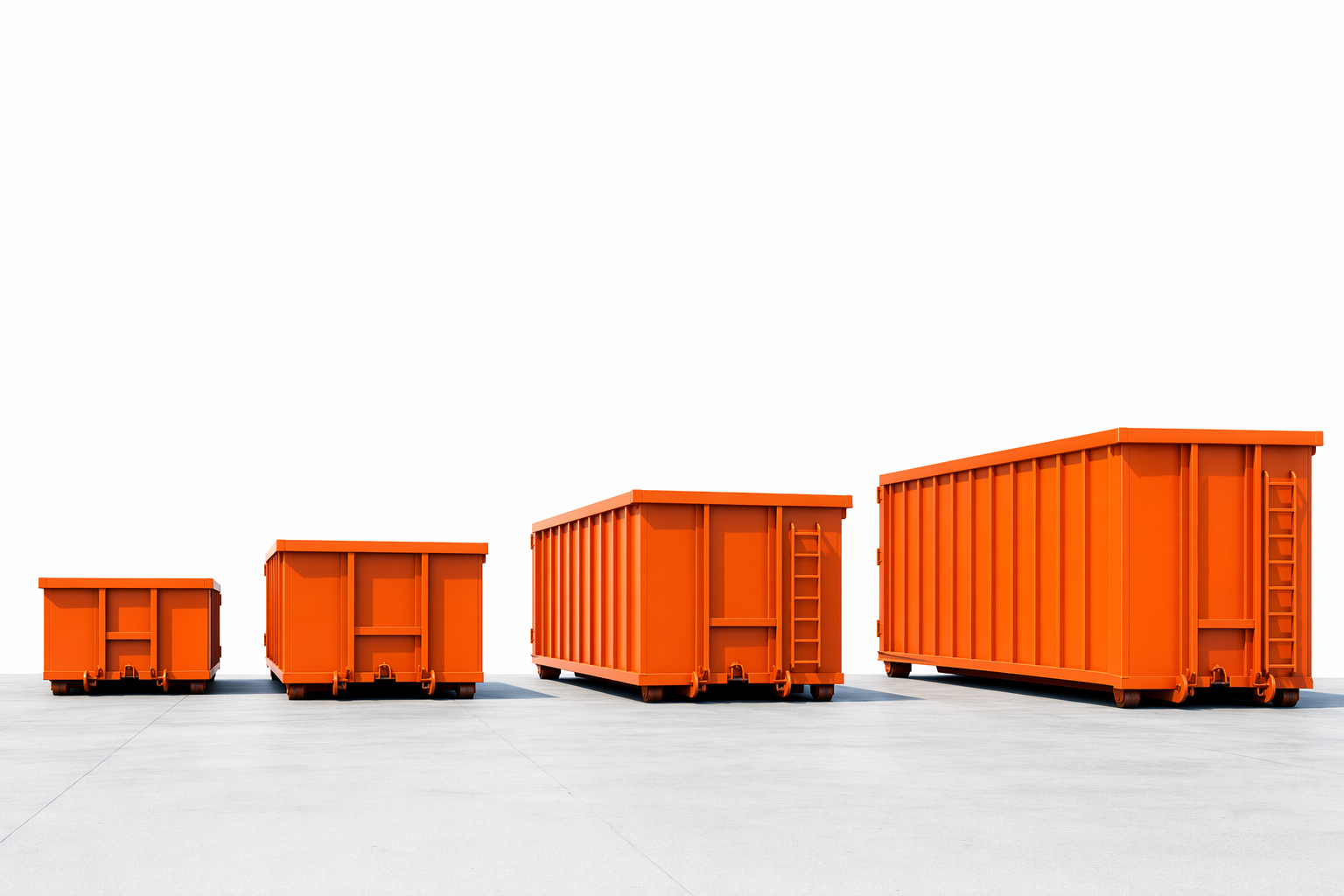
What fits in a 10-yard roll-off, what it's best for (small cleanouts, single rooms, heavy concrete or dirt), honest cost ranges and weight limits, and how to get one from a local hauler.
Open → 20-yard roll-off dumpsterWhat fits in a 20-yard roll-off, what it's best for (whole-home cleanouts, mid-size renovations, roofing), honest cost ranges and tonnage, and how to get matched with a local hauler.
Open → 30-yard roll-off dumpsterWhat fits in a 30-yard roll-off, what it's best for (large renovations, new builds, big estate cleanouts), honest cost ranges, dimensions, and how to find a licensed local hauler.
Open → 40-yard roll-off dumpsterWhat fits in a 40-yard roll-off, what it's best for (major construction, demolition, commercial jobs), honest cost ranges, what it can't hold by weight, and how to get one.
Open → Concrete and heavy-debris dumpster rentalWhy concrete, dirt, brick, and tile need a small dedicated clean-fill dumpster, how weight limits work, honest cost ranges, and how to find a hauler that takes heavy material.
Open → Junk removal vs renting a dumpsterWhen full-service junk removal makes more sense than a roll-off you load yourself, how the costs compare honestly, the trade-offs of each, and how to get matched either way.
Open → Commercial and contractor roll-off rentalsRoll-off service for contractors, businesses, and recurring job sites — sizes, swap-outs, scheduling, honest cost ranges, and how to get matched with licensed local haulers.
Open →Common roll-off dumpster sizes: what they really hold
Roll-off dumpsters are measured in cubic yards, not by the outside metal box size. In real life, people understand them better in pickup-truck loads: a 10-yard usually holds about 3 to 4 pickup loads, a 20-yard about 6 to 8, a 30-yard about 9 to 12, and a 40-yard about 12 to 16.
A 10-yard dumpster is the usual starting point for a small cleanout, a bathroom remodel, a little deck tear-out, or a small load of heavy material. A 20-yard is the most common all-around choice for a garage or basement cleanout, flooring, a medium remodel, or a modest roofing job. A 30-yard is better for a whole-home cleanout, larger renovation, or bulky construction debris. A 40-yard is usually for major remodels, demolition, commercial cleanouts, or big construction jobs.
Most people under-order. If you are between sizes, the next size up is often cheaper than filling one bin too fast and paying for a second haul. The big exception is heavy debris like concrete, dirt, brick, shingles, and tile: those materials can hit the weight limit long before the dumpster looks full, so they usually belong in a smaller dedicated heavy-debris container.
Rental types: mixed debris, heavy debris, roofing, and commercial bins
Not every roll-off is rented the same way. The most common rental is a mixed-debris dumpster for household junk, wood, drywall, furniture, and general renovation debris. That is the everyday roll-off most homeowners picture.
Heavy-debris dumpsters are for concrete, dirt, asphalt, brick, stone, and similar material. These are often smaller on purpose because the weight adds up fast. Roofing dumpsters are usually sized around shingle weight and roof-square count, not just volume. Commercial or construction roll-offs may be larger, swapped out more often, and priced around ongoing jobsite use instead of a one-time cleanout.
What a company allows in each type of container varies by area and by hauler. Always confirm what can go in, what cannot, and what the weight allowance is before delivery. For hazardous, medical, or otherwise regulated waste, use the proper local disposal program instead of a roll-off.
Typical rental costs by size
Honest national-style ranges for a basic rental are often about $300 to $450 for a 10-yard, $350 to $550 for a 20-yard, $450 to $700 for a 30-yard, and $550 to $850 or more for a 40-yard. Heavy-material dumpsters can be priced differently because disposal costs and weight limits are different. These are general ranges, not quotes.
The real number depends on your area, the dumpster size, the rental period, the included tonnage or weight allowance, and the type of debris. A clean load of household junk prices differently from shingles, concrete, dirt, or construction waste. City access, landfill rates, and seasonal demand can move the price too.
Get the all-in price in writing before you book. Ask exactly what is included: delivery, pickup, how many days, how much weight, and what the overage charges are if you go over.
The surprise fees to watch for
Most bad dumpster experiences are not about the box size. They are about unclear pricing. The common extra charges are over-tonnage fees charged per ton over the included weight allowance, extra-day fees if you keep the container longer than the rental period, trip or dry-run fees if the driver shows up and cannot safely drop off or pick up the dumpster, and prohibited-item fees if banned items are found in the load.
You can avoid most of that by confirming five things up front: the exact size, the rental period, the tonnage allowance, the placement spot, and the all-in price. If the dumpster is going on the street, ask whether a permit is needed and who handles it, because that varies by area.
Also ask about loading rules. Many haulers require debris to stay level with the top rails for safe transport. An overfilled dumpster can lead to extra charges or a refused pickup.
How to choose the right size without overthinking it
Start with the project, not the biggest box you can find. Small room remodel or light cleanout: think 10-yard. Typical home cleanout or medium remodeling job: often 20-yard. Large renovation or whole-house cleanout: usually 30-yard. Major construction, demolition, or bulky commercial debris: 40-yard.
If you have bulky but lighter material, size up. If you have dense heavy material, size down and use a dedicated heavy-debris container. That one rule saves people money all the time.
If you want to compare options, visit projects for common use cases. If you already know roughly what you need, you can get matched with a licensed, insured local hauler. BinRoute is a free matching service only — not a dumpster company — so you stay in control and choose who to hire after you confirm the details.
How BinRoute helps
BinRoute helps people across the United States understand roll-off sizes, rental basics, and common pricing so they can avoid overpaying or ordering the wrong bin. Then we help match you with participating local haulers. The service is free for the customer.
We only collect basic contact and project-intent details: name, phone, optional email, project type, ZIP code, and preferred language. We do not rent, deliver, haul, or dispose of dumpsters or waste, and we do not give legal, engineering, or hazardous-waste-disposal advice.
Before any dumpster is delivered, you should verify the hauler is licensed and insured, confirm what is allowed in the container, and review the final size, weight allowance, rental period, placement, and total written price.
Pick the dumpster by project and weight, not guesswork, get the full price in writing, and confirm the rules locally before the bin shows up.
Ready to rent a roll-off dumpster?
Get the size right first, then get matched, free, with licensed local haulers near you. You compare and choose who to hire — and you confirm the all-in price before the dumpster is delivered.