BinRoute
What are you clearing out?
Start with the kind of debris you actually have. The right dumpster size, weight limit, and price depend more on the material than most people expect.
Gutting a kitchen, bath, or whole house? Find out which roll-off size fits drywall, flooring, cabinets, and fixtures, honest cost ranges, the fees to watch, and how to get a licensed local hauler.
Open → Home cleanout — the right dumpster for clearing a houseClearing out a house, garage, or basement of junk and furniture? Learn which size you need, what you can and can't toss, honest cost ranges, and how to get matched with a local hauler fast.
Open → Roofing tear-off — sizing a dumpster for shinglesTearing off a roof? Shingles are heavy and fill a bin by weight, not volume. Learn how to size a roll-off by squares, watch the tonnage limit, see honest costs, and find a local hauler.
Open → Construction and demolition debris dumpstersRunning a build, addition, or tear-down? Learn how to size a roll-off for C&D debris, separate heavy materials, keep the job site clear, see honest cost ranges, and get matched with a hauler.
Open → Concrete, dirt and heavy-debris dumpstersHauling concrete, brick, dirt, or tile? Heavy clean fill needs a small dedicated dumpster, not a big one. Learn why, what it costs, the weight rules, and how to get a licensed local hauler.
Open → Yard waste and landscaping debris dumpstersBig landscaping job, tree removal, or storm cleanup? Learn which size handles brush, soil, and branches, what counts as yard waste, honest cost ranges, and how to find a local hauler.
Open → Estate cleanout — clearing a full propertyClearing an entire estate or inherited home? Learn how to size a roll-off for a full-property cleanout, sort what to keep, donate, or toss, see honest costs, and get matched with a hauler.
Open → Garage cleanout — sizing a dumpster for the garageReclaiming the garage from years of clutter, old furniture, and junk? Learn the right small-to-mid roll-off size, what's allowed, honest cost ranges, and how to get a local hauler.
Open → Moving or downsizing — a dumpster for what you can't takeMoving or downsizing and stuck with furniture and junk you can't take? Learn which dumpster size fits, what you can toss, honest cost ranges, and how to get matched with a local hauler.
Open → Commercial and business cleanout dumpstersClearing out an office, store, or warehouse? Learn how to size a roll-off for a commercial cleanout, handle bulky fixtures, plan placement, see honest costs, and find a licensed hauler.
Open →Pick the project that matches your debris
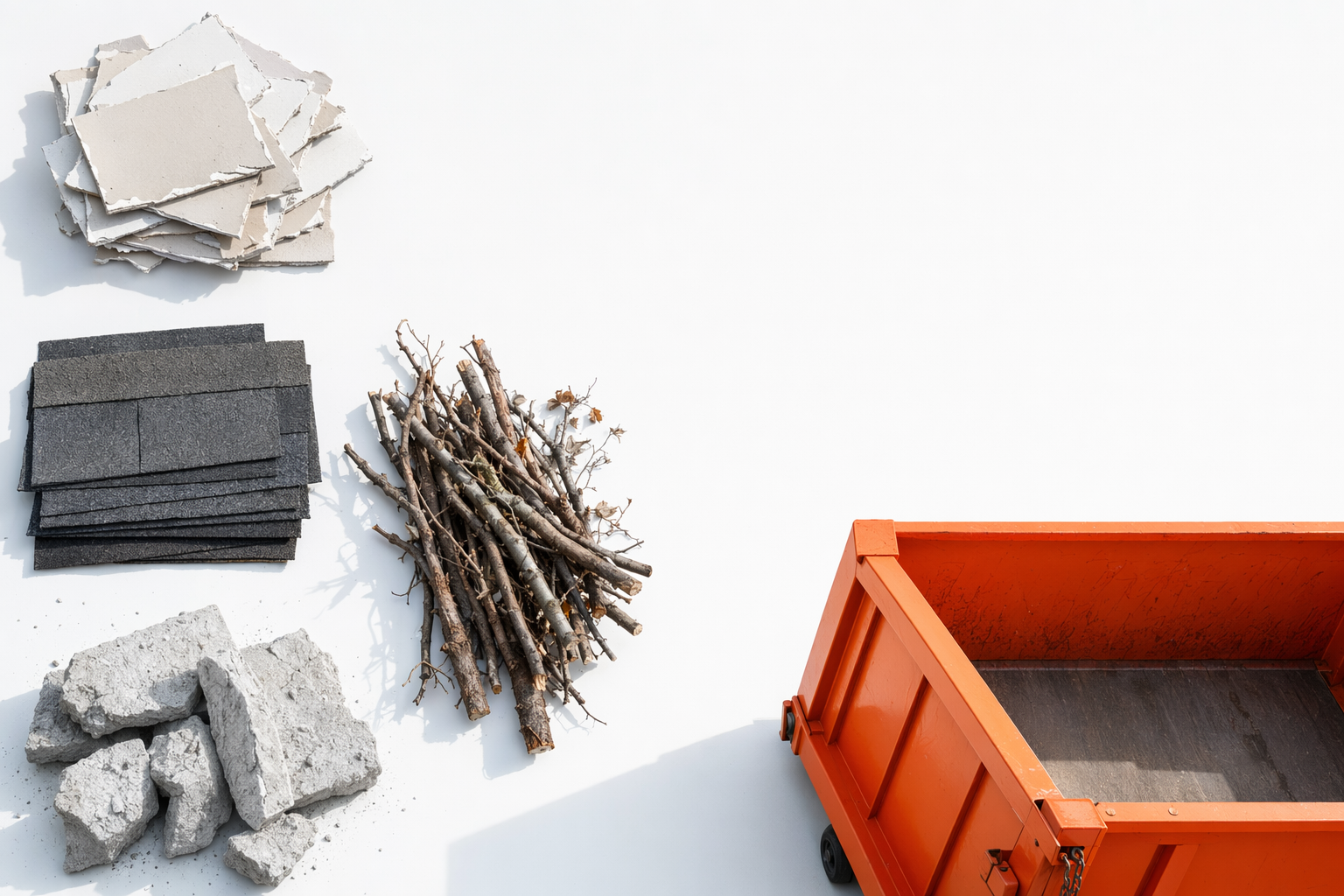
Different jobs fill dumpsters in different ways. A house cleanout usually fills a bin by volume. Concrete, dirt, shingles, and tile fill it by weight first. That is why the same size dumpster can be right for one job and wrong for another.
Most people under-order. If your job is light, bulky junk, going one size up is usually cheaper than needing a second dumpster. If your job is heavy material, do the opposite: use a smaller dedicated container meant for heavy debris and confirm the weight allowance before delivery.
A quick way to think about size:
- 10-yard: about 3 pickup-truck loads
- 20-yard: about 6 pickup-truck loads
- 30-yard: about 9 pickup-truck loads
- 40-yard: about 12 pickup-truck loads
Common project types
If you are remodeling a kitchen, bathroom, or several rooms, start with renovation debris. Renovation jobs often mix cabinets, drywall, flooring, fixtures, and packaging, so size depends on how many rooms you are touching.
If you are cleaning out a garage, attic, basement, whole house, or handling an estate cleanout, start with home cleanout. Cleanouts are usually about volume, not weight, unless you are also throwing out tile, books, old plaster, or other dense material.
Other common jobs include roofing tear-offs, construction or demolition debris, concrete and dirt, and yard waste. For heavy loads like concrete, brick, dirt, sand, shingles, or tile, ask for a small heavy-debris container. For mixed debris, confirm exactly what the hauler allows in the bin.
Rules on accepted items vary by area and by hauler. For paint, chemicals, fuel, propane tanks, batteries, asbestos, medical waste, or other regulated material, use the proper local disposal program instead of a standard roll-off.
What it usually costs
A typical roll-off dumpster rental often lands somewhere around $300 to $800 for common residential projects, but that is only a general range, not a quote. The real number depends on the dumpster size, your area, the rental period, the included weight or tonnage, and the type of debris.
Heavy materials usually cost more because disposal is charged by weight. Longer rentals can cost more too. In busy seasons or dense urban areas, delivery and disposal costs may run higher than in smaller markets.
Watch for the fees that surprise people most:
- over-tonnage fees charged per ton over the allowance
- extra-day fees if you keep the dumpster longer
- trip or dry-run fees if the driver cannot drop off or pick up
- prohibited-item fees if banned material is found
Get the all-in price in writing before you book. Ask what size you are getting, how many days are included, how much weight is included, what happens if you go over, and what items are not allowed.
Placement, permits, and staying out of trouble
If the dumpster fits on private property like a driveway, that is often the simplest option. If it needs to go on a street, alley, sidewalk area, or other public space, you may need a permit. Who gets that permit and who is responsible varies by city and county.
Also check for overhead wires, tree branches, narrow gates, soft ground, HOA rules, and parked cars. The customer stays in control: you confirm the placement, size, rental period, tonnage allowance, and total price before the dumpster is delivered.
This is general information only. Local rules differ, so confirm permit requirements, placement rules, and prohibited items directly with the city and with the hauler you choose.
How BinRoute helps
BinRoute is a free matching service, not a dumpster rental, hauling, or disposal company. We help you understand the job, then connect you with licensed, insured local haulers so you can compare your options.
The service is free for the customer. We only collect basic contact and project details: name, phone, optional email, project type, ZIP code, and preferred language. You choose who to hire, and you confirm the final size, terms, and price directly with the hauler before anything is delivered.
If you are ready, get matched and tell us what you are clearing out.
Tell us what kind of debris you have, and we’ll help you figure out the right roll-off size and connect you with a local hauler to compare real options.
Ready to rent a roll-off dumpster?
Get the size right first, then get matched, free, with licensed local haulers near you. You compare and choose who to hire — and you confirm the all-in price before the dumpster is delivered.