Projects
Concrete, dirt and heavy-debris dumpsters
Concrete, dirt, brick, and tile are different from regular junk: they hit the weight limit fast. The right move is usually a small dedicated dumpster with a clear tonnage allowance and the full price in writing before delivery.
How to get the size right
A quick, honest way to size a roll-off so you don't pay for a second bin — or for empty air.
- 1 Estimate your debris in cubic yards. Think in pickup-truck loads: one full short-bed load is roughly 2 to 3 cubic yards. Add up the rooms, the pile, or the project — most people under-estimate, so round up one size.
- 2 Match it to a roll-off size. A 10-yard suits a small cleanout or heavy concrete; a 20-yard a whole-home cleanout or roofing; a 30-yard a big renovation; a 40-yard major construction. Between sizes, the next size up is almost always cheaper than a second bin.
- 3 Check the weight limit. Every roll-off includes a tonnage allowance, then charges per ton over it. Heavy debris — concrete, dirt, shingles, tile — fills a small bin by weight long before it fills by volume, so use a smaller container for heavy loads.
- 4 Confirm what's included, then get matched. Get matched, free, with licensed local haulers. Confirm the rental period, the tonnage allowance, the drop-off and pickup, and any fees in writing before the bin arrives — you compare and choose who to hire.
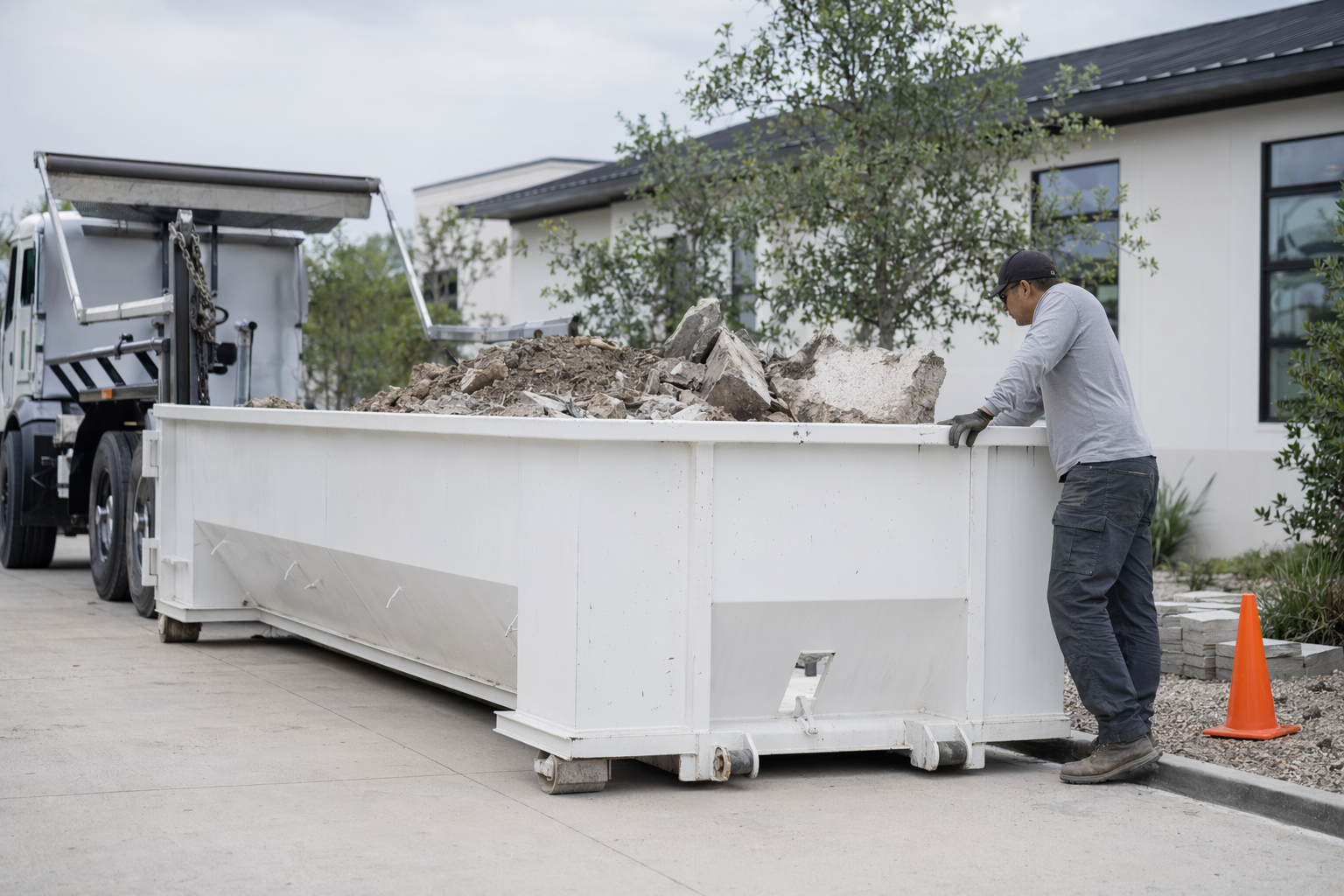
What size dumpster do you need for concrete, dirt, or other heavy debris?
For heavy clean fill, bigger is usually not better. Concrete, dirt, brick, block, asphalt, sand, rock, mortar, and tile can make a large container too heavy to legally haul long before it looks full. That is why local haulers often use small dedicated heavy-debris dumpsters for these jobs.
A good rule of thumb: a 10-yard dumpster is the common starting point for concrete or dirt, and in some areas even smaller heavy-load containers are used. A 10-yard bin is roughly 3 to 4 pickup-truck loads by volume, but with heavy debris the real limit is weight, not space. A 20-yard can look tempting, but many haulers will not allow it for full loads of concrete or dirt because it can exceed truck and road weight limits.
Think in material, not just size. Broken patio concrete, pavers, bricks, cinder block, ceramic tile, and dense masonry are usually "small bin only" materials. Dirt is the same story, especially if it is wet. Wet soil weighs far more than people expect. If you are tearing out a driveway, sidewalk, slab, retaining wall, or digging out soil, most people under-order the right kind of container, not just the right cubic yards.
When in doubt, round up on information, not on bin size. Tell the hauler exactly what the material is, about how many square feet or cubic yards you are removing, and whether it is clean concrete only or mixed debris. If you are between options, the safer move is usually the next step up in planning and tonnage allowance, not just ordering a giant box. For most projects, a second properly sized heavy bin is cheaper than getting stuck with a container that cannot be hauled.
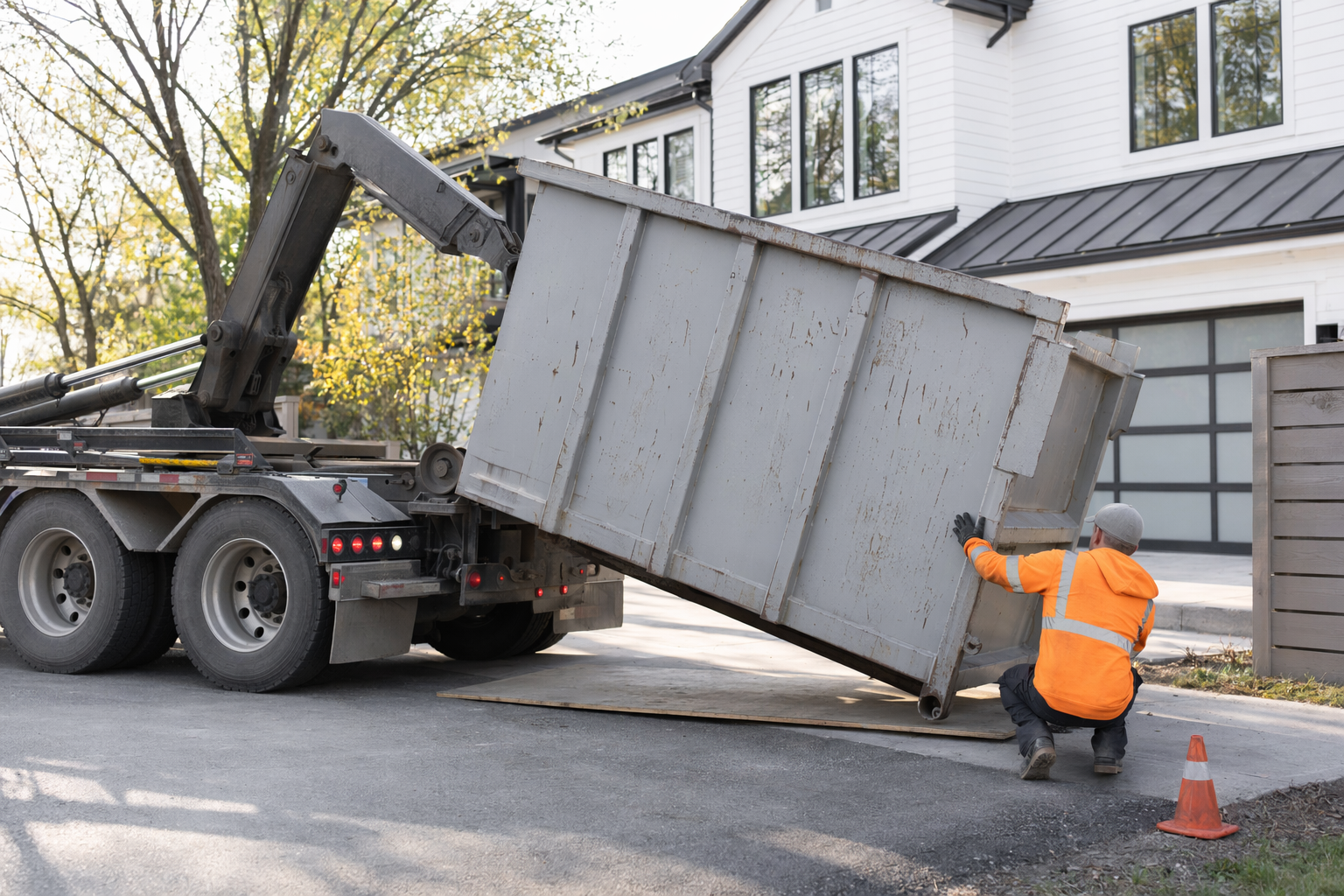
What does a concrete or dirt dumpster cost?
Honest range: many heavy-debris dumpsters land somewhere around $300 to $800+, but the real number depends on your area, container size, rental period, included weight, and exactly what you are loading. Those are not quotes. Dense material costs more to haul and dispose of than light household junk, so heavy loads can get expensive fast.
Concrete-only or clean-fill loads may price differently from mixed masonry. Dirt, brick, block, tile, and asphalt can each be handled a little differently by local companies and local disposal sites. A small 10-yard dedicated concrete dumpster may cost more than people expect because the truck is hauling a lot of weight even though the box is small.
What drives the price up or down:
- Your ZIP code and local landfill, transfer, or recycling rates
- Dumpster size and whether it is a special heavy-load container
- Rental period and extra days
- Weight allowance included in the base price
- Clean concrete only versus mixed heavy debris
- Access issues, long carries, or a failed delivery/pickup attempt
If you want a fuller breakdown of dumpster pricing in general, see costs. For heavy debris, the main thing is simple: get the all-in price in writing first, including the tonnage allowance.
The surprise fees to watch for
Heavy debris is where surprise fees show up most often. The big one is over-tonnage: you pay per ton over the weight allowance in the order. With concrete, dirt, shingles, tile, or brick, that extra charge can add up quickly because you can go overweight with a bin that still looks half empty.
Also ask about extra-day fees if you keep the container longer than the standard rental, trip or dry-run fees if the driver shows up and cannot deliver or pick up, and prohibited-item fees if you toss in material the hauler or disposal site will not accept. These are common charges across the industry.
Before the dumpster is delivered, confirm these points plainly:
- Exact dumpster size
- What material is allowed in it
- Weight allowance included
- Per-ton price if you go over
- Standard rental period and extra-day fee
- Delivery spot and any access requirements
- Full all-in price in writing
Most expensive mistake on heavy jobs: using one dumpster for everything. Mixing concrete with wood, trash, metal, or insulation can change disposal rules and the price. For many jobs, it is smarter to keep heavy clean fill separate from lighter renovation debris.
What can you put in a heavy-debris dumpster?
Usually accepted heavy materials include clean concrete, dirt, brick, block, rock, sand, asphalt, and tile. But local rules and hauler policies vary, so always confirm exactly what your hauler accepts before loading. Some companies allow mixed heavy debris; others want clean concrete only, or dirt only, or no rebar-heavy material.
Keep an eye on contamination. Wood, plastic, insulation, carpet, painted debris, household trash, and other mixed waste can change where the load goes and what it costs. If the load was ordered as clean fill and ends up mixed, your price can change.
Do not assume regulated or hazardous materials can go in with heavy debris. Things like asbestos-containing material, chemicals, fuel, paint, solvents, batteries, medical waste, and other regulated waste need the proper local disposal program. This page is general information only, not legal or hazardous-waste-disposal advice.
Street placement and permits also vary by city, county, and HOA. If the dumpster goes on a public street or right-of-way, you may need permission or a permit. Confirm locally before delivery.
How to get matched with a licensed local hauler
BinRoute is a free matching service. We do not rent, deliver, haul dumpsters, or dispose of waste. We help you get connected with local participating companies so you can compare options and choose who to hire.
To get matched, share basic project details: your name, phone, optional email, project type, ZIP code, and preferred language. That is it. We use contact and project-intent details only so local haulers can understand the job.
For a heavy-debris job, give as much useful detail as you can:
1. Say whether it is concrete, dirt, brick, block, tile, asphalt, or mixed heavy debris.
2. Estimate the amount: square feet of slab, thickness, or approximate pickup loads.
3. Say whether the load is clean fill only or mixed with other materials.
4. Explain where the bin will go and whether there is room for the truck.
5. Ask the hauler to confirm the size, tonnage allowance, rental period, and all-in price.
Start with get matched if you are ready, or review other project dumpster guides and what size dumpster do I need? if you are still figuring it out. Always verify the hauler is licensed and insured for your area.
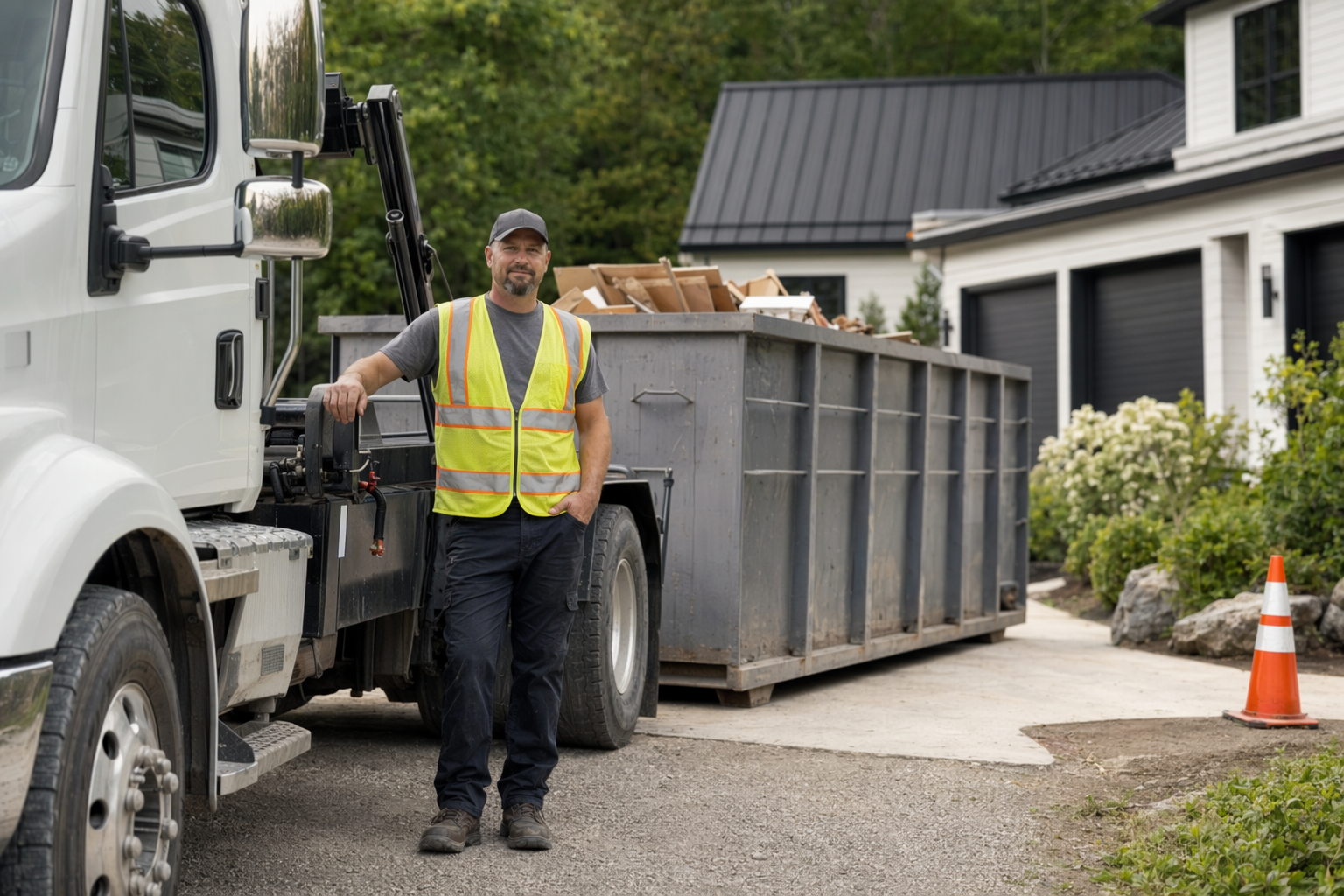
For concrete, dirt, brick, and tile, use a small dedicated heavy-debris dumpster, confirm the weight allowance first, and get the full price in writing before the bin shows up.
Common questions
Can I put concrete and regular construction trash in the same dumpster?
Sometimes, but it often costs more and can change what size or type of dumpster you need. For heavy jobs, keeping clean concrete or dirt separate from lighter debris is usually the safer and cheaper move.
Why can't I just order a big 20-yard or 30-yard dumpster for dirt?
Because dirt and concrete fill a container by weight long before they fill it by volume. Many haulers limit heavy debris to small dedicated containers so the truck can legally and safely haul the load.
How much concrete fits in a 10-yard dumpster?
By volume, a 10-yard holds about 3 to 4 pickup-truck loads, but with concrete the real limit is the included tonnage. The exact amount depends on thickness, rebar, moisture, and local hauling limits, so confirm with the hauler.
Do I need a permit for a concrete dumpster?
Maybe. If the dumpster will sit on your driveway, often no street permit is needed, but public-street placement rules vary by city and area. Check locally before delivery.
What is the biggest fee people get hit with on dirt or concrete dumpsters?
Usually over-tonnage fees. Heavy materials can exceed the included weight allowance quickly, so ask for the tonnage included and the per-ton overage price before you book.
Is BinRoute the company that delivers the dumpster?
No. BinRoute is a free matching service, not a hauling company. We help connect you with local participating haulers, and you choose who to hire.