Projects
Home cleanout — the right dumpster for clearing a house
Cleaning out a house usually takes more dumpster than people think. Here’s the practical way to pick the right size, avoid surprise fees, and get matched with a licensed local hauler.
How to get the size right
A quick, honest way to size a roll-off so you don't pay for a second bin — or for empty air.
- 1 Estimate your debris in cubic yards. Think in pickup-truck loads: one full short-bed load is roughly 2 to 3 cubic yards. Add up the rooms, the pile, or the project — most people under-estimate, so round up one size.
- 2 Match it to a roll-off size. A 10-yard suits a small cleanout or heavy concrete; a 20-yard a whole-home cleanout or roofing; a 30-yard a big renovation; a 40-yard major construction. Between sizes, the next size up is almost always cheaper than a second bin.
- 3 Check the weight limit. Every roll-off includes a tonnage allowance, then charges per ton over it. Heavy debris — concrete, dirt, shingles, tile — fills a small bin by weight long before it fills by volume, so use a smaller container for heavy loads.
- 4 Confirm what's included, then get matched. Get matched, free, with licensed local haulers. Confirm the rental period, the tonnage allowance, the drop-off and pickup, and any fees in writing before the bin arrives — you compare and choose who to hire.
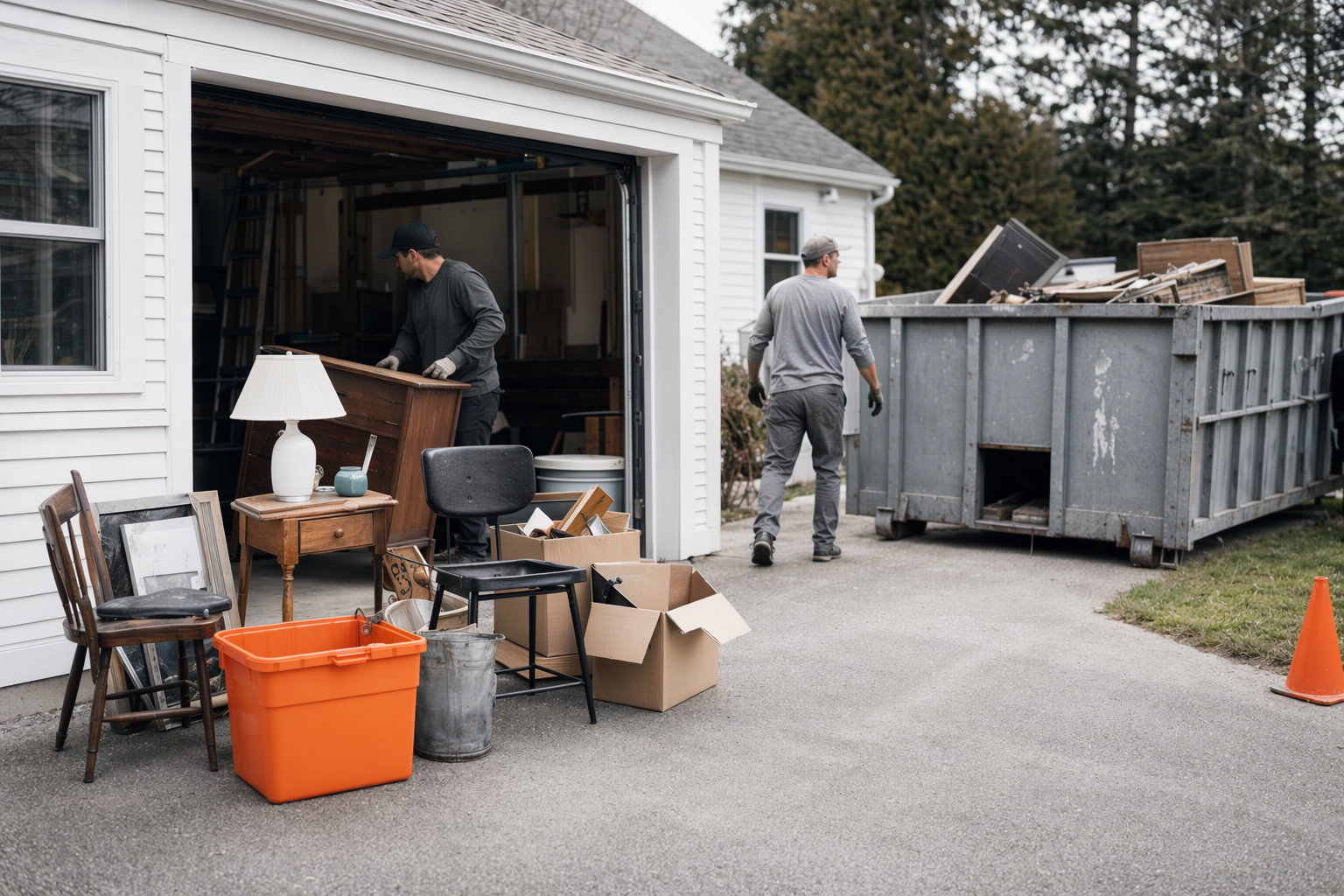
What size dumpster works for a home cleanout?
For a home cleanout, most people under-order. Furniture, bagged trash, old carpet, toys, shelving, boxes, and garage junk eat up space fast, even when the material is not especially heavy. If you are between sizes, the next size up is almost always cheaper than needing a second dumpster.
A rough guide: a 10-yard dumpster holds about 3 to 4 pickup-truck loads and works for a small room cleanout, a small garage, or a light apartment move-out. A 15-yard holds about 4 to 5 pickup loads and fits a small house cleanout or a couple packed rooms plus some furniture. A 20-yard holds about 6 to 8 pickup loads and is the most common pick for a whole-house cleanout, estate cleanout, or a full basement and garage at the same time. A 30-yard holds about 9 to 12 pickup loads and is often the safer choice for a larger house, a long-neglected property, or a cleanout with lots of bulky furniture and boxed belongings.
If the house is packed wall-to-wall, has years of storage in the attic, basement, sheds, or garage, or you already know there are mattresses, couches, dressers, and dozens of boxes, start bigger. For very large or hoarder-type cleanouts, one 30-yard or 40-yard may still not be enough. See what size dumpster do I need? for a broader size guide.
One important exception: if your cleanout includes heavy debris like concrete, dirt, brick, tile, or shingles, do not mix that into a large general junk bin without checking first. Heavy debris fills a dumpster by weight before volume, so it usually needs a smaller dedicated container.
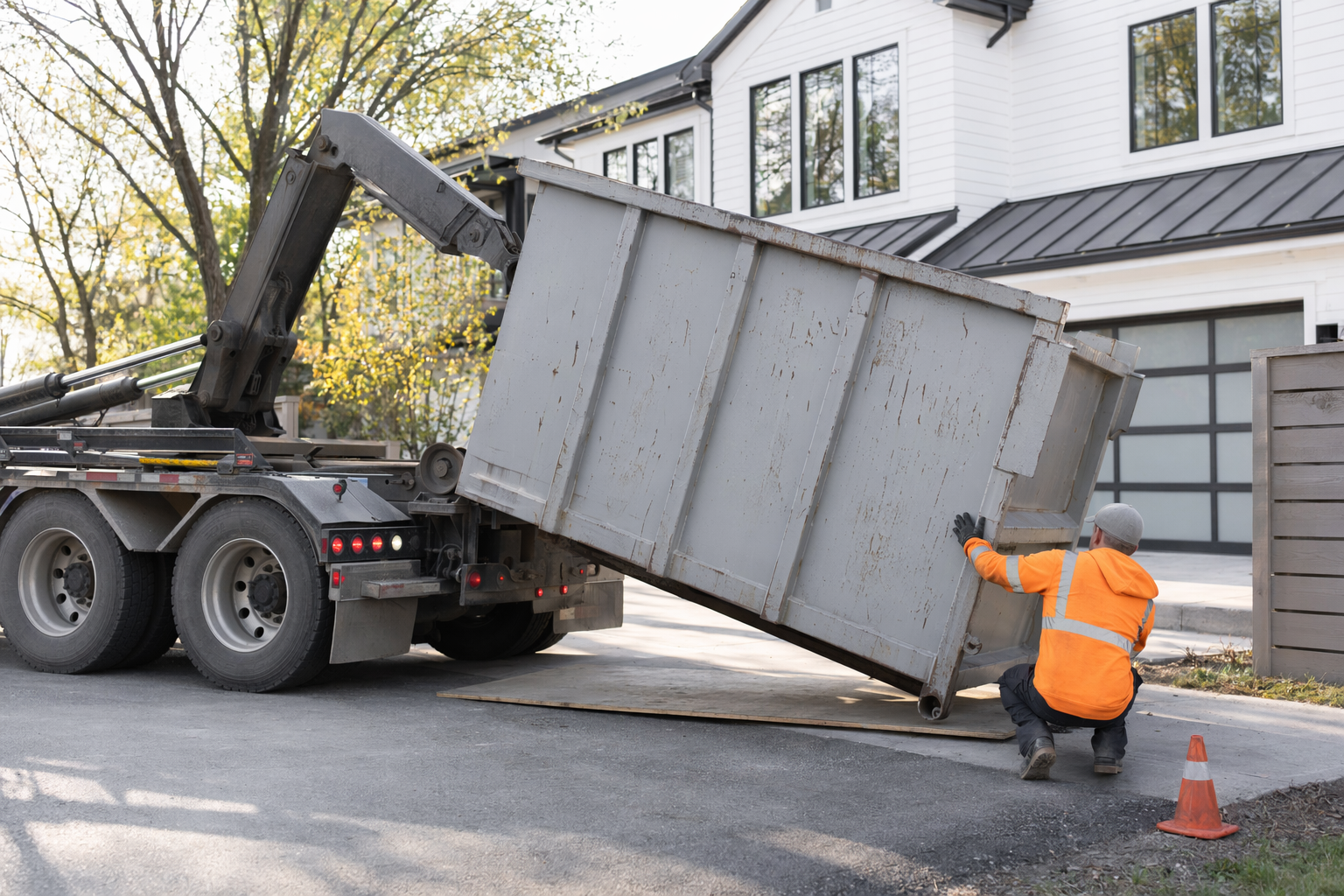
What a home cleanout dumpster usually costs
For a home cleanout, a fair general range is often about $300 to $850 for the rental, depending on dumpster size, your area, the rental period, the included weight allowance, and what kind of debris is going in. In many places, a 10-yard may land around $300 to $500, a 20-yard around $400 to $650, and a 30-yard around $500 to $850. Those are not quotes. Real pricing varies by city, landfill costs, demand, and the local hauler.
Clean household junk is usually more about volume than weight, but weight still matters. A dumpster full of furniture, books, wet trash, and old flooring can run heavier than people expect. Ask for the all-in price in writing before you book, including the rental period and the tonnage allowance. You can also read more on general dumpster costs.
If you are comparing offers, make sure you are comparing the same things: same size, same number of rental days, same included tons, and the same type of debris. A low upfront number can become the expensive option if the weight allowance is tiny or the extra-day fee is high.
The surprise fees to watch before delivery
The big one is over-tonnage. Most dumpsters come with a set weight allowance, and if you go over, the hauler usually charges a per-ton rate for the extra weight. For a home cleanout, that matters most when there are books, old files, dense furniture, wet materials, or some heavy construction debris mixed in.
Other common add-ons are extra-day fees if you keep the bin longer than planned, trip or dry-run fees if the driver shows up and cannot safely drop it off or pick it up, and prohibited-item fees if banned items are found in the load. Street placement can also mean a local permit or other city requirements, depending on where you live.
Before the dumpster is delivered, confirm these points clearly:
- Dumpster size in cubic yards
- Rental period and extra-day charge
- Included weight or tonnage allowance
- Per-ton charge if you go over
- Delivery spot and whether the truck has enough room
- Whether a street permit is needed in your area
- What items are prohibited
- The all-in price in writing
Rules, permit responsibility, and fees vary by area and by hauler, so always confirm locally.
What you can usually throw in from a house cleanout
Most home cleanout dumpsters can usually take general household junk like furniture, clothing, toys, cardboard, non-electronic clutter, shelving, small amounts of carpet, and ordinary non-hazardous trash from a cleanout. Many cleanouts also include old tables, chairs, mattresses, dressers, and garage clutter, but acceptance can vary by area and by hauler.
What usually causes trouble is regulated or hazardous material. Common examples include paint, solvents, oils, fuels, pesticides, propane tanks, batteries, asbestos-containing material, medical sharps, and many chemicals. Tires, appliances containing refrigerants, TVs, monitors, and certain electronics may also have separate rules or extra fees depending on local programs and the hauler.
This is general information only. Do not guess on hazardous, medical, or regulated waste. Use the proper local disposal program and confirm prohibited items with the hauler before loading the dumpster.
A good rule for cleanouts: separate obvious problem items before the dumpster arrives. That keeps the load simple and helps you avoid prohibited-item charges.
How to load a cleanout dumpster without making the job harder
Load bulky, flat, and heavy items first so you build a stable base. Break down bed frames, shelving, and empty boxes. Put loose items in bags or small boxes when possible so you do not waste air space. Try to spread the weight evenly instead of piling everything on one end.
Do not load debris above the top edge of the dumpster. Haulers generally need the load level enough to tarp and transport safely. An overfilled dumpster can lead to extra charges or require you to unload material before pickup.
For a whole-house cleanout, a simple order works well:
1. Walk the house and set aside hazardous or prohibited items first.
2. Start with the biggest furniture and broken-down bulky items.
3. Fill gaps with boxes, bagged trash, and loose clutter.
4. Keep usable donations separate so they do not end up buried.
5. Stop at the fill line, even if a little debris is left.
If you think the job may run long, ask about the rental window up front. A slightly larger dumpster with a clear rental period is often easier and cheaper than rushing, overfilling, or extending the rental at the last minute.
How BinRoute helps you get matched
BinRoute is a free matching service. We do not rent, deliver, haul dumpsters, or dispose of waste. We help connect you with licensed, insured local dumpster-rental and hauling companies so you can compare your options and choose who to hire.
To get matched, you share basic contact and project details only: name, phone, optional email, project type, ZIP code, and preferred language. Then you can speak with a local provider about size, timing, placement, weight allowance, and price. Start here: get matched.
You stay in control. Before any dumpster is delivered, confirm the size, rental period, tonnage allowance, placement, and all-in price directly with the hauler. If you are still comparing project types or planning a larger cleanup, you can browse more project guides.
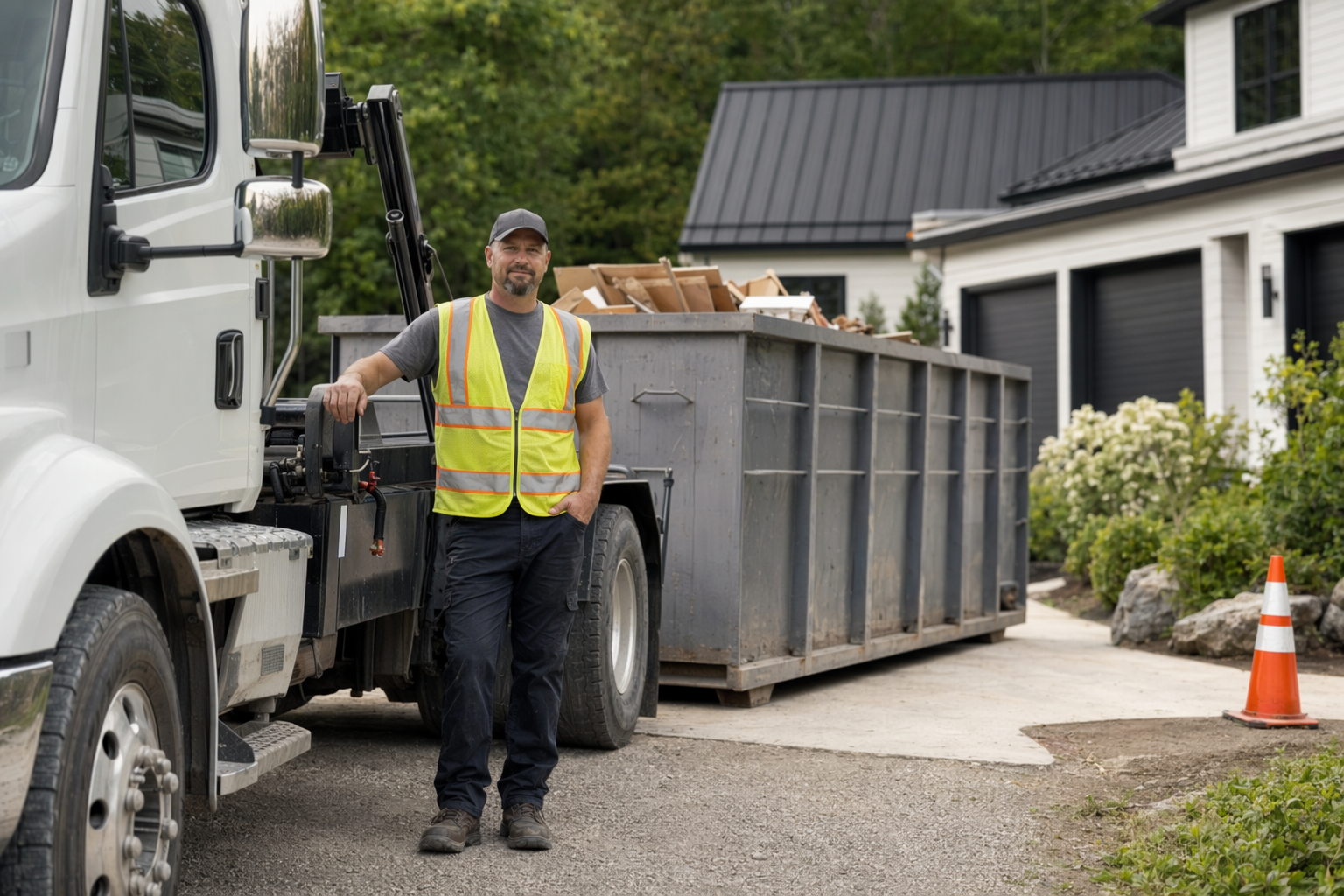
For a house cleanout, most people need a bigger dumpster than they first think, and the smart move is to confirm the size, weight limit, allowed items, and all-in price before it is dropped off.
Common questions
What size dumpster do I need to clean out a whole house?
For many whole-house cleanouts, a 20-yard is the common starting point, and a 30-yard is often the safer choice if there is a lot of furniture, storage, or years of accumulated junk. Most people under-order, so if you are between sizes, round up.
How much does a home cleanout dumpster cost?
A common general range is about $300 to $850, depending on size, area, rental period, included weight, and the type of debris. That is not a quote, and local pricing can be higher or lower.
Can I throw a mattress and couch in a cleanout dumpster?
Often yes, but rules and extra fees vary by area and by hauler. Ask before delivery so you know whether bulky furniture or mattresses have special handling charges.
Can I put paint, batteries, or chemicals in the dumpster?
Usually no, or only under specific local rules. For hazardous, medical, or regulated waste, use the proper local disposal program and confirm with the hauler first.
Do I need a permit for a dumpster during a house cleanout?
Maybe. If the dumpster goes on your driveway, often no permit is needed, but if it goes on a street or public space, local rules may apply. Permit requirements and who handles them vary by area.
What information do I need to get matched with a local hauler?
Just basic contact and project intent: your name, phone, optional email, project type, ZIP code, and preferred language. BinRoute is free for customers and does not collect financial account numbers, SSNs, or income information.