Guides
What size dumpster do I need?
Most people rent a dumpster that’s too small. Start by estimating your debris in pickup-truck loads or cubic yards, then round up one size so you don’t pay for a second bin later.
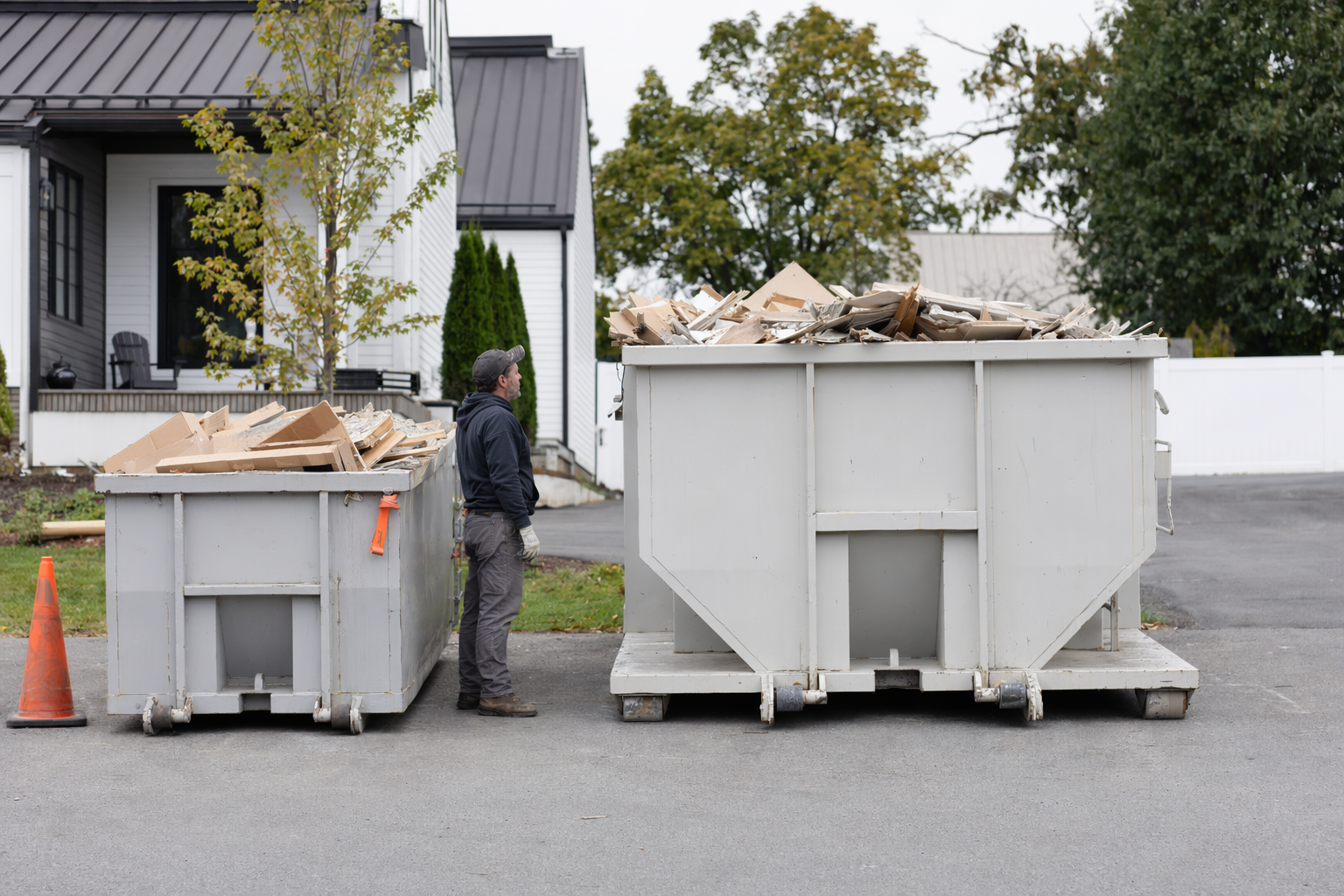
The quick answer: size up if you’re between two bins
If you’re torn between two sizes, go with the larger one almost every time. A bin that’s a little too big is usually cheaper than renting a second dumpster, paying for extra days, or getting hit with over-tonnage charges.
As a rough guide, a 10-yard dumpster fits about 3 pickup-truck loads, a 20-yard fits about 6, and a 30-yard fits about 9. That’s not exact, but it’s a good starting point when you’re looking at a house cleanout, remodel, or roofing job.
BinRoute is a free matching service, not a dumpster company. We help you compare local licensed, insured haulers and choose the right size, but the hauler still confirms the final size, weight allowance, placement, and all-in price.

How to estimate the size you need
Think about the debris pile, not the room or the house. A small garage cleanout, single-room remodel, or a few tons of light junk often fits in a 10-yard bin. A larger basement cleanout, kitchen or bath remodel, or medium renovation often lands in the 20-yard range.
A full home cleanout, bigger renovation, roofing tear-off, or mixed debris job often needs 20 to 30 yards. Bigger construction, demolition, or multi-room projects may need 30 to 40 yards, but the final answer depends on what you’re throwing away and how heavy it is.
A simple way to judge:
- 10 yards = about 3 pickup loads
- 20 yards = about 6 pickup loads
- 30 yards = about 9 pickup loads
- 40 yards = about 12 pickup loads
If the debris is bulky but light, like furniture, drywall, or household junk, volume matters most. If it’s heavy stuff like concrete, dirt, tile, asphalt, or shingles, weight matters fast and you may need a smaller dedicated bin instead of a bigger one filled too heavy.
Why people under-order dumpsters
People almost always underestimate how much space debris takes once it’s broken up, stacked unevenly, and mixed with trash bags, wood, and broken pieces. A pile that looks small on the ground can fill a roll-off faster than expected.
You also have to leave room below the top edge. Most haulers will not take an overfilled dumpster, and stuffing it too high can lead to extra fees or a refused pickup.
Rule of thumb: if you’re saying, “Maybe the smaller one is enough,” that’s usually the moment to go one size up.
Heavy debris changes the answer
Concrete, dirt, rock, brick, tile, and sometimes roofing material can hit the weight limit before the dumpster looks full. That means the size question is not just about volume — it’s also about tonnage.
For heavy clean fill, a smaller dumpster is often the smarter choice, because a larger bin can be too heavy long before it’s full. The right answer depends on your local hauler’s weight allowance and what they accept in your area.
Do not assume one bin size works for every project. Rules, weight limits, and what counts as acceptable debris vary by area and by hauler, so always confirm locally.
What it usually costs, and the fees to watch
Dumpster pricing varies by size, area, rental period, weight allowance, and the type of debris. As a general U.S. range, smaller roll-offs may run a few hundred dollars, while larger bins or heavier loads can move into the higher hundreds or more. These ranges are not quotes.
Ask for the all-in price in writing before delivery. Watch for surprise fees like:
- Over-tonnage fees if you go past the weight allowance
- Extra-day fees if you keep it longer than planned
- Trip or dry-run fees if the truck comes but can’t deliver or pick up
- Prohibited-item fees if forbidden waste is found in the bin
The real number depends on the dumpster size, your ZIP code, the rental period, the tonnage allowance, and the debris type. If you want to compare numbers, see dumpster rental costs.
How to get the right match without overpaying
Before you book, be ready with your project type, ZIP code, preferred language, and contact info. BinRoute uses that to connect you with local licensed, insured haulers who can tell you what sizes they have, what’s allowed, and what the all-in price looks like.
When you talk to a hauler, confirm:
1. The dumpster size
2. The rental period
3. The tonnage allowance
4. Where it can be placed
5. The all-in price and any possible extra fees
If you’re not sure where your job fits, browse project guides or start a match at get matched.
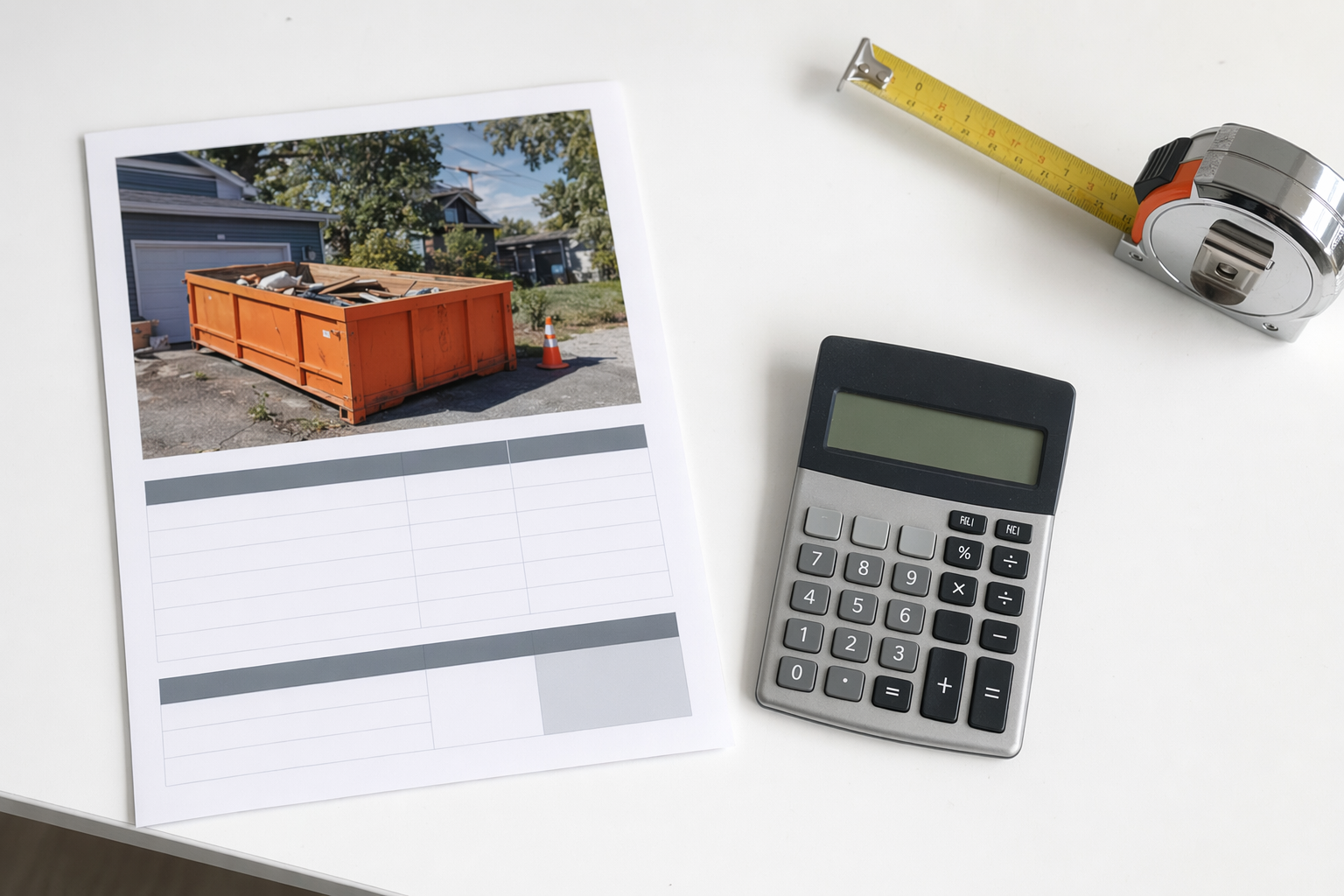
Estimate your debris, then round up one dumpster size, because under-ordering usually costs more than going a little bigger.
Common questions
How do I know if I need a 10-yard or 20-yard dumpster?
If your debris is a small cleanout, one room, or a light remodel, 10 yards may be enough. If you have a basement, kitchen, bath, or mixed household debris that’s adding up fast, 20 yards is usually the safer bet.
Should I rent the bigger size just in case?
Usually yes, if you’re unsure. The next size up is often cheaper than renting a second bin or paying extra fees for overflow or over-tonnage.
What if I’m throwing away concrete or dirt?
Heavy material can hit the weight limit before the bin looks full, so a smaller dedicated container is often the better choice. Confirm local rules and weight limits with the hauler because they vary by area.
Are dumpster sizes and rules the same everywhere?
No. Sizes, weight limits, permit rules, and what items are accepted vary by area and by hauler, so always confirm locally before you book.
Does BinRoute rent dumpsters?
No. BinRoute is a free matching service that connects you with local dumpster-rental and hauling companies. The customer stays in control and chooses who to hire.