Projects
Construction and demolition debris dumpsters
Construction and demolition debris adds up fast, and most people order too small. Here’s the practical way to size a roll-off, separate heavy material, spot the real fees, and get matched with a licensed local hauler.
How to get the size right
A quick, honest way to size a roll-off so you don't pay for a second bin — or for empty air.
- 1 Estimate your debris in cubic yards. Think in pickup-truck loads: one full short-bed load is roughly 2 to 3 cubic yards. Add up the rooms, the pile, or the project — most people under-estimate, so round up one size.
- 2 Match it to a roll-off size. A 10-yard suits a small cleanout or heavy concrete; a 20-yard a whole-home cleanout or roofing; a 30-yard a big renovation; a 40-yard major construction. Between sizes, the next size up is almost always cheaper than a second bin.
- 3 Check the weight limit. Every roll-off includes a tonnage allowance, then charges per ton over it. Heavy debris — concrete, dirt, shingles, tile — fills a small bin by weight long before it fills by volume, so use a smaller container for heavy loads.
- 4 Confirm what's included, then get matched. Get matched, free, with licensed local haulers. Confirm the rental period, the tonnage allowance, the drop-off and pickup, and any fees in writing before the bin arrives — you compare and choose who to hire.
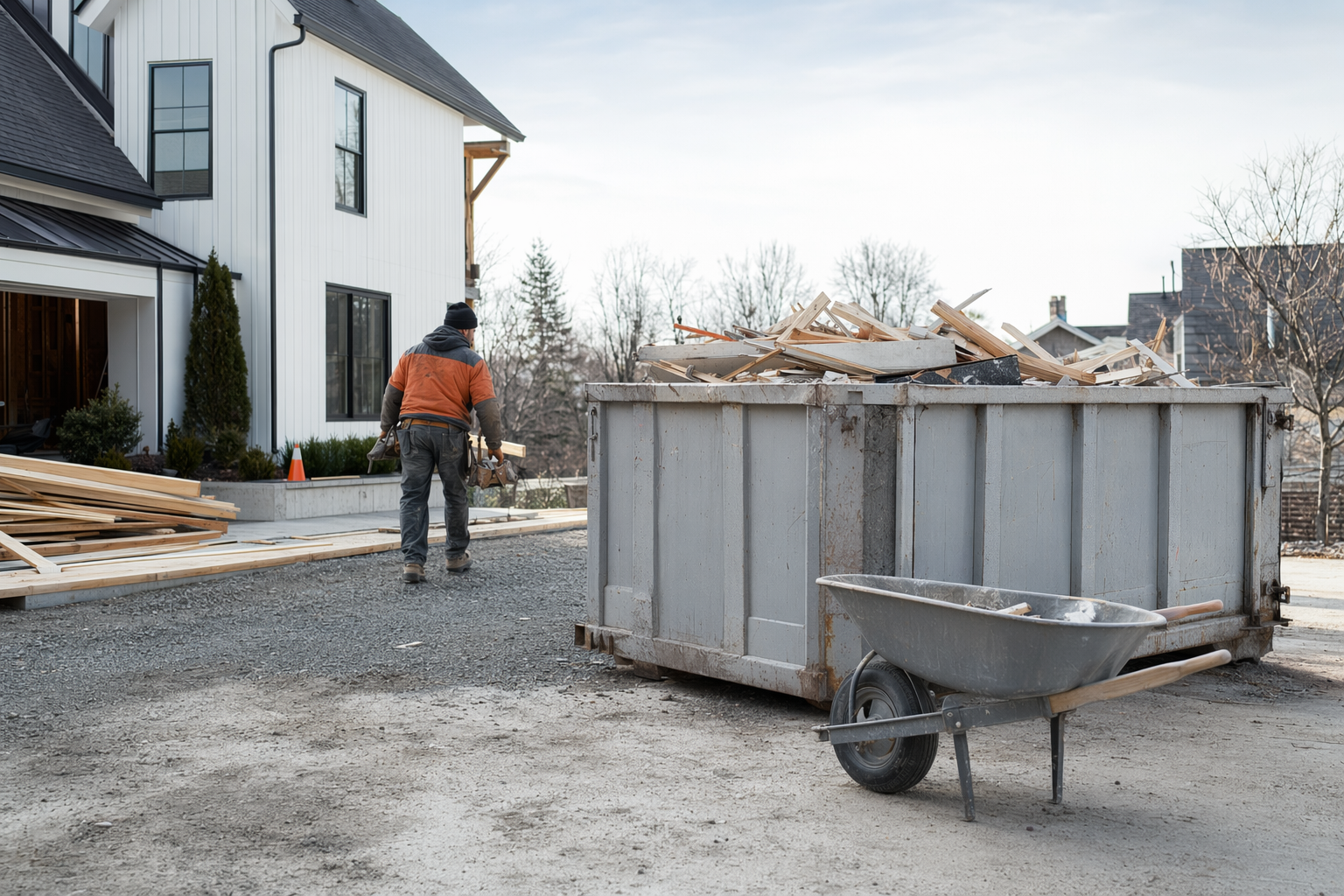
What size dumpster for construction and demolition debris?
For construction and demolition debris, the right size depends on two things: how much space the material takes up and how heavy it is. Most mixed C&D jobs need more room than people think. Wood, drywall, insulation, cabinets, flooring, trim, siding, and packaging get bulky fast, so under-ordering is common.
A rough way to picture size: a 10-yard holds about 3 pickup-truck loads, a 20-yard about 6 loads, a 30-yard about 9 loads, and a 40-yard about 12 loads. On many jobs, a 20-yard works for a small remodel or one-room tear-out, a 30-yard fits a medium renovation or addition, and a 40-yard is common for major construction, large demo, or whole-house cleanout plus tear-out.
Heavy material changes the answer. Concrete, brick, dirt, sand, tile, stucco, plaster, roofing, and masonry can max out the weight allowance long before the dumpster looks full. For those, a smaller dedicated heavy-debris container is usually smarter than one big mixed bin. If you mix a lot of heavy debris into a large dumpster, over-tonnage fees can hit hard.
If you are between sizes, the next size up is usually cheaper than renting a second dumpster after the first one fills early. For more general sizing help, see what size dumpster do I need? and more project guides.
- 10-yard: small demo, dense debris, about 3 pickup loads
- 20-yard: small-to-medium remodel, about 6 pickup loads
- 30-yard: larger renovation or addition, about 9 pickup loads
- 40-yard: major build-out, large demo, about 12 pickup loads
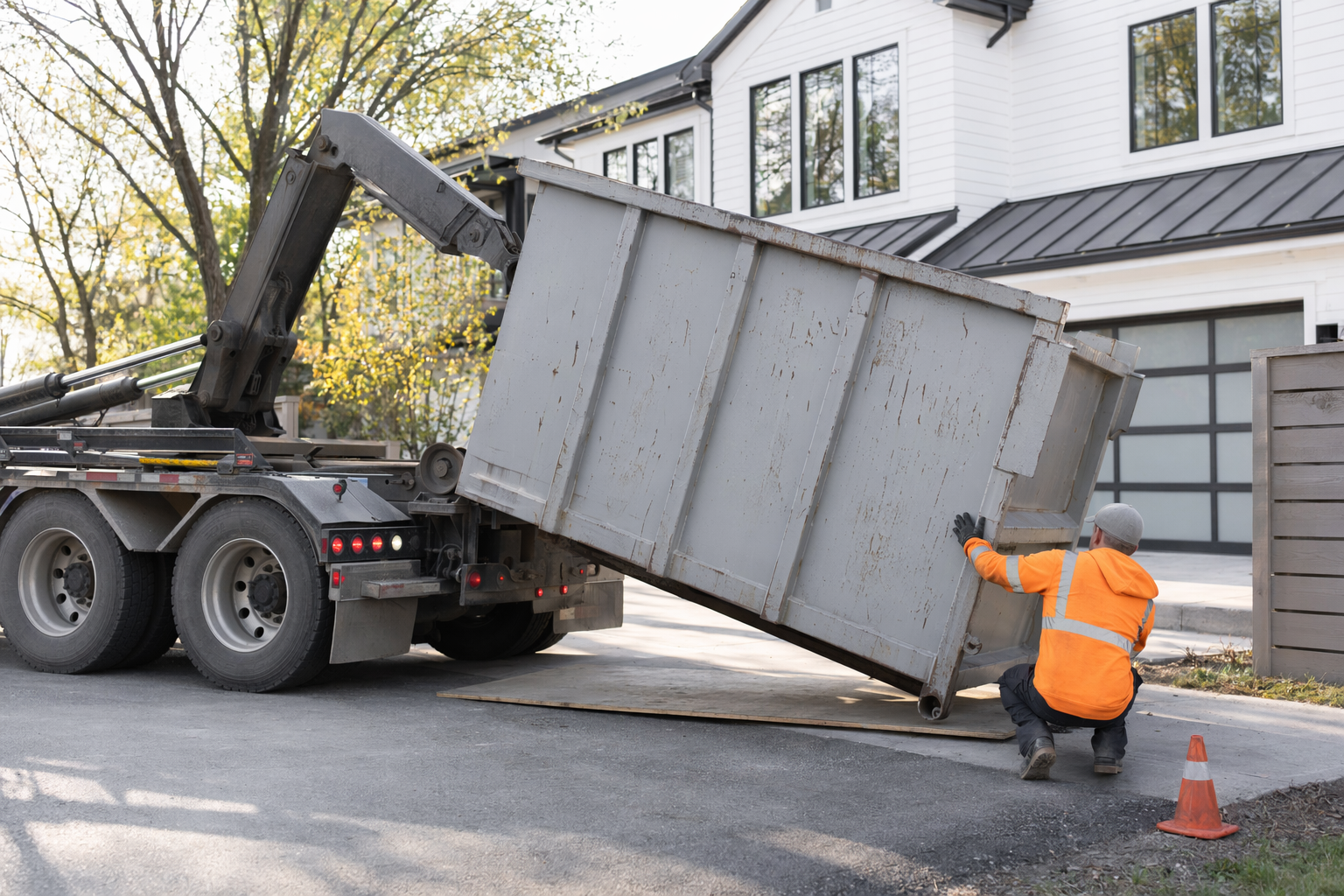
Honest cost range for a C&D dumpster
A typical construction and demolition dumpster rental often runs about $350 to $900+ for common sizes, but that is a general range, not a quote. The real number depends on the dumpster size, your area, the rental period, the included weight or tonnage, and the type of debris going into it.
Lighter mixed construction debris like wood, drywall, insulation, and packaging is usually easier on the weight allowance than concrete, dirt, plaster, brick, shingles, or tile. That matters because weight is often what pushes the bill up. A cheaper base price is not a bargain if the included tonnage is too low for your job.
Urban areas, longer rentals, restricted delivery access, multiple swaps, and heavier loads usually cost more. Smaller bins for clean heavy material can look expensive per cubic yard, but they are often the cheaper move overall because they help avoid over-tonnage on a mixed container.
If you want local price context, start with dumpster cost guides. Just remember: online ranges are for planning only. Before delivery, get the all-in price in writing and confirm exactly what weight is included.
Fees to watch before the dumpster shows up
The big one on construction and demolition jobs is over-tonnage. That means you pay per ton for weight above the included allowance. On a mixed job, one layer of plaster, tile, masonry, or roofing can push a dumpster over faster than people expect.
Other common charges are extra-day fees if you keep the dumpster longer than planned, trip or dry-run fees if the driver cannot safely drop off or pick up the container, and prohibited-item fees if banned material is found in the load. Some areas also have permit or placement costs if the dumpster goes on a public street.
Ask these questions before you book:
1. What is the total price before any overage?
2. How many days are included?
3. How many tons are included?
4. What is the per-ton overage rate?
5. Are there extra fees for swaps, blocked access, or failed pickup?
6. What items are prohibited locally?
You stay in control. Confirm the size, rental period, weight allowance, placement, and all-in price before the dumpster is delivered.
What you can usually throw in — and what needs a separate plan
Many haulers will take common C&D debris such as lumber, drywall, trim, cabinets, flooring, doors, windows, siding, fencing, non-hazardous packaging, and general job-site trash. But rules vary by area, landfill, and hauler, so always confirm locally before loading.
Some materials may be limited, charged differently, or require separation. That often includes concrete, brick, dirt, asphalt, shingles, mattresses, appliances, tires, and large amounts of clean cardboard. Loads with refrigerants, liquids, batteries, paint, solvents, fuels, asbestos, medical waste, or other hazardous or regulated waste need proper local disposal programs, not a regular roll-off.
This is general information only, not legal or hazardous-waste-disposal advice. If you are dealing with regulated, hazardous, or possibly contaminated material, stop and use the proper local disposal program. For demolition work, also verify local rules on permits, recycling requirements, and who is responsible for the debris.
How to keep a C&D dumpster from slowing down the job
Placement matters more on construction sites than people think. Put the dumpster where crews can reach it easily without blocking deliveries, access, or neighbors. Leave enough room for the truck to drop it safely and pick it up later. If the driver arrives and access is blocked by cars, pallets, mud, low wires, or stacked material, you can get a trip fee.
Load the dumpster evenly and do not fill above the top rail. Overfilled containers may be refused for pickup because they are unsafe to haul. Keep clean heavy material separate when possible. That makes pickup easier, keeps the site cleaner, and reduces the odds of overage charges.
A simple job-site plan helps:
- Keep one container for mixed C&D debris
- Use a smaller dedicated bin for concrete, dirt, brick, tile, or shingles when needed
- Don’t let crews toss prohibited items in "just this once"
- Schedule enough rental days so pickup does not become a rush problem
How BinRoute helps you get matched with a local hauler
BinRoute is a free matching service, not a waste-management or hauling company. We do not rent, deliver, haul dumpsters, or dispose of waste. We help you get connected with local dumpster-rental and hauling companies so you can compare your options and choose who to hire.
To get matched, you share basic contact and project details only: name, phone, optional email, project type, ZIP code, and preferred language. That helps us point you toward participating local companies for your kind of job. We do not need financial account numbers, Social Security numbers, income, or sensitive personal records.
Before you agree to anything, verify that the hauler is licensed and insured for your area, and confirm the dumpster size, rental period, tonnage allowance, placement rules, and all-in price in writing. When you are ready, use Get matched to start.
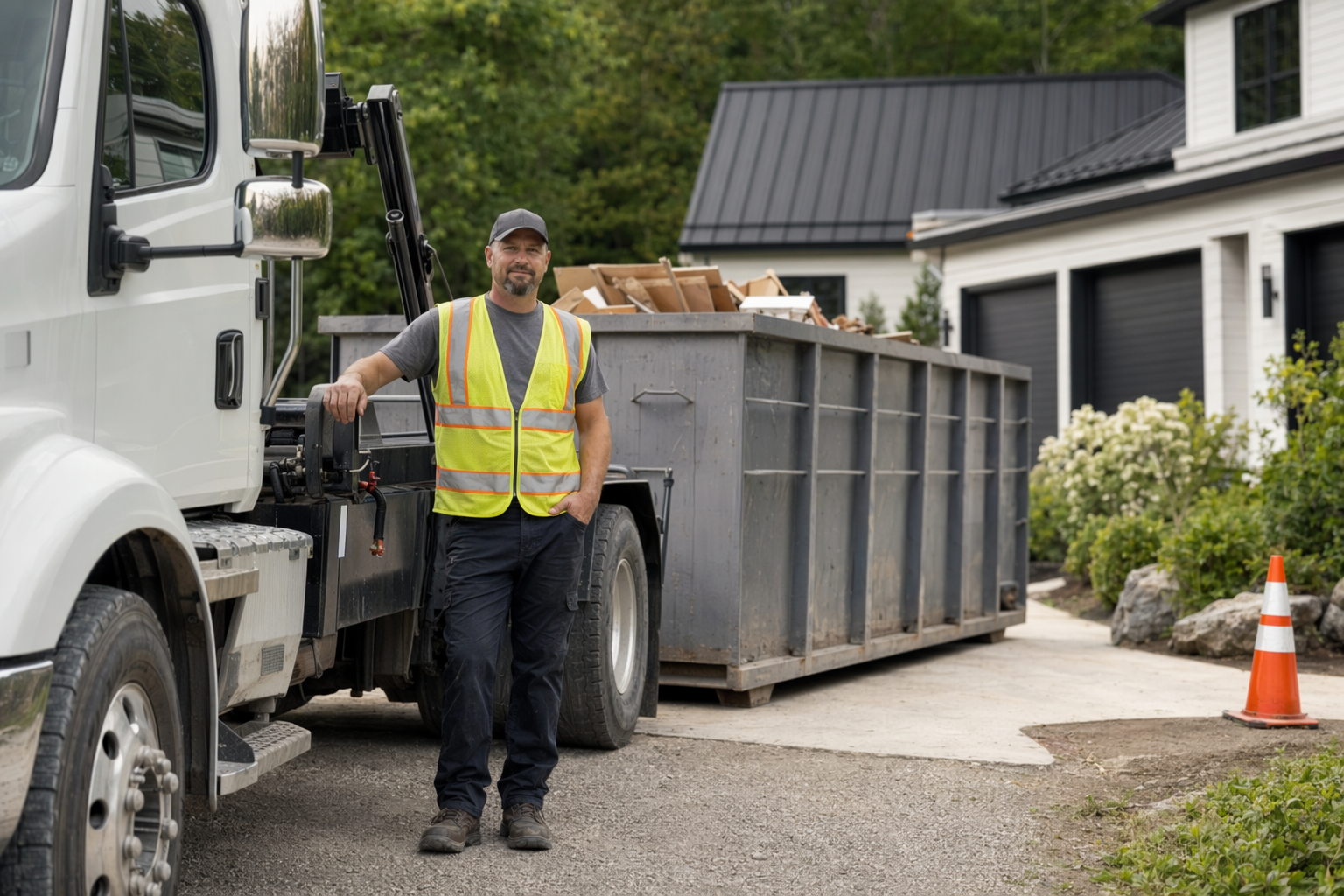
For construction and demolition debris, most people need a bigger dumpster than they think, and heavy materials should usually go in a separate smaller bin so over-tonnage fees do not eat them alive.
Common questions
What size dumpster do I need for construction debris?
For many small-to-medium remodels, a 20-yard is a common starting point. Bigger renovations, additions, and demo jobs often need a 30-yard or 40-yard, and heavy debris may need a separate smaller container because weight, not volume, becomes the limit.
How much does a construction dumpster cost?
A common general range is about $350 to $900+ depending on size, area, rental period, included tonnage, and the type of debris. That is not a quote, and heavy materials can raise the final cost fast through over-tonnage fees.
Can I put concrete and drywall in the same dumpster?
Sometimes, but it is often a bad value on a big C&D job because concrete is very heavy. Many jobs save money by keeping concrete or other dense material in a smaller dedicated container and using a separate bin for lighter mixed debris.
Do I need a permit for a construction dumpster?
Maybe. If the dumpster goes on your private property, you may not need one, but street placement often requires a local permit. Rules vary by city and who is responsible varies too, so confirm locally before delivery.
What is the most common surprise fee?
Over-tonnage is the one that catches people most often, especially on demolition and heavy-material jobs. Also watch for extra-day, trip or dry-run, and prohibited-item fees, and get the all-in price in writing first.
Does BinRoute rent dumpsters directly?
No. BinRoute is a free matching service that connects you with local dumpster-rental and hauling companies. You compare options, confirm the details directly, and decide who to hire.