Guides
What you can and can't put in a dumpster
Most roll-off dumpsters allow common household debris and construction waste, but they usually ban hazardous materials and many “special” items. Here’s the practical checklist to help you avoid rejected loads and surprise fees—rules vary by area.
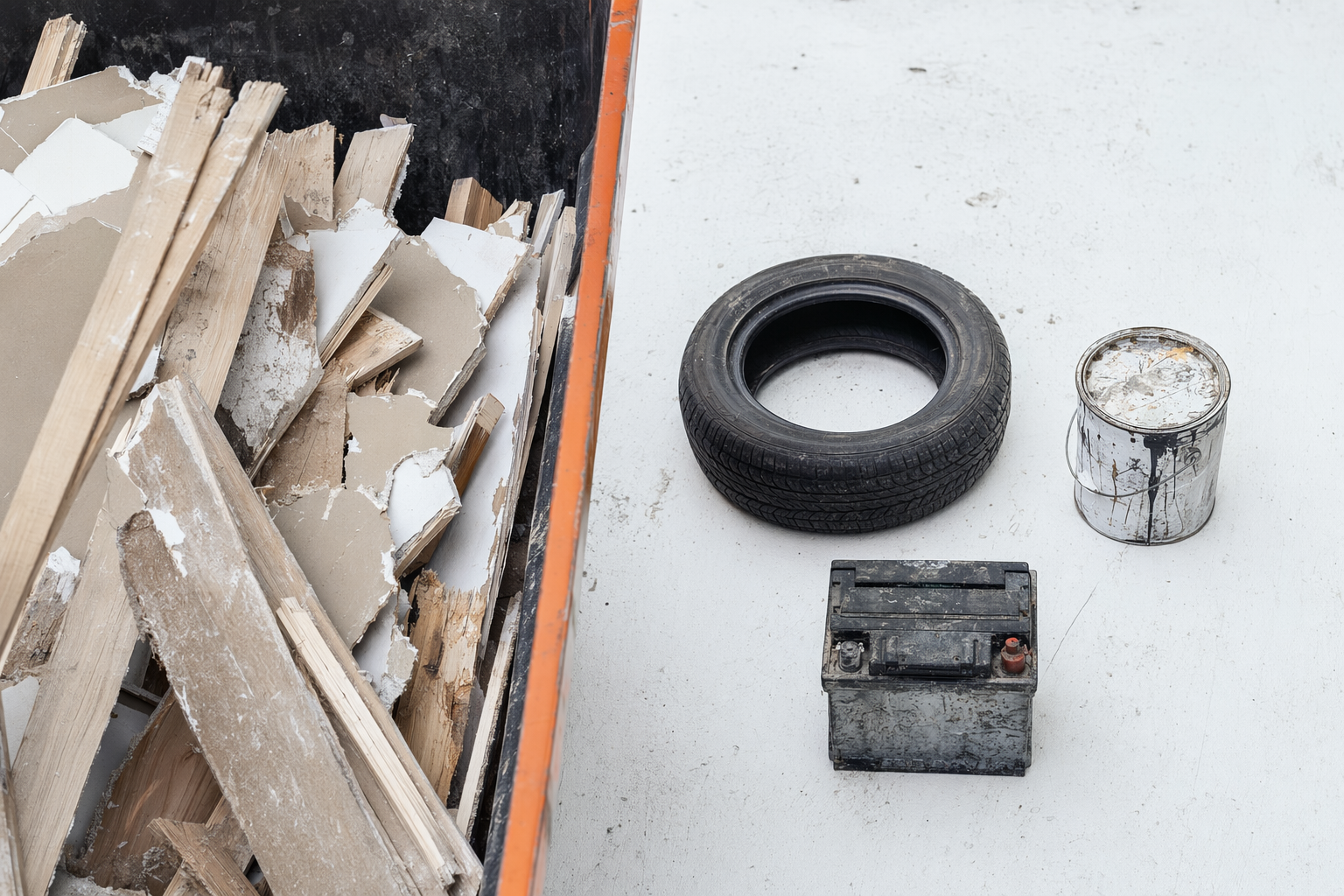
Quick answer: what’s usually allowed vs. usually banned
Most haulers will take clean, solid debris like drywall, lumber, roofing shingles (in many areas), and regular construction waste. They typically do NOT take hazardous waste or anything that can leak, explode, or contaminate other loads.
As a general rule, assume these categories are banned in most places unless your local hauler specifically says otherwise:
- Liquids (paint, fuel, solvents, gasoline, oil), chemicals, and unknown waste
- Tires
- Batteries (car batteries and many household batteries)
- Electronics (TVs, computers, monitors)
- Paint and paint-related products (including stains/varnish)
- Propane tanks / cylinders and pressurized containers
- Medical waste
- Asbestos, regulated demolition waste, or anything you suspect is hazardous
If you’re not sure about an item, don’t guess—ask the dumpster rental company before it arrives or before you fill the bin.

What you can usually throw in (by common project)
Here are the kinds of debris that are commonly accepted for roll-off dumpsters. Acceptance can still vary by local rules and the hauler’s processing agreements, so confirm locally.
Typical home cleanout / estate cleanout:
- Furniture (if not leaking/contaminated)
- Carpet and padding
- Drywall and wall trim
- Small amounts of household junk
- Yard debris (if allowed in your area)
Typical renovation / remodel:
- Drywall, lath, and insulation (non-hazardous)
- Wood scraps, studs, paneling
- Flooring materials (carpet typically yes, but check for padding and special flooring)
- Tile and small amounts of stone (varies—heavy waste can affect weight charges)
Typical roofing tear-off / construction:
- Roofing shingles and underlayment (often allowed, but check)
- Concrete and masonry from clean demolition (again, weight matters)
Common “surprise fee” items: when loads get rejected or charged extra
Even when an item is not totally banned, some haulers charge extra to handle it. The most common reasons are weight limits, contamination, and special handling requirements.
Watch for these situations:
- Prohibited items: if something banned shows up, the hauler may refuse the load, require removal, or charge a prohibited-item fee.
- Over-Weight: heavy debris (concrete, dirt, brick, tile) often fills a dumpster by WEIGHT before volume. If you go over the included weight allowance, you can be charged per ton over.
- Contaminated loads: mixing clean construction debris with household garbage, liquids, or unknown waste can lead to extra handling or rejection.
- Extra days / trips: if you keep the bin longer than planned or they need additional visits to fix a problem, expect extra charges.
Before delivery, get the all-in price in writing—including the over-tonnage rate, extra-day rate, and any prohibited-item or special-handling fees—so you’re not surprised after the fact.
Special cases: items people ask about most
Because rules vary by area, think of these as “check first” items.
- Paint, stains, solvents: usually banned in dumpsters. For hazardous or regulated materials, use your local household hazardous waste program.
- Propane tanks / compressed cylinders: usually not accepted. Contact the proper local disposal or exchange options.
- Tires: usually banned. Look for local tire recycling programs.
- Batteries: commonly banned or restricted. Recycle through proper local programs.
- Electronics (TVs, computers, monitors): usually banned. Use e-waste recycling.
- Large appliances: sometimes accepted if drained/dry, but often treated as special handling—confirm with the hauler.
- Tree stumps/large logs: sometimes accepted, sometimes not, and weight can be high—confirm.
If you’re dealing with demolition of older buildings, don’t assume “it’s just debris.” If you suspect asbestos or other regulated materials, stop and use the proper local programs and qualified professionals.
How to stay compliant: what to do before you fill the bin
A quick process can prevent delays and extra cost.
- Confirm your item list with the rental company (ask if each category is allowed).
- Ask about prohibited-item fees and whether any items trigger rejection.
- Verify weight/tonnage allowance for your dumpster size—heavy loads usually hit weight limits first.
- Keep liquids out. Even “small amounts” can create contamination and disposal issues.
- Place the bin where debris can be loaded safely and without blocking access.
Finally, if you’re between sizes: round UP. Most people under-order because they underestimate how fast heavy debris fills. When between two dumpster sizes, the next size up is often cheaper than renting a second bin.
How BinRoute helps (and what to verify with haulers)
BinRoute is a free matching service. We don’t rent or haul dumpsters, and we don’t dispose of waste—we connect you with licensed, insured local dumpster-rental companies so you can get accurate, local rules and an honest all-in cost.
To get matched, start here: Get matched. Share your project type and ZIP code, and tell us your preferred language. Then, before you say “yes” to a delivery, confirm the dumpster size, rental period, weight allowance, placement rules, and the all-in price.
If you want size help for your specific job, check the relevant guide hub: Guides and project pages like Projects. For pricing drivers and what affects your cost, see Dumpster costs.
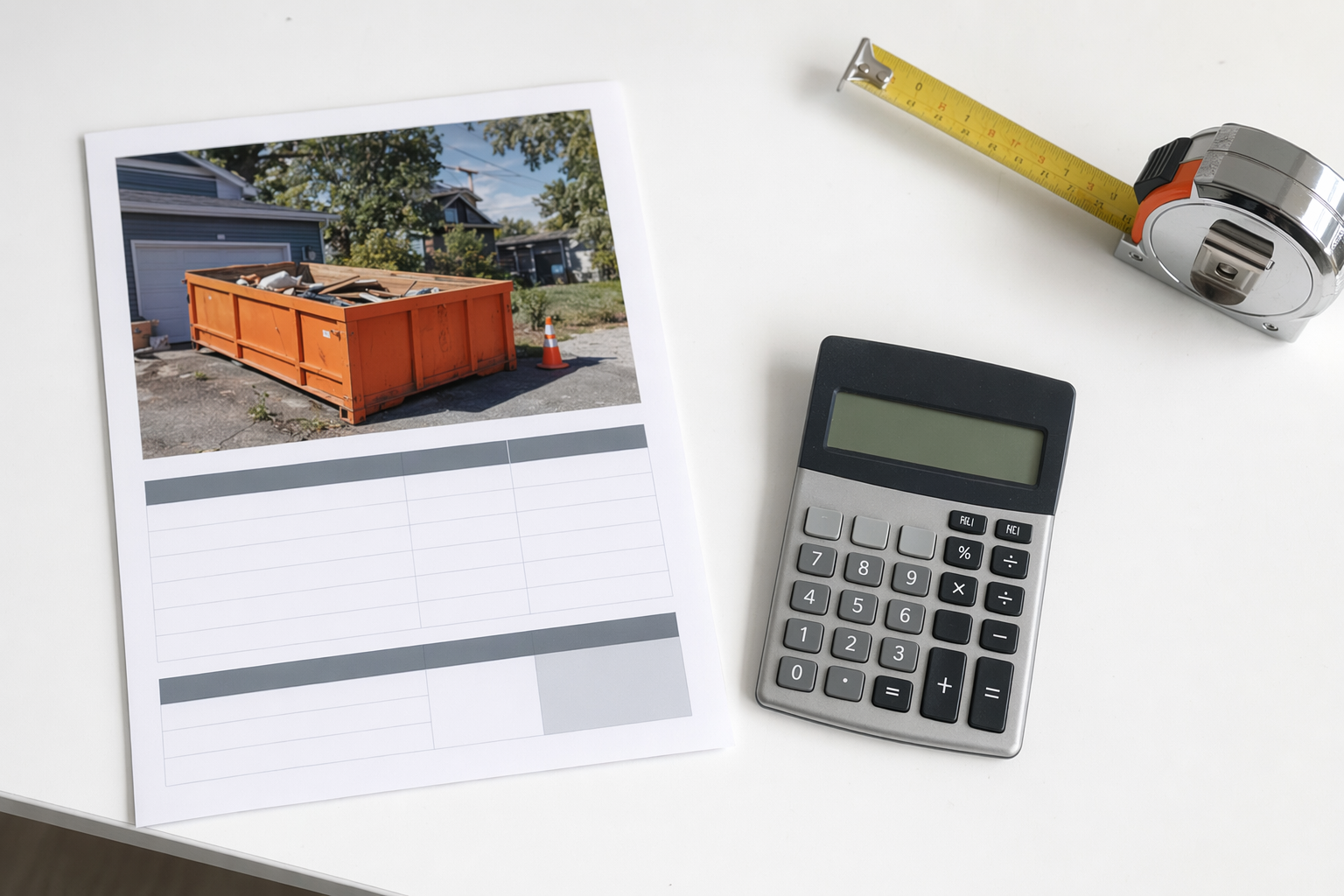
Bring only permitted, solid debris—most hazardous items, liquids, tires, batteries, paint, and electronics are banned in most places—and confirm your item list locally to avoid rejected loads or extra fees.
Common questions
Can I put paint in a roll-off dumpster?
In most areas, paint and paint-related products are not accepted because they’re treated as hazardous or regulated waste. Use your local household hazardous waste program or ask your hauler what approved options they offer.
Are tires allowed in a dumpster?
Usually no. Tires are commonly prohibited or restricted, and they often need separate recycling. Confirm locally with the dumpster rental company before putting tires in the bin.
Why did my dumpster company ask about electronics and batteries?
Electronics and many batteries are often banned or require special handling to prevent contamination. Even if some items are “small,” they can trigger rejected loads or extra fees.
What’s the biggest risk—getting rejected or getting charged extra?
Both happen. Prohibited items can lead to refusal or removal, while heavy debris can push you over the weight allowance and create per-ton overage charges. That’s why you should get the all-in price and the prohibited-item/over-tonnage terms in writing.
Do the rules vary by location?
Yes. What’s allowed, how weight limits work, and whether certain items are accepted can vary by city/state and by hauler’s processing rules. Always confirm locally with the company you hire.