Projects
Yard waste and landscaping debris dumpsters
Doing a big yard cleanup, tree job, or storm cleanup? Here’s the practical truth on what size roll-off usually works for brush, branches, soil, and mixed landscaping debris, what it may cost, and where extra fees show up.
How to get the size right
A quick, honest way to size a roll-off so you don't pay for a second bin — or for empty air.
- 1 Estimate your debris in cubic yards. Think in pickup-truck loads: one full short-bed load is roughly 2 to 3 cubic yards. Add up the rooms, the pile, or the project — most people under-estimate, so round up one size.
- 2 Match it to a roll-off size. A 10-yard suits a small cleanout or heavy concrete; a 20-yard a whole-home cleanout or roofing; a 30-yard a big renovation; a 40-yard major construction. Between sizes, the next size up is almost always cheaper than a second bin.
- 3 Check the weight limit. Every roll-off includes a tonnage allowance, then charges per ton over it. Heavy debris — concrete, dirt, shingles, tile — fills a small bin by weight long before it fills by volume, so use a smaller container for heavy loads.
- 4 Confirm what's included, then get matched. Get matched, free, with licensed local haulers. Confirm the rental period, the tonnage allowance, the drop-off and pickup, and any fees in writing before the bin arrives — you compare and choose who to hire.
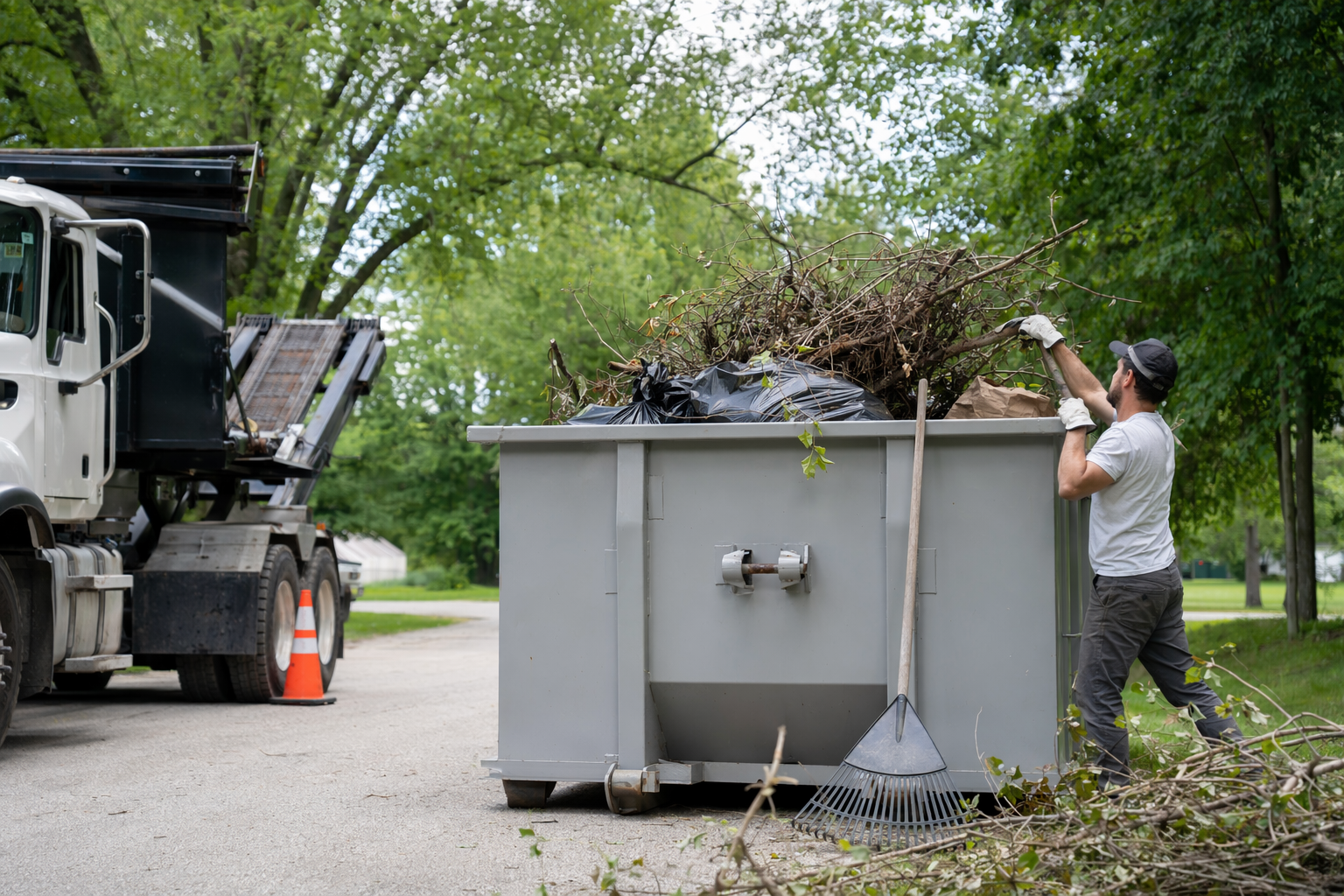
What size dumpster for yard waste and landscaping debris?
For yard waste, most people under-order. Brush and branches look light in a pile, but they take up a lot of space fast. A roll-off size is measured in cubic yards, and a good rough way to picture that is in pickup-truck loads.
As a general guide, a 10-yard dumpster holds about 3 to 4 pickup loads, a 15-yard about 4 to 5, a 20-yard about 6 to 8, and a 30-yard about 9 to 12. For a small yard cleanup with bags, shrubs, and light trimming, a 10-yard is often enough. For a larger landscaping job, moderate tree trimming, or a cleanup around a whole property, a 15-yard or 20-yard is usually the safer choice. For major storm cleanup, heavy brush, lots of limbs, or a big property overhaul, a 30-yard may make sense.
The important catch: dirt, sod, stumps, rocks, wet leaves, and logs can get heavy very quickly. Heavy debris fills a bin by weight before it fills by volume. If your job includes a lot of soil or other dense material, a smaller dedicated container is usually smarter than one big box. When you are between sizes for light brush and branches, the next size up is almost always cheaper than renting a second dumpster. If you want a broader sizing guide, see what size dumpster do I need.
What yard waste can usually go in the dumpster?
In many areas, common yard and landscaping debris can go in a roll-off: branches, brush, leaves, hedge clippings, small limbs, weeds, plants, and sometimes clean wood from outdoor work. Some haulers also allow sod and soil, but often only in smaller amounts or only in a dedicated heavy-material container.
What trips people up is mixing materials. One hauler may accept clean green waste at one price, but charge more if the bin also has fencing, treated wood, lumber, trash, patio debris, plastic pots, or other mixed junk. Stumps, large logs, railroad ties, pressure-treated wood, and landscape timbers may have separate rules or higher disposal costs. Wet yard waste can also push the weight up.
Rules vary by area and by hauler, so confirm locally before delivery. If you have chemicals, pesticides, fuel, paint, pool chemicals, propane tanks, batteries, medical waste, or other hazardous or regulated waste, do not toss them in. Use the proper local disposal program.
Honest cost range for a yard waste dumpster
For a yard waste or landscaping dumpster, a common general range is about $300 to $750 for a typical rental. Smaller containers for light green waste may land near the lower end. Larger bins, longer rentals, higher-cost areas, and loads with heavier material usually cost more. These are not quotes.
The real price depends on five things: the dumpster size, your area, the rental period, the included weight or tonnage, and exactly what is going in the bin. A 10-yard for brush in one town may cost less than a 15-yard in another. A mixed landscaping load with soil, fencing, or wood can price differently than clean leaves and branches.
If you are comparing options, ask for the all-in price in writing before the dumpster is dropped off. You can also review general dumpster costs and compare with other project guides so you know what is normal in your area.
Fees to watch: over-tonnage, extra days, and dry runs
The biggest surprise fee on landscaping jobs is over-tonnage. A bin full of fluffy brush is one thing. A bin with wet leaves, dirt, sod, logs, rocks, or stumps is another. Many rentals include a set weight allowance, and if you go over it, you usually pay a per-ton charge for the extra weight.
Other common fees are extra-day charges if you keep the dumpster longer than the included rental period, trip or dry-run fees if the driver comes out but cannot drop or pick up the container because the spot is blocked, and prohibited-item fees if banned material is found in the load.
Ask these questions up front:
- What weight is included?
- What is the per-ton charge if I go over?
- How many days are included?
- What is the extra-day fee?
- Are stumps, dirt, sod, logs, or treated wood allowed?
- Is there any trip fee if the driveway or street is blocked?
For heavy landscaping material, it is often cheaper to order the right small heavy-debris container from the start than to overload a larger mixed-yard-waste bin.
Placement, permits, and driveway reality
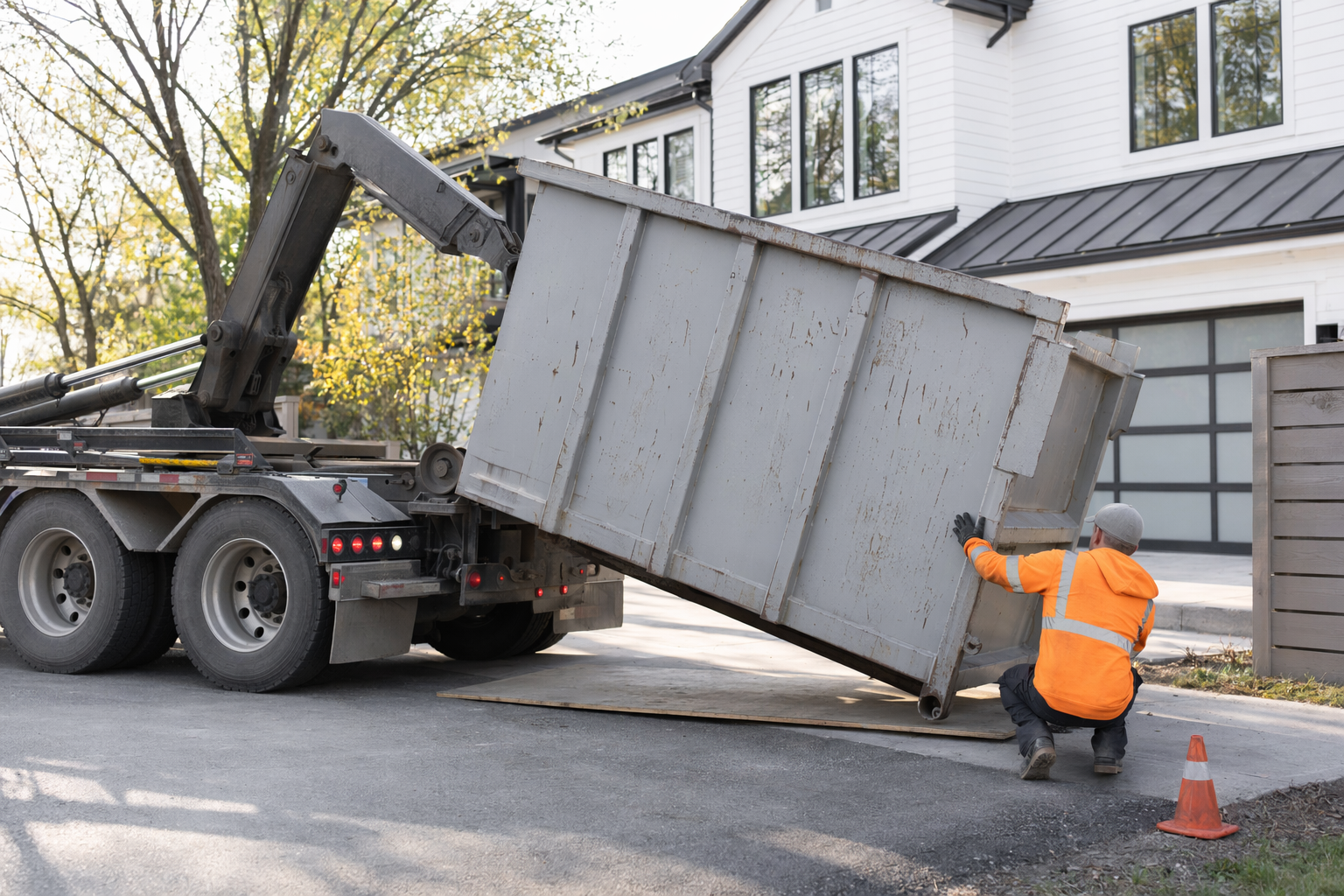
Most people place a roll-off in the driveway or on private property if there is enough room and solid access for the truck. That is often the simplest option. Put the dumpster where workers can reach it easily, but leave enough clearance for the delivery truck to roll it off safely.
If the dumpster needs to sit on a street, alley, or other public space, a permit may be required. Who gets that permit varies by city and by hauler, so confirm locally. BinRoute gives general information only and does not handle permits, delivery, hauling, or disposal.
It also helps to protect the surface and clear the area first. Move cars, keep gates open, and watch overhead wires or branches. The customer stays in control by confirming the size, rental period, weight allowance, placement, and all-in price before delivery.
How BinRoute helps you get matched with a local hauler
BinRoute is a free matching service. We do not rent, deliver, haul dumpsters, or dispose of waste. We help you get connected with local participating haulers so you can compare your options and choose who to hire.
To get matched, you share basic contact and project intent only: name, phone, optional email, project type, ZIP code, and preferred language. Then you can talk with a local company about container size, what material they accept, the rental period, the tonnage allowance, and the all-in price.
Use get matched when you are ready, and ask whether the hauler is licensed and insured for your area. Verify it yourself before you book. That way you stay in control of the job, the price, and the pickup plan.
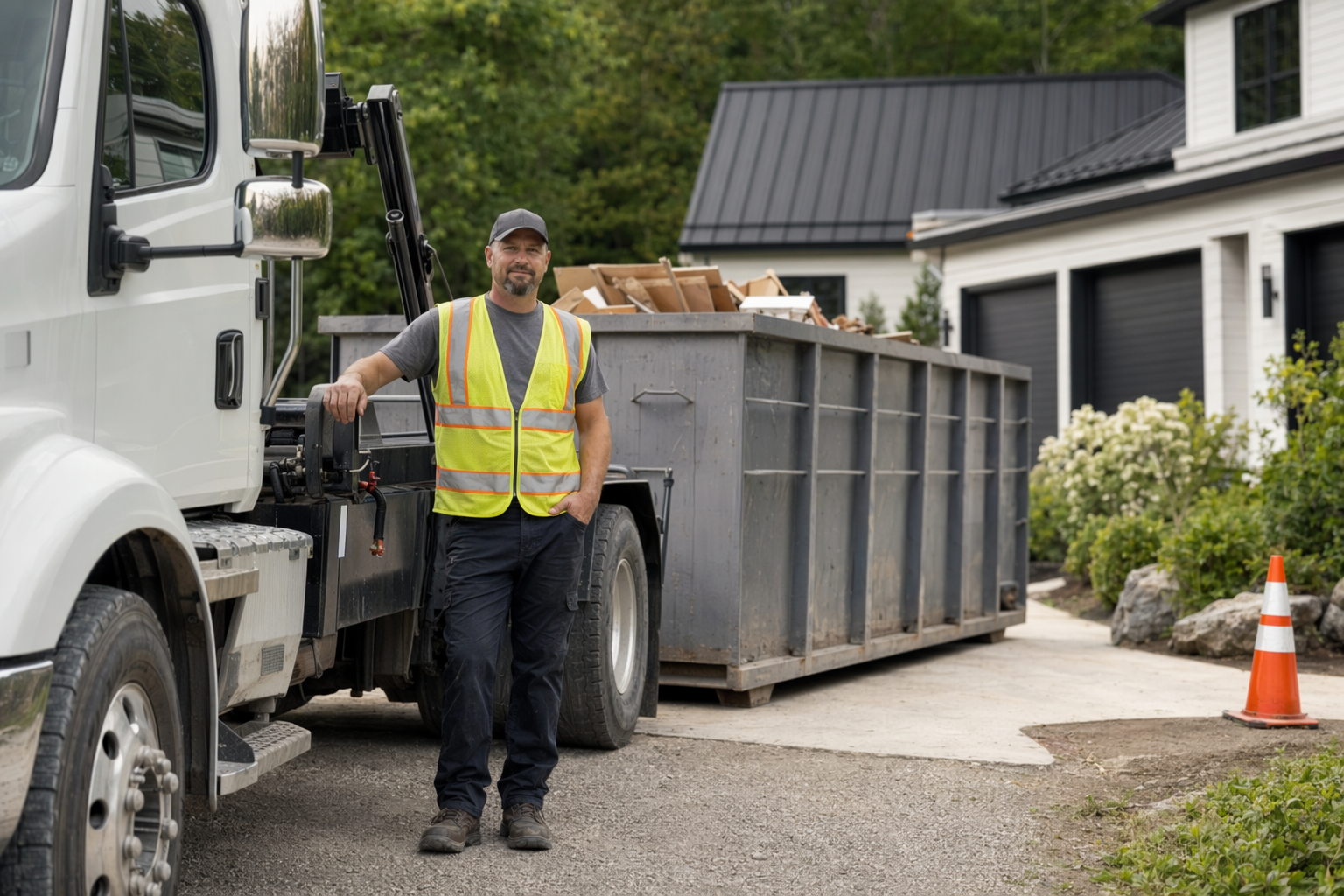
For yard cleanup, brush takes more room than people expect and dirt weighs more than people expect, so size up for volume, size down for heavy material, and get the all-in price in writing before delivery.
Common questions
Can I put branches, leaves, and grass clippings in a roll-off dumpster?
Usually yes, but the exact rules depend on the local hauler and landfill or compost rules in your area. Always confirm what counts as yard waste before delivery.
What size dumpster do I need for tree removal?
For light limbs and brush, many people use a 15-yard or 20-yard. If the job includes large logs, stumps, or a lot of wood, weight becomes the bigger issue, so ask about a smaller dedicated container for heavy material.
Can I throw dirt and sod in the same dumpster as brush?
Sometimes, but that mix can get heavy fast and may change the price. Many haulers prefer dirt and sod in a smaller dedicated dumpster because over-tonnage fees can add up quickly.
How much does a yard waste dumpster cost?
A typical general range is about $300 to $750, but that is not a quote. The real number depends on size, area, rental length, weight allowance, and whether the load is clean yard waste or mixed debris.
Are stumps allowed in a landscaping dumpster?
Sometimes yes, sometimes no, and sometimes only for an added charge. Stumps are heavy and may have separate handling rules, so ask before loading them.
Do I need a permit for a yard waste dumpster?
Maybe. If the dumpster goes on private property, often no permit is needed, but if it sits on a street or public space, local rules may require one. Confirm with your city and the hauler.