Projects
Garage cleanout — sizing a dumpster for the garage
Cleaning out a packed garage usually takes more dumpster than people expect. Here’s the practical way to size it, what it usually costs, and which junk you need to keep out.
How to get the size right
A quick, honest way to size a roll-off so you don't pay for a second bin — or for empty air.
- 1 Estimate your debris in cubic yards. Think in pickup-truck loads: one full short-bed load is roughly 2 to 3 cubic yards. Add up the rooms, the pile, or the project — most people under-estimate, so round up one size.
- 2 Match it to a roll-off size. A 10-yard suits a small cleanout or heavy concrete; a 20-yard a whole-home cleanout or roofing; a 30-yard a big renovation; a 40-yard major construction. Between sizes, the next size up is almost always cheaper than a second bin.
- 3 Check the weight limit. Every roll-off includes a tonnage allowance, then charges per ton over it. Heavy debris — concrete, dirt, shingles, tile — fills a small bin by weight long before it fills by volume, so use a smaller container for heavy loads.
- 4 Confirm what's included, then get matched. Get matched, free, with licensed local haulers. Confirm the rental period, the tonnage allowance, the drop-off and pickup, and any fees in writing before the bin arrives — you compare and choose who to hire.
What size dumpster for a garage cleanout?
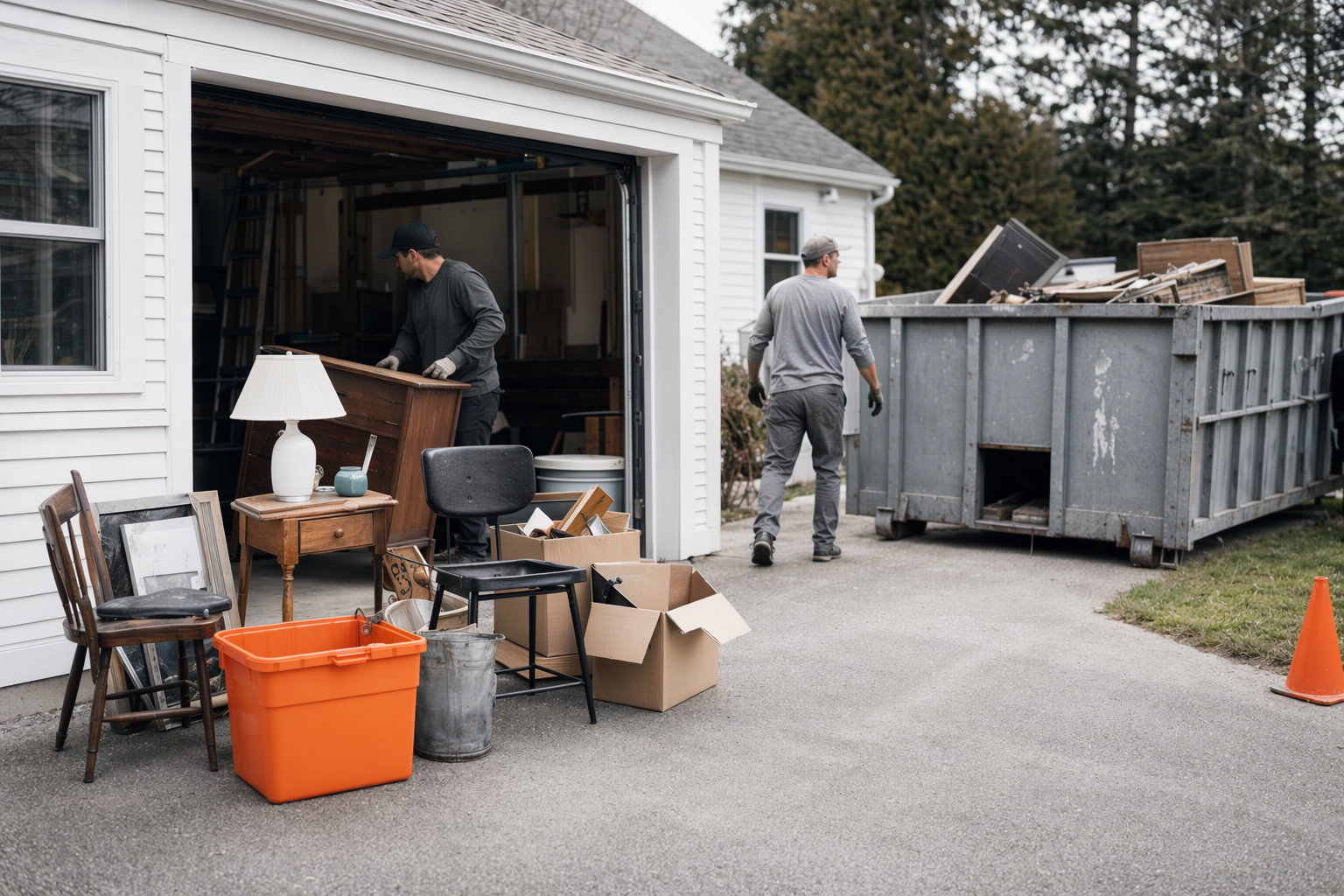
For most garage cleanouts, the right roll-off is usually a 10-yard, 15-yard, or 20-yard dumpster. A 10-yard holds about 3 to 4 pickup-truck loads, a 15-yard about 4 to 5, and a 20-yard about 6 to 8. If your garage has old shelving, broken furniture, boxes, yard tools, toys, storage totes, and years of mixed junk, a 20-yard is often the safer choice.
People under-order all the time because garage junk looks smaller when it is stacked on shelves and pushed against walls. Once you pull everything out, break down bulky items, and start tossing loose debris into a bin, the volume adds up fast. If you are between sizes, the next size up is usually cheaper than filling a small dumpster and ordering a second one.
A rough rule of thumb: a lightly cluttered one-car garage may fit in a 10-yard, a full one-car or modest two-car garage often needs a 15-yard, and a packed two-car garage with bulky junk often lands in 20-yard territory. If the cleanout includes heavy material like concrete chunks, dirt, brick, tile, or lots of shingles, do not size by volume alone. Heavy debris fills a dumpster by weight before it fills by space, so ask for a smaller dedicated heavy-load container instead.
If you want a broader sizing guide before you book, see what size dumpster do I need? or browse other project guides.
What a garage cleanout dumpster usually costs
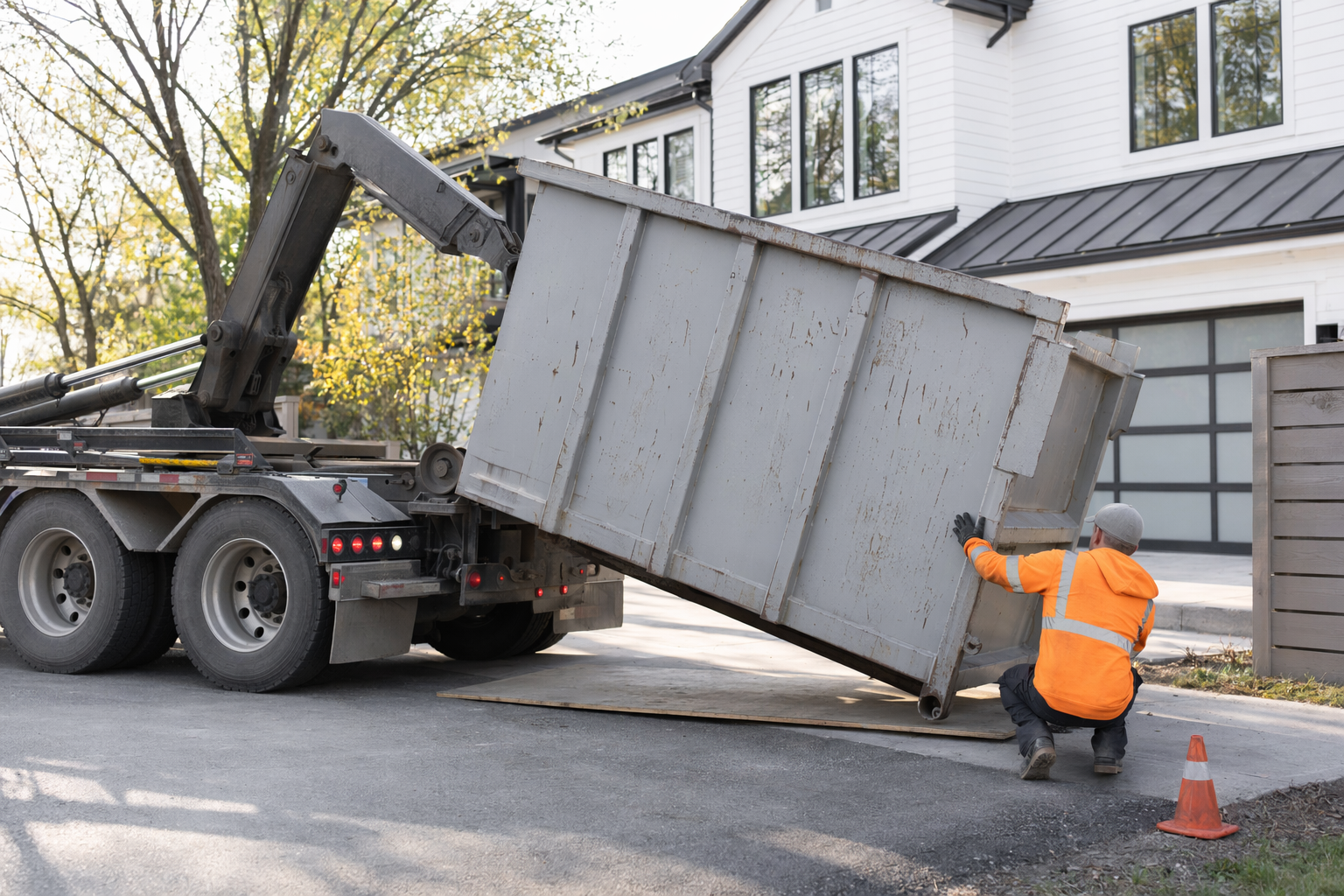
A garage cleanout dumpster commonly runs about $300 to $750 for a small-to-mid roll-off in many parts of the US. In some areas, a basic 10-yard may start a little lower, while a 20-yard in a higher-cost market can run more. These are general ranges, not quotes.
The real price depends on five things: dumpster size, your area, rental period, included weight or tonnage, and the type of debris. Mixed household junk is usually priced differently than dense material. If your cleanout is mostly old boxes, toys, plastic bins, and broken furniture, that is one thing. If it includes books, exercise equipment, car parts, tile, or bags of old material, weight can push the cost up.
Before you hire anyone, get the all-in price in writing. Ask what size you are getting, how many days are included, how much weight is included, and what the charge is if you go over. That matters more than a low starting number on the phone.
For a wider look at pricing, see dumpster rental costs.
The surprise fees to watch for
The big one is over-tonnage. Most roll-off rentals include a weight allowance, and if your load goes over it, you can be charged per ton over the limit. Garage cleanouts seem light, but they can get heavy fast if you toss books, tools, metal shelving, engine parts, flooring, or wet junk that has been sitting for years.
Other common fees are extra-day fees if you keep the dumpster longer than the included rental period, trip or dry-run fees if the driver comes out but cannot safely drop or pick up the bin, and prohibited-item fees if banned material is found in the load. Some haulers also charge if debris is piled above the top edge and the container is not safe to haul.
Ask these questions plainly before delivery:
- What is the total price before any extras?
- How many days are included?
- How much weight is included?
- What is the charge per ton if I go over?
- What items are not allowed?
- Is there a trip fee if the truck cannot deliver or pick up?
That five-minute conversation can save you real money.
What you can usually throw in — and what to keep out
A garage cleanout dumpster usually accepts general household junk and non-hazardous clutter: old furniture, cardboard, toys, shelving, wood scraps, clothes, non-freon appliances in some areas, and other basic debris from cleaning out storage space. Rules vary by hauler and by area, so always confirm your exact load before the dumpster is delivered.
Items that are often restricted or banned include paint, solvents, oil, gasoline, propane tanks, batteries, chemicals, asbestos, medical waste, and other hazardous or regulated material. Tires, mattresses, TVs, computer monitors, and refrigerators may be accepted only with special approval or extra fees in some places, and not at all in others.
If you have hazardous, medical, or regulated waste, use the proper local disposal program. BinRoute provides general information only and is a free matching service, not a hauling or disposal company, so the local hauler and local rules are what count.
One more practical point: do not mix heavy clean fill like concrete or dirt into a general garage-junk dumpster unless the hauler says it is allowed and priced for that. Heavy material should usually go into a smaller dedicated container.
Placement, access, and permit questions
Most people place a garage cleanout dumpster in the driveway so they can walk junk straight out of the garage and into the bin. Make sure the truck has room to roll the container off safely and that parked cars, low wires, tree limbs, and tight turns will not block delivery.
If the dumpster has to go on a public street, sidewalk area, or other public space, you may need a permit depending on local rules. In some places the customer handles that, and in others the hauler may help explain the process. Always verify locally because permit rules vary a lot by city and county.
Keep the loading area clear, spread debris evenly, and do not load material above the top edge. The customer stays in control here: confirm the placement, rental period, tonnage allowance, and all-in price before delivery.
How BinRoute helps you get matched
BinRoute is a free matching service. We do not rent, deliver, haul, or dispose of dumpsters. We help you connect with licensed, insured local dumpster-rental and hauling companies so you can compare your options and choose who to hire.
To get matched, you share basic contact and project intent only: name, phone, optional email, project type, ZIP code, and preferred language. Then you can talk with a local hauler about size, allowed materials, timing, placement, and price. Always verify that the company is licensed and insured, and get the all-in price in writing before you agree.
If you are ready, start here: get matched.
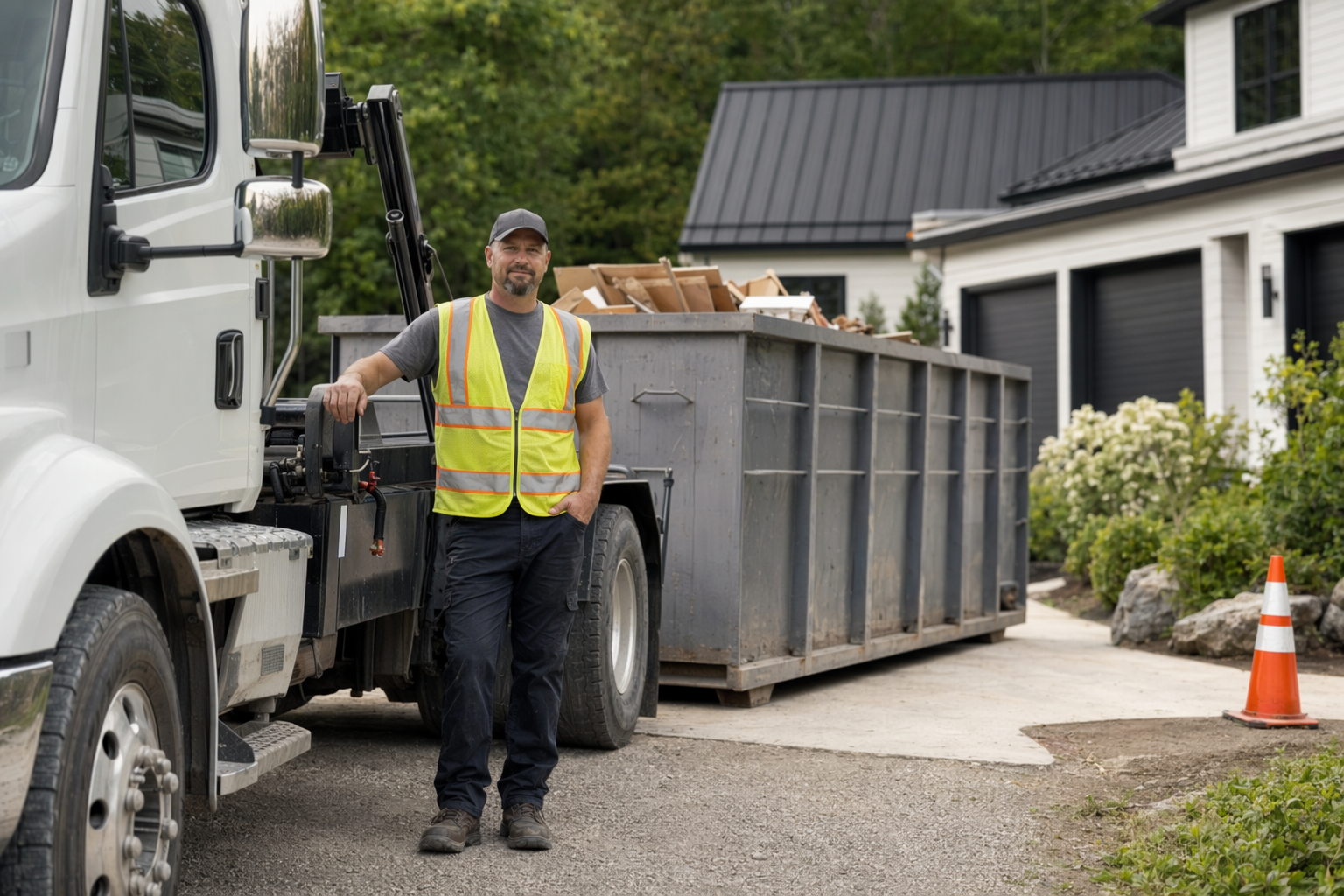
For most garage cleanouts, a 15- or 20-yard dumpster is the smart choice, and you should confirm the total price, weight limit, and banned items before it is delivered.
Common questions
Is a 10-yard dumpster enough for a garage cleanout?
Sometimes, yes — but only for a smaller or lightly cluttered garage. If the garage is packed floor to ceiling or has bulky furniture and shelving, a 15-yard or 20-yard is often the safer bet.
How many pickup loads is a garage cleanout dumpster?
A 10-yard is about 3 to 4 pickup loads, a 15-yard about 4 to 5, and a 20-yard about 6 to 8. Exact capacity depends on how bulky the junk is and how well it breaks down.
Can I throw old paint and chemicals from the garage into the dumpster?
Usually no, or not without special rules. Paint, chemicals, fuel, oil, batteries, and similar hazardous items should go through the proper local disposal program.
Why did the price go up after the dumpster was picked up?
The most common reasons are over-tonnage, extra rental days, prohibited items, or a trip fee. Ask for the all-in price, included weight, and overage charge in writing before delivery.
Do I need a permit for a garage cleanout dumpster?
Usually not if it stays on private property like a driveway, but street placement may require one. Permit rules vary by city, so confirm locally.
What information does BinRoute need to help me get matched?
Just basic contact and project details: your name, phone, optional email, project type, ZIP code, and preferred language. BinRoute is free for the customer and does not collect financial account numbers or similar sensitive records.