Projects
Estate cleanout — clearing a full property
Cleaning out an entire estate usually takes more dumpster than people think. Here’s how to size it, what it may cost, which fees catch people, and how to get matched with a local hauler.
How to get the size right
A quick, honest way to size a roll-off so you don't pay for a second bin — or for empty air.
- 1 Estimate your debris in cubic yards. Think in pickup-truck loads: one full short-bed load is roughly 2 to 3 cubic yards. Add up the rooms, the pile, or the project — most people under-estimate, so round up one size.
- 2 Match it to a roll-off size. A 10-yard suits a small cleanout or heavy concrete; a 20-yard a whole-home cleanout or roofing; a 30-yard a big renovation; a 40-yard major construction. Between sizes, the next size up is almost always cheaper than a second bin.
- 3 Check the weight limit. Every roll-off includes a tonnage allowance, then charges per ton over it. Heavy debris — concrete, dirt, shingles, tile — fills a small bin by weight long before it fills by volume, so use a smaller container for heavy loads.
- 4 Confirm what's included, then get matched. Get matched, free, with licensed local haulers. Confirm the rental period, the tonnage allowance, the drop-off and pickup, and any fees in writing before the bin arrives — you compare and choose who to hire.
What size dumpster for an estate cleanout?
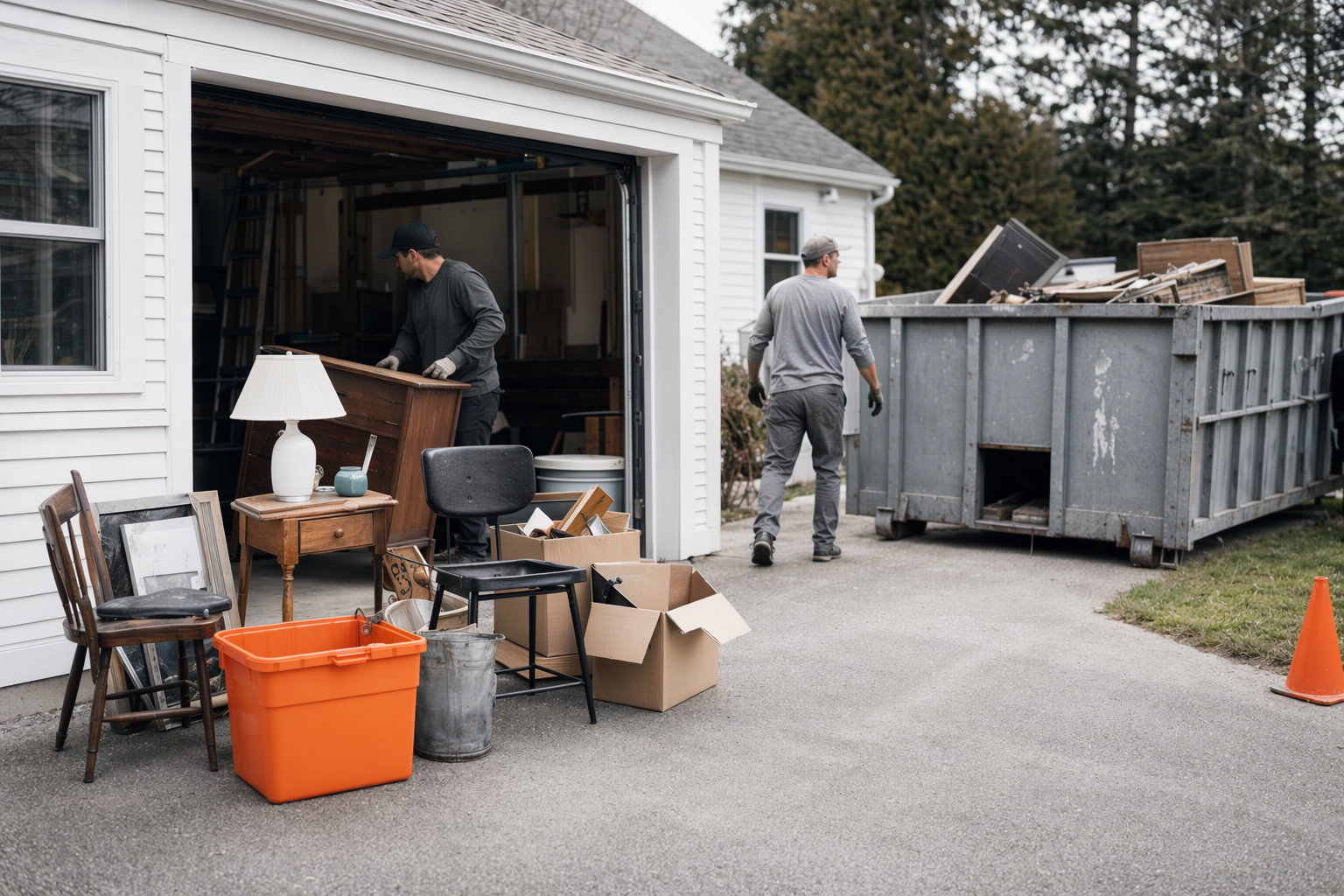
For a full-property estate cleanout, most people are choosing between a 20-yard, 30-yard, and 40-yard roll-off. A good rough guide: 10 yards is about 3 pickup-truck loads, 20 yards about 6, 30 yards about 9, and 40 yards about 12. If you are clearing furniture, mattresses, boxed household junk, garage clutter, and years of stored belongings from a whole house, a 30-yard is common and a 40-yard is not unusual.
A smaller home or partial cleanout may fit in a 20-yard. A larger house, packed attic, full basement, stuffed garage, or multiple outbuildings can easily push you into a 30- or 40-yard. People almost always under-order because loose household items take up more room than they expect once they are bagged, boxed, and tossed in.
If you are between sizes, the next size up is usually cheaper than filling one dumpster and ordering a second. For help comparing bin sizes, see what size dumpster do I need? and browse other project guides.
One important exception: if the property also has heavy debris like concrete, dirt, brick, tile, plaster, or roofing shingles, do not mix a lot of that into a big household-junk dumpster without asking first. Heavy material fills a container by weight before volume, so it often needs a smaller dedicated dumpster.
- 10-yard: small room, garage, or limited cleanout
- 20-yard: small house or moderate estate cleanout
- 30-yard: common choice for full-house cleanouts
- 40-yard: large, packed, or multi-area property cleanout
What estate cleanout dumpsters usually cost
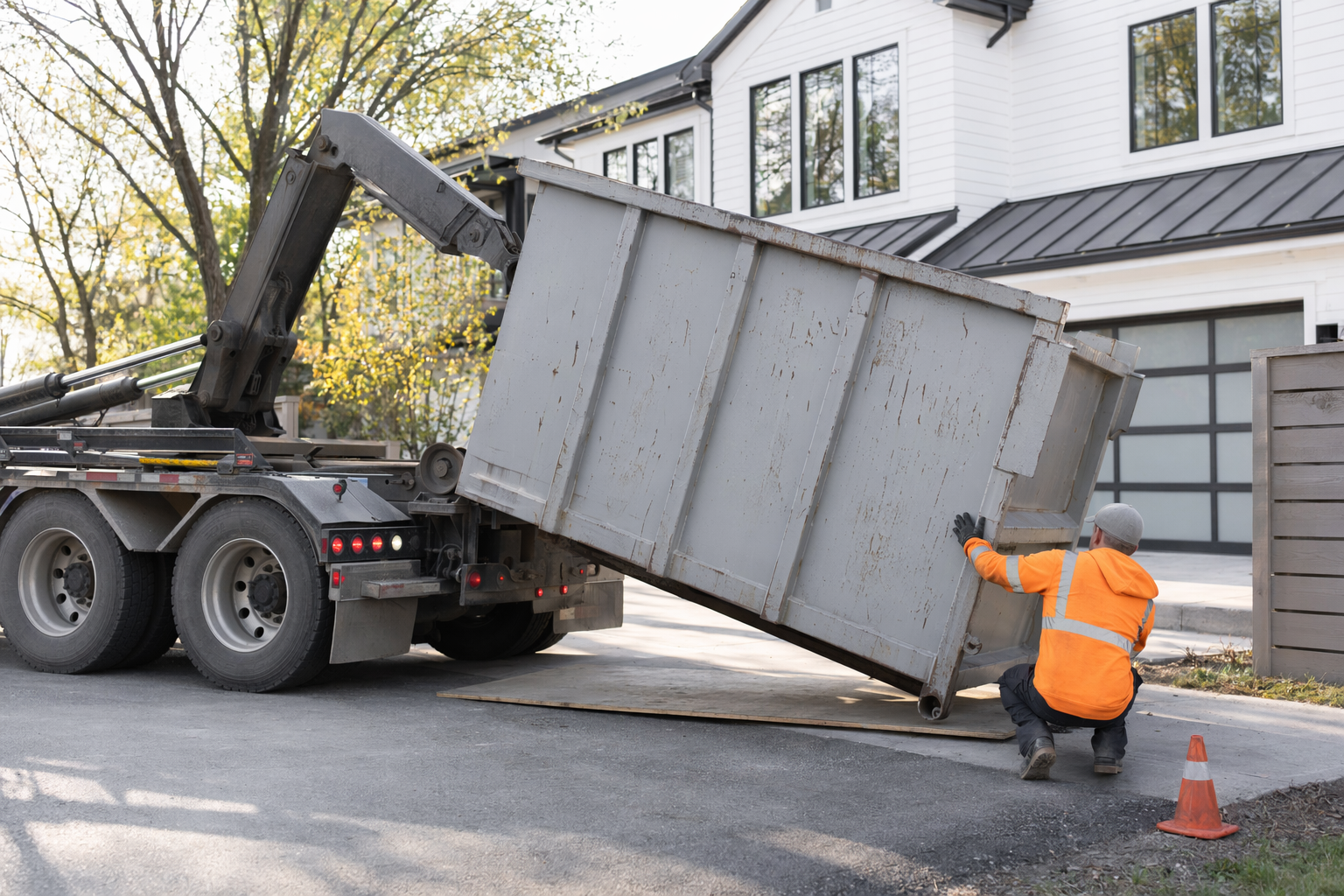
A full-property cleanout dumpster often falls somewhere around $350 to $850 for one container, and larger bins or high-cost areas can run higher. In many places, a 20-yard might be roughly $350 to $600, a 30-yard around $450 to $700, and a 40-yard around $550 to $850 or more. These are general ranges, not quotes.
The real price depends on the dumpster size, your area, the rental period, the included weight or tonnage, and what type of debris is going in. Estate cleanouts are often mostly light household junk, but if you add books, old filing cabinets, exercise equipment, wet furniture, or renovation debris, the weight can climb fast.
Before you book, get the all-in price in writing and confirm exactly what is included. You can compare more general pricing on our dumpster cost guides.
Fees that surprise people during estate cleanouts
The biggest surprise fee is usually over-tonnage. Every dumpster comes with a weight allowance, and if you go over it, you are typically charged per ton over that limit. Estate cleanouts can look light, but years of stored items, books, old tools, appliance parts, and soaked furniture add up.
Other common add-ons are extra-day fees if you keep the dumpster longer than the included rental period, trip or dry-run fees if the driver arrives and cannot safely place or remove the dumpster, and prohibited-item fees if banned items are found in the load. Street placement can also bring permit costs in some areas.
The practical move is simple: ask these questions before delivery. What is the rental period? What is the weight allowance? What is the per-ton overage charge? What happens if I need more days? Is there any fee if the driver cannot drop or pick up because the area is blocked?
You stay in control by confirming the size, placement, rental period, tonnage allowance, and all-in price before the dumpster is delivered.
What you can throw away, and what needs special handling
Most estate cleanout dumpsters can take general household junk: old furniture, non-hazardous clutter, clothing, toys, wood shelving, cardboard, and many non-recyclable cleanout items. Some appliances and mattresses may be allowed in certain areas, but often cost extra or need separate handling. Rules vary by area and by hauler, so always confirm locally before loading.
Do not assume you can toss paint, solvents, fuel, chemicals, propane tanks, car fluids, batteries, asbestos-containing material, medical waste, or other hazardous or regulated waste. Those usually need a proper local disposal program. This is general information only, not legal or hazardous-waste-disposal advice.
For estate work, it helps to sort the property before the dumpster arrives so you do not pay to throw away things that should be kept, donated, recycled, shredded, or disposed of through a special program.
- Keep: personal papers, photos, jewelry, heirlooms, cash, documents, medications
- Donate: usable furniture, clothing, kitchenware, books, housewares
- Ask first: mattresses, TVs, monitors, refrigerators, tires, paint cans
- Use proper disposal programs: chemicals, medical sharps, batteries, propane, hazardous waste
A simple way to plan the cleanout
Estate cleanouts go smoother when you do a quick walk-through before ordering. Count the rooms, check the attic, basement, garage, sheds, and yard, and note bulky items like couches, dressers, box springs, and shelving. Then think about whether you are tossing everything or only what is left after family takes what they want.
If the house has stairs, a long carry, or limited parking, build in extra time. If several relatives are involved, decide who is approving what gets kept or donated before the dumpster arrives. A dumpster sitting full while people argue over boxes is how you end up paying extra-day fees.
- Walk the whole property and estimate how many pickup loads of debris you really have.
- Separate keep, donate, recycle, shred, and trash piles.
- Pull out hazardous, medical, and regulated items for proper local disposal.
- Choose a size with room to spare; when in doubt, round up.
- Confirm where the dumpster can sit and whether a street permit may be required.
- Load bulky items flat first, then break down boxes and fill gaps efficiently.
How BinRoute helps you get matched
BinRoute is a free matching service, not a dumpster company, hauler, or disposal site. We do not rent, deliver, or haul dumpsters. We help connect you with local participating companies so you can compare options for your estate cleanout.
To get matched, you share basic contact and project details only: name, phone, optional email, project type, ZIP code, and preferred language. Then you can speak with a local company, confirm availability, verify they are licensed and insured, and decide who to hire. The service is free for the customer.
Use get matched when you are ready. Before you say yes to any order, confirm the dumpster size, the rental period, the included weight, the placement rules, and the all-in price in writing.
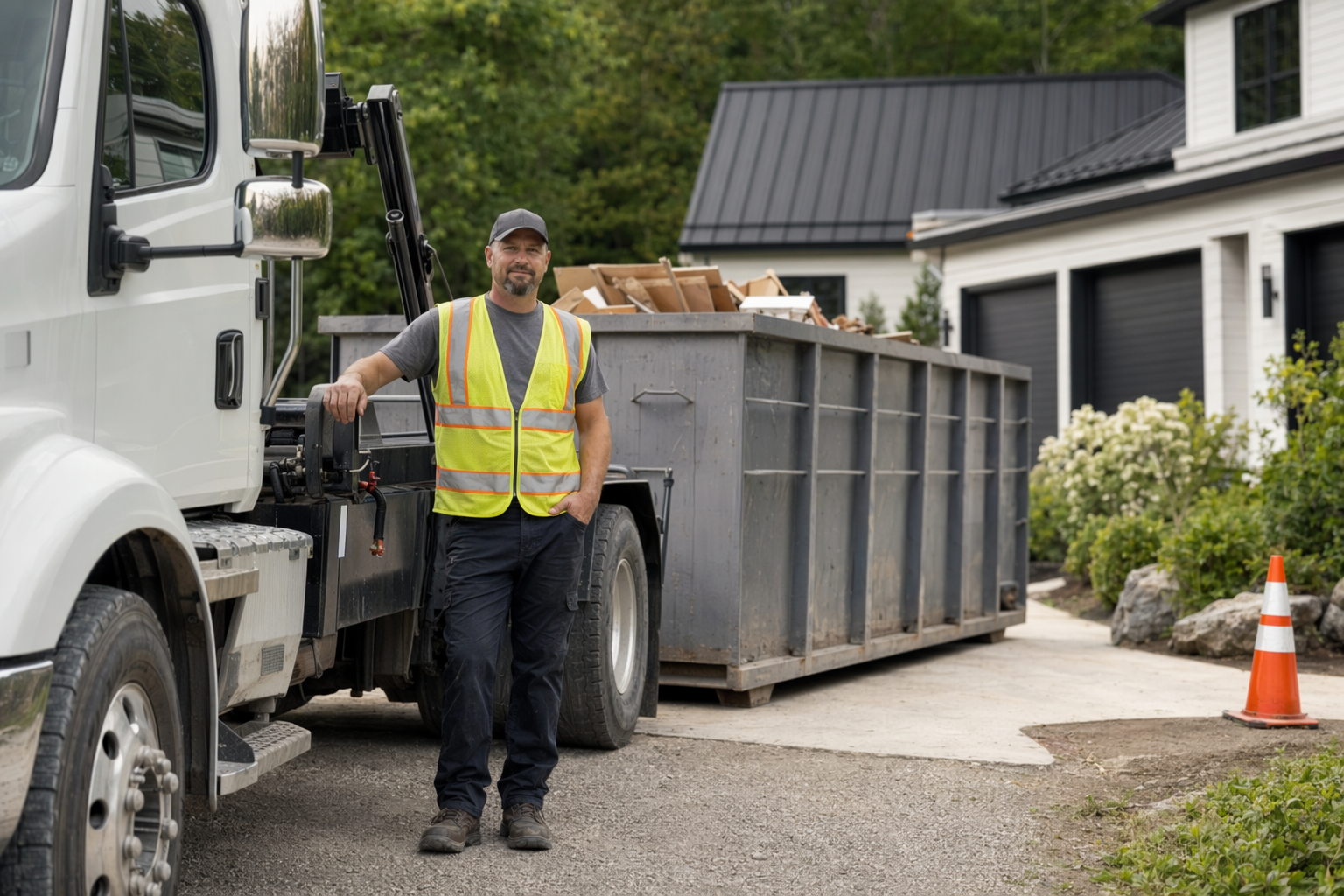
For most full estate cleanouts, a 30- or 40-yard dumpster is the safe bet, and you should confirm the weight limit and all fees before it shows up.
Common questions
What size dumpster do I need for cleaning out an entire house after a death or move-out?
For a full-house estate cleanout, a 30-yard is a common starting point, and a 40-yard is often needed for larger or packed properties. If you are between sizes, going up one size is usually cheaper than ordering a second dumpster later.
How much does an estate cleanout dumpster cost?
A typical range is about $350 to $850 for one roll-off, depending on size, area, rental period, included weight, and debris type. Those are general ranges, not quotes.
Can I throw furniture, clothes, and boxes from an estate into one dumpster?
Usually yes for general household junk, but some items may have special rules or extra charges. Always confirm allowed items with the local hauler before loading.
What items from an estate cleanout usually cannot go in a dumpster?
Hazardous or regulated items like chemicals, fuel, propane tanks, batteries, medical waste, and similar materials usually cannot go in. Use the proper local disposal program for those items.
Do I need a permit for an estate cleanout dumpster?
Maybe. If the dumpster sits on your own driveway, a permit is often not needed, but a street placement may require one depending on local rules. Confirm locally before delivery.
Is BinRoute the company that drops off the dumpster?
No. BinRoute is a free matching service that helps connect you with local dumpster rental and hauling companies. You choose who to hire and confirm the details directly with them.