Projects
Moving or downsizing — a dumpster for what you can't take
If a move or downsizing leaves you with bulky furniture, garage junk, and years of stuff you can’t take, a roll-off dumpster can clear it fast. The main trick is sizing it right so you don’t end up needing a second bin.
How to get the size right
A quick, honest way to size a roll-off so you don't pay for a second bin — or for empty air.
- 1 Estimate your debris in cubic yards. Think in pickup-truck loads: one full short-bed load is roughly 2 to 3 cubic yards. Add up the rooms, the pile, or the project — most people under-estimate, so round up one size.
- 2 Match it to a roll-off size. A 10-yard suits a small cleanout or heavy concrete; a 20-yard a whole-home cleanout or roofing; a 30-yard a big renovation; a 40-yard major construction. Between sizes, the next size up is almost always cheaper than a second bin.
- 3 Check the weight limit. Every roll-off includes a tonnage allowance, then charges per ton over it. Heavy debris — concrete, dirt, shingles, tile — fills a small bin by weight long before it fills by volume, so use a smaller container for heavy loads.
- 4 Confirm what's included, then get matched. Get matched, free, with licensed local haulers. Confirm the rental period, the tonnage allowance, the drop-off and pickup, and any fees in writing before the bin arrives — you compare and choose who to hire.
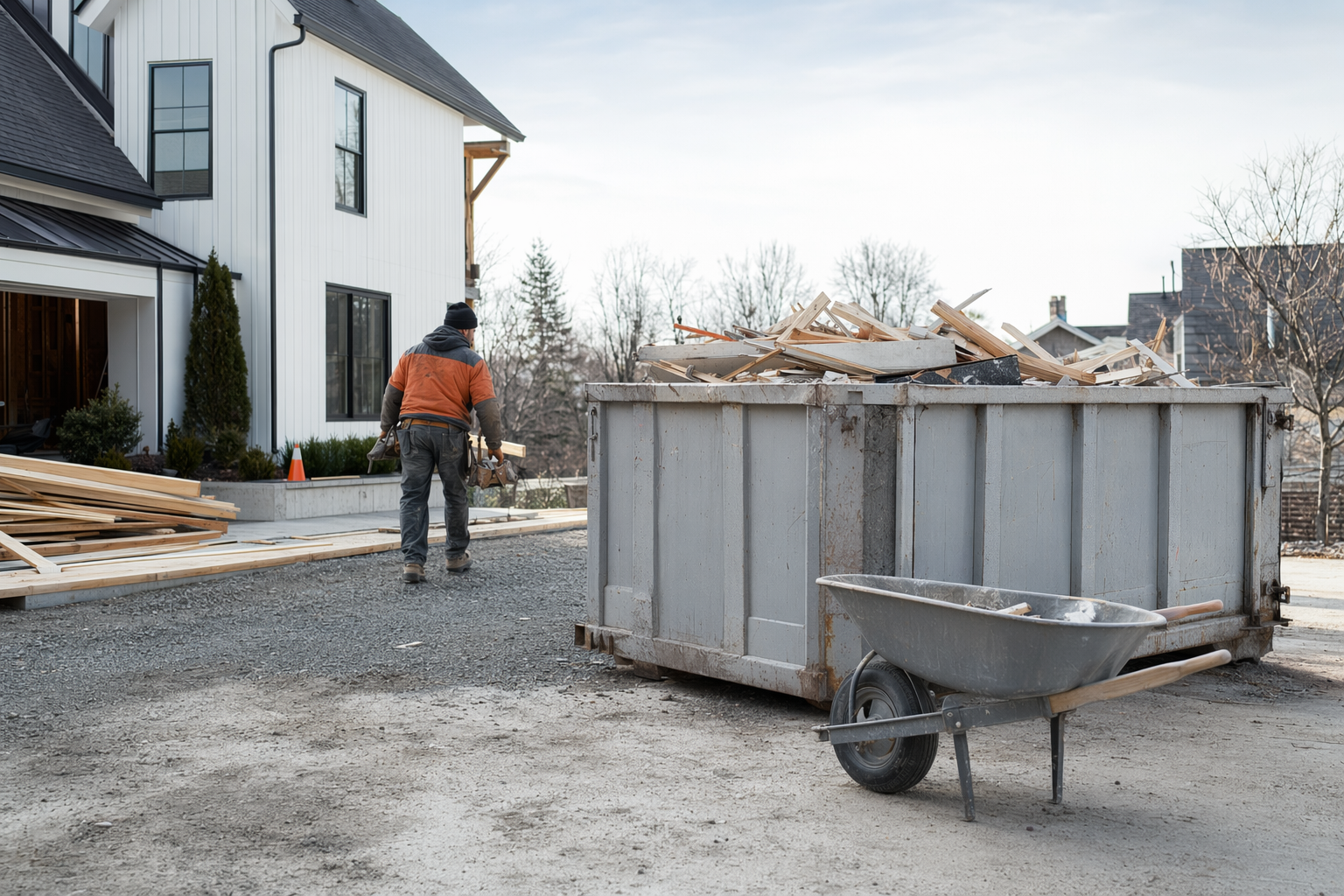
What size dumpster usually fits a moving or downsizing cleanout?
For moving and downsizing jobs, most people underestimate how much space old furniture, boxed clutter, garage junk, and “maybe later” items really take up. A couch, mattresses, dressers, shelving, patio furniture, broken toys, and loose household junk fill air space fast. If you are between sizes, the next size up is usually cheaper than renting a second dumpster.
A rough guide: a 10-yard dumpster holds about 3 to 4 pickup-truck loads and works for a small apartment, one-room cleanout, or a light garage purge. A 15-yard holds about 4 to 5 pickup loads and is often enough for a small move-out with some furniture. A 20-yard holds about 6 to 8 pickup loads and is the most common choice for a whole-house downsizing, a larger move, or a home where the attic, basement, garage, and closets are all getting cleaned out.
If you are clearing a larger house, helping with an estate cleanout, or throwing out bulky furniture from several rooms, a 30-yard dumpster is often the safer call. That is around 9 to 12 pickup loads. A 40-yard can work for a very large property cleanout, but many moving jobs do not need one unless the house is packed, the garage is full, or there is a lot of light bulky material.
One more truth: moving cleanouts are usually light-to-medium weight, not heavy like concrete or dirt, so volume is the bigger issue. Think in rooms and furniture pieces, not just bags. If you want a broader sizing guide, see what size dumpster do I need?.
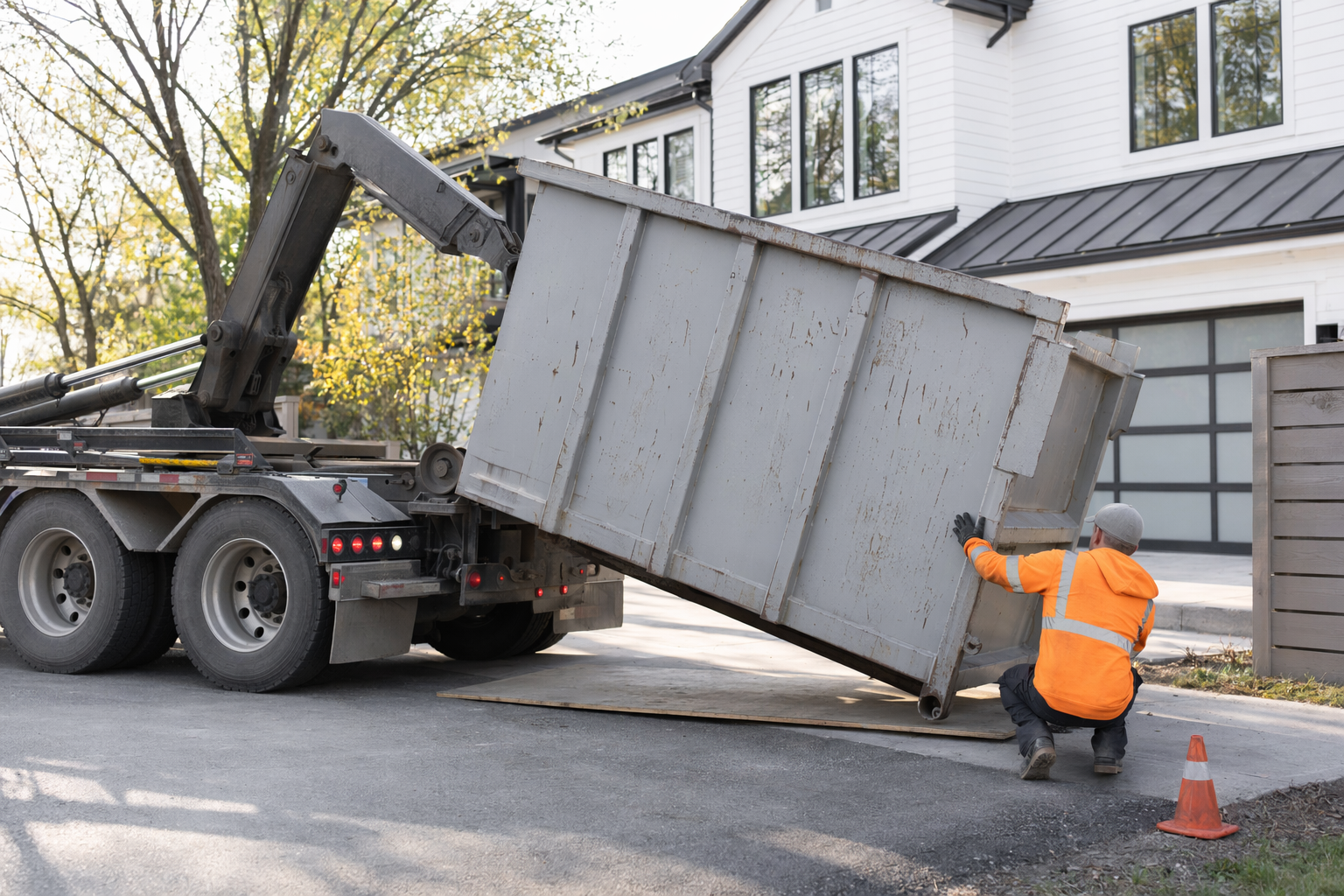
What it usually costs — and the surprise fees to watch
For a moving or downsizing project, many roll-off rentals land somewhere around $300 to $750 for common sizes in many parts of the US, with some markets lower and some much higher. A small 10-yard may start near the low end in cheaper areas. A 20-yard or 30-yard in a higher-cost city, with a longer rental period or higher dump costs, can run more. These are general ranges, not quotes.
The real price depends on the dumpster size, your area, the rental period, the weight allowance included, and exactly what you are tossing. Household junk is usually priced more simply than heavy debris, but the details still matter. Always ask for the all-in price in writing before delivery.
The biggest surprise fees are usually these:
- over-tonnage fees if you go over the included weight allowance
- extra-day fees if you keep the dumpster longer than the rental period
- trip or dry-run fees if the driver shows up but cannot place or remove the bin
- prohibited-item fees if banned items are found in the load
Ask plain questions: How many days are included? How much weight is included? What is the charge per ton over that limit? Are mattresses, TVs, or appliances extra? Is pickup included in the base price? BinRoute can help you compare dumpster rental costs, but the final number always depends on the local hauler and your specific load.
What you can usually throw in from a move-out or downsizing job
For a typical move or downsizing cleanout, a roll-off dumpster can usually take common household junk such as old furniture, non-recyclable toys, broken shelving, rugs, bagged trash, cardboard, clothes, garage clutter, and general non-hazardous debris. Many people use one dumpster to get rid of the things donation centers will not take and the moving truck should not carry.
That said, rules vary by area, landfill, and hauler. Some items that seem normal still may have restrictions, extra charges, or separate disposal rules. Mattresses, box springs, tires, TVs, computers, refrigerators, air conditioners, paint, propane tanks, automotive fluids, batteries, chemicals, and anything medical or hazardous often have special handling rules.
If you have hazardous, medical, or other regulated waste, do not put it in the dumpster. Use your local household hazardous waste or special disposal program instead. BinRoute provides general information only, and the local hauler must confirm what is allowed on your load.
Placement, access, and permits before delivery day
A moving dumpster is easiest when it goes on a private driveway or other spot on your property with solid, accessible ground. Make sure there is enough room not just for the dumpster itself, but for the truck to roll it off and pick it back up. Cars, low wires, tree limbs, and narrow gates cause a lot of failed deliveries and extra charges.
If the dumpster has to sit on a public street, alley, or other public right-of-way, you may need a permit. In some places the customer handles that. In others, the hauler may handle it, or it may not be allowed at all. Permit rules vary a lot by city and county, so confirm locally before delivery.
Try to place the dumpster close to the door, garage, or area you are clearing. That saves time and your back. It also helps to load bulky furniture first, then smaller loose items around it so you use the air space better.
How BinRoute helps you get matched with a local hauler
BinRoute is a free matching service, not a dumpster company. We do not rent, deliver, haul, or dispose of waste. We help connect you with licensed, insured local dumpster-rental and hauling companies so you can compare your options for a moving or downsizing job.
When you use get matched, we ask only for basic contact and project intent: name, phone, optional email, project type, ZIP code, and preferred language. Then you can talk directly with local providers, confirm the dumpster size, rental period, tonnage allowance, placement, and all-in price, and choose who you want to hire.
Before you book, verify the company is licensed and insured, and ask for the full terms in writing. The customer stays in control. If you are still comparing project types or planning the cleanup, you can also browse more dumpster project guides.
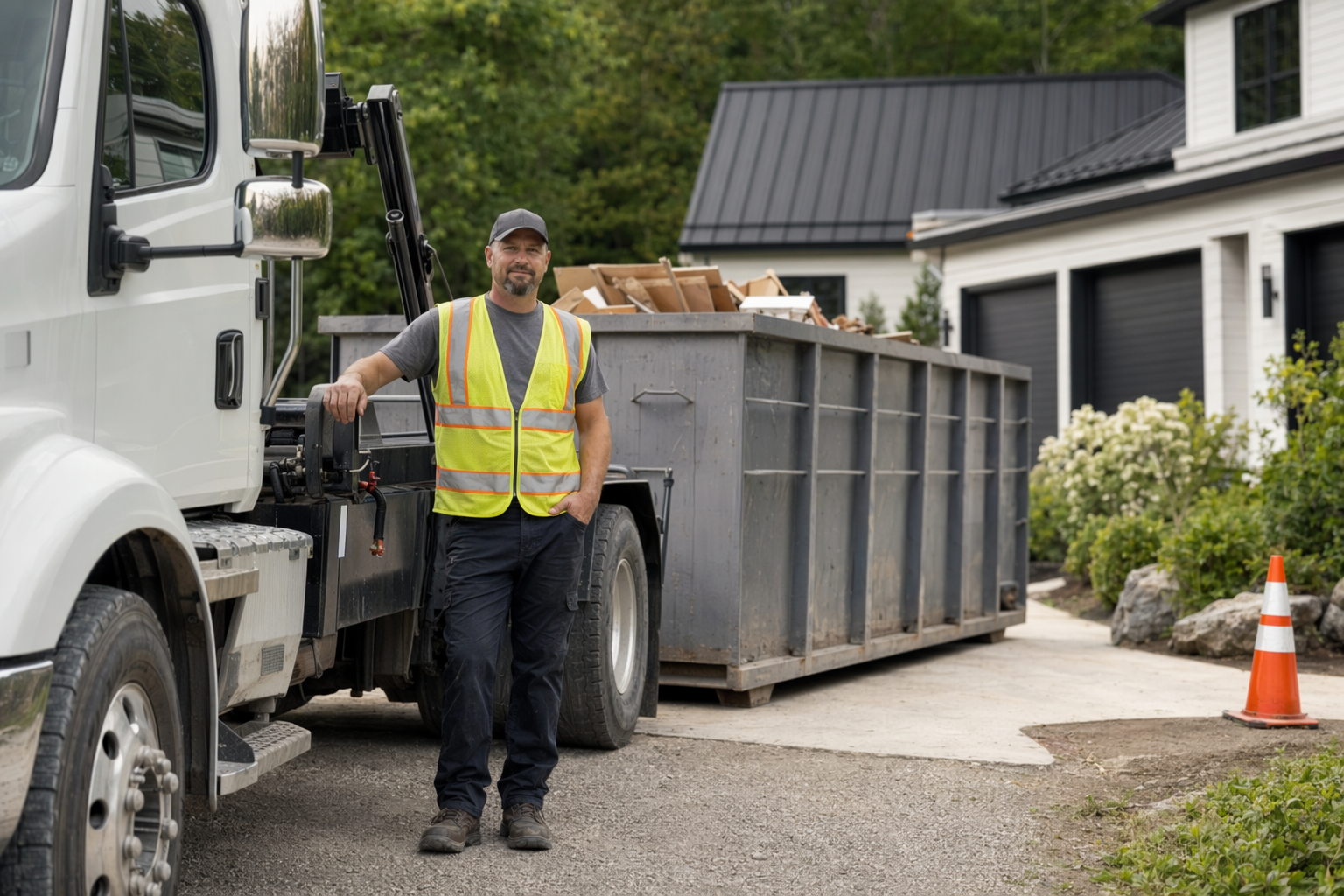
For most moving and downsizing jobs, people need a bigger dumpster than they think, and getting the size, weight allowance, and all-in price in writing upfront helps avoid paying for a second bin or surprise fees.
Common questions
What size dumpster do I need for moving out of a house?
For a small apartment or light move-out, a 10-yard may work. For a typical house downsizing with furniture and general junk, a 20-yard is often the safest starting point, and a 30-yard makes sense if several rooms, a garage, attic, or basement are involved.
Is a dumpster cheaper than making a lot of dump runs while moving?
Often, yes—especially if you have bulky furniture, a lot of volume, or limited time. But the real comparison depends on local rental cost, dump fees, fuel, truck access, and how many trips you would otherwise make.
Can I throw a couch, mattress, and old dresser in a dumpster?
Usually yes for common furniture, but mattresses and some bulky items can carry extra fees or separate rules in some areas. Always confirm with the local hauler before delivery.
Can I put electronics, paint, or cleaning chemicals in a moving dumpster?
Usually not, or not without special rules. Electronics, paint, chemicals, batteries, and other hazardous or regulated items should go through the proper local disposal program.
How long can I keep the dumpster during a move?
That depends on the hauler and the rental agreement. Many rentals include a set number of days, and keeping it longer can trigger extra-day fees, so confirm the rental period in writing.
Do I need a permit for a dumpster during a move?
Usually not if it stays on private property like a driveway. If it needs to go on a street or other public space, you may need a local permit, and the rules vary by area.