Sizes
Commercial and contractor roll-off rentals
Need a roll-off for a job site, store, warehouse, or ongoing cleanout? Here’s the practical truth on commercial dumpster sizes, swap-outs, weight limits, real-world costs, and how to get matched with a licensed local hauler.
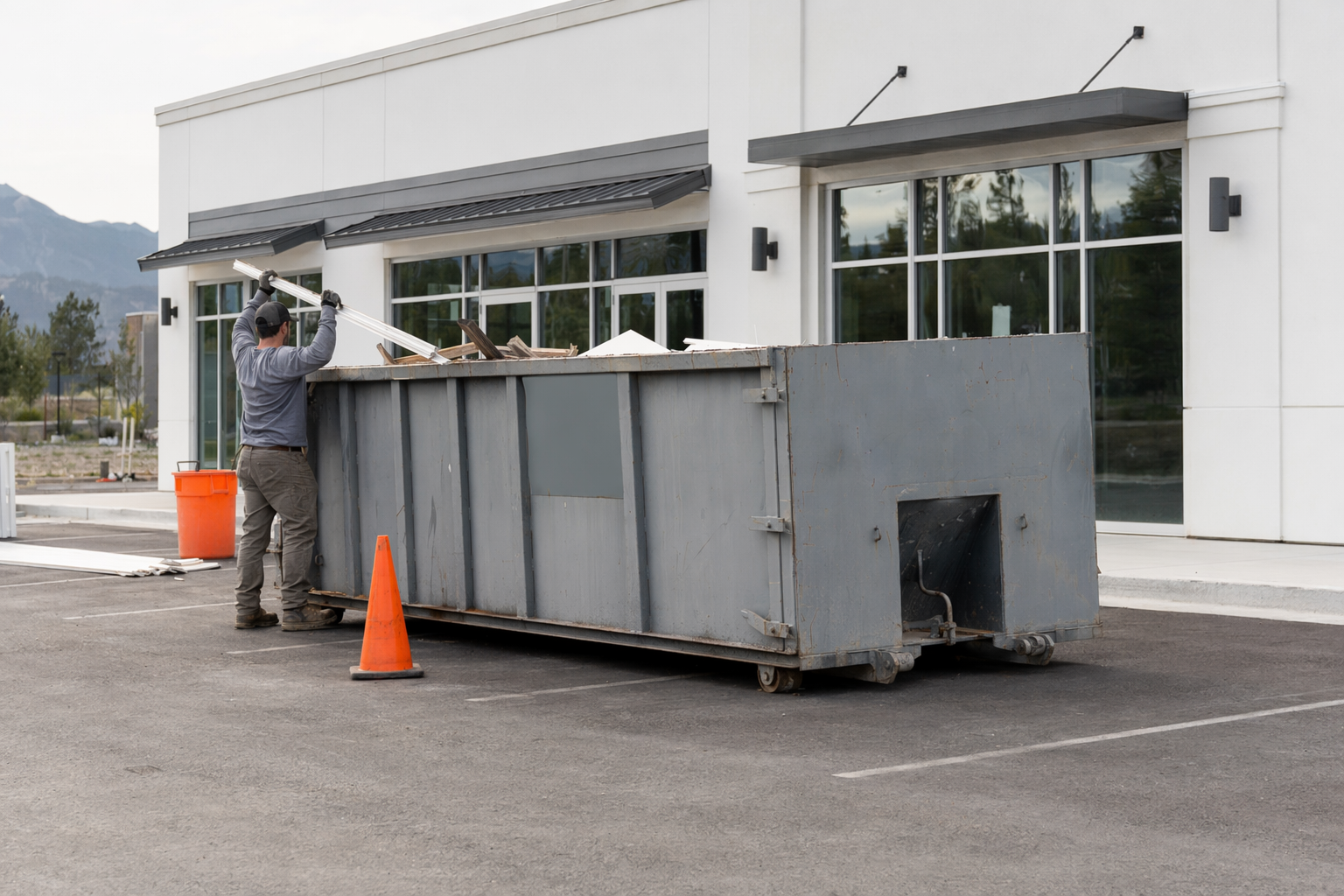
Pick the right commercial roll-off size first
For commercial and contractor work, the biggest mistake is ordering too small. Most people underestimate debris volume, and a second haul usually costs more than sizing up the first time.
Common commercial roll-off sizes are 10, 20, 30, and 40 yards. A 10-yard is often used for heavy material, small tenant build-outs, or tight job sites. A 20-yard is a common all-around choice for remodeling, flooring, roofing, and medium cleanouts. A 30-yard works well for larger renovations, commercial cleanouts, and light demolition. A 40-yard is usually for bulky, high-volume jobs like warehouse cleanouts, large retail resets, and major construction debris.
A simple way to picture it: 10 yards is about 3 to 4 pickup-truck loads, 20 yards about 6 to 8, 30 yards about 9 to 12, and 40 yards about 12 to 16. That is only a rough guide, because loose debris, broken-down materials, and how the bin is loaded all change the real capacity.
Heavy debris changes the math. Concrete, dirt, brick, shingles, tile, and plaster often hit the weight limit before the container looks full. For those materials, a smaller dedicated heavy-debris bin is usually the safer and cheaper move than a big general-purpose box.
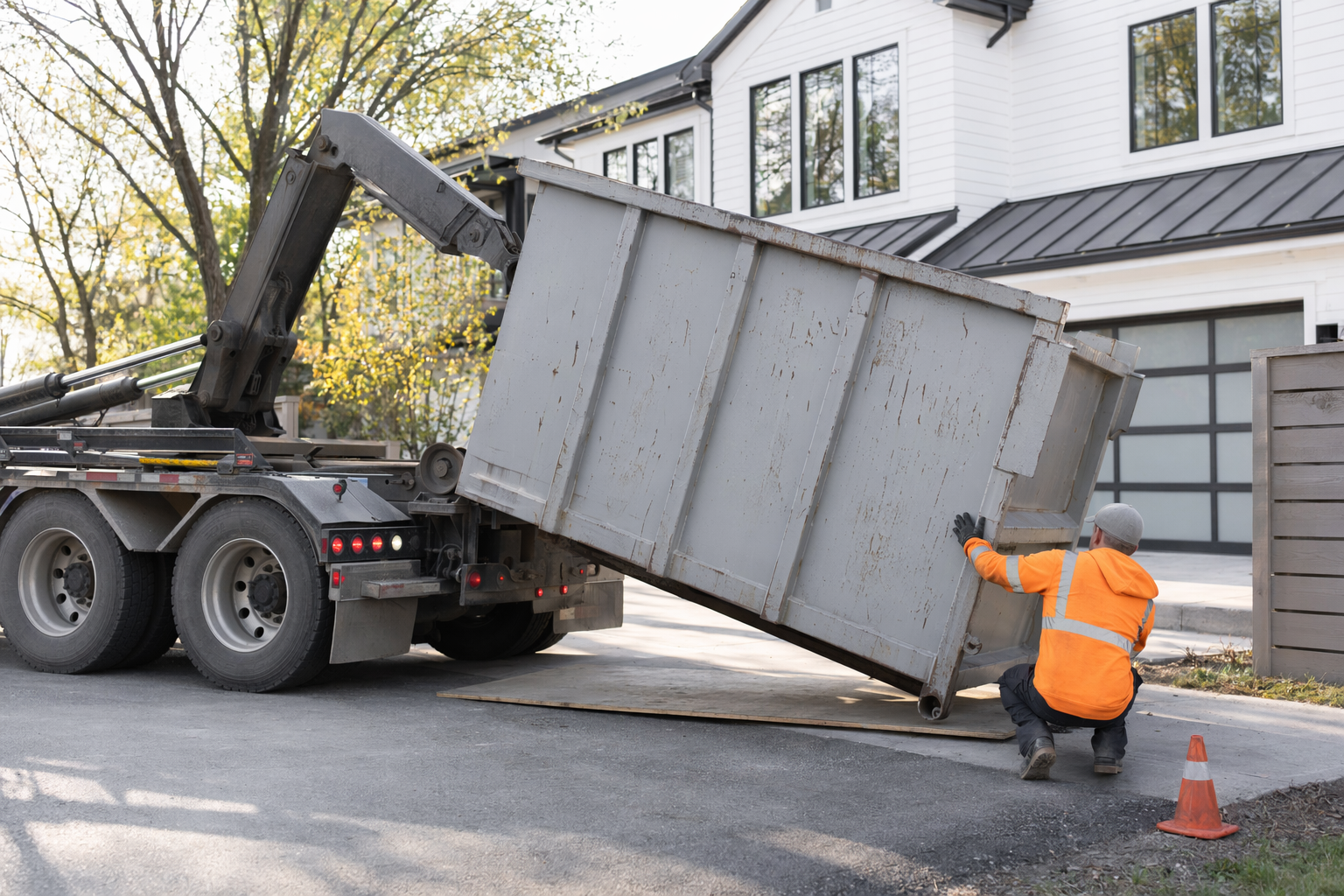
What fits in each size, and what each one is best for
A 10-yard commercial roll-off is typically around 12 to 14 feet long, 7 to 8 feet wide, and 3 to 4 feet high. It is best for dense loads: small demolition jobs, concrete, dirt, brick, roofing shingles, or a small office or retail cleanout. Because the walls are lower, it is also easier to load heavy material safely.
A 20-yard is often around 16 to 22 feet long, 7 to 8 feet wide, and 4 to 5 feet high. This is the workhorse size for many contractors. It fits medium remodeling debris, flooring tear-outs, cabinets, drywall, packaging waste, and general construction debris from a moderate-size job.
A 30-yard is usually around 20 to 22 feet long, 7 to 8 feet wide, and 5 to 6 feet high. It is a good fit for larger build-outs, multi-room renovations, commercial cleanouts, and lighter demolition where the debris takes up a lot of space.
A 40-yard is commonly around 20 to 22 feet long, 7 to 8 feet wide, and 7 to 8 feet high. It is built for bulky, high-volume waste rather than dense material. Think long-running job sites, warehouse junk, store-fixture removal, large office cleanouts, and major demolition with a lot of light material.
Dimensions vary by hauler and area, so confirm the exact outside dimensions if your site is tight. On a cramped property or alley delivery, that matters as much as the yardage.
Typical weight allowance and why it matters on commercial jobs
Commercial roll-off pricing usually includes a weight allowance, sometimes called tonnage. A common range is about 1 to 2 tons on a 10-yard, 2 to 3 tons on a 20-yard, 3 to 4 tons on a 30-yard, and 4 to 6 tons on a 40-yard. Those are general ranges only, not rules. Local haulers set their own limits, and the same size container can come with different included weight depending on the market and the debris type.
If you go over the included weight, the usual extra charge is an over-tonnage fee billed per ton over the allowance. This is one of the most common surprise charges on contractor and commercial jobs, especially with roofing, tile, plaster, wet debris, and mixed demolition.
Ask two simple questions before you book: how many tons are included, and what is the exact charge per ton over? Get both in writing along with the rental period, because those three numbers drive the real cost more than the advertised base rate.
Also ask how high you can load the material. In most areas, debris cannot be piled above the top rail for safe transport. An overfilled dumpster can lead to an extra trip charge, unloading delay, or the driver refusing pickup until the load is leveled.
Honest commercial roll-off cost ranges and the fees to watch
For general commercial and contractor use, a 10-yard roll-off often runs about $300 to $600, a 20-yard about $375 to $700, a 30-yard about $450 to $850, and a 40-yard about $550 to $1,000+. In higher-cost cities, dense debris jobs, or longer rentals, real prices can land above those ranges. These are general US ranges, not quotes.
What moves the price up or down: the container size, your area, the rental period, the included tonnage, the debris type, landfill or disposal costs, access to the site, and whether you need one haul, recurring service, or same-day swap-outs. A contractor doing repeated pulls on one site may be priced differently from a one-time retail cleanout.
Watch for the standard extra fees: over-tonnage fees per ton over the limit, extra-day fees if you keep the box longer, trip or dry-run fees if the driver cannot drop off or pick up because of blocked access, and prohibited-item fees if banned material is found in the load. Get the all-in price in writing before delivery. A low headline price can stop looking cheap once those add-ons show up.
If you are comparing options, costs pages can help you understand what changes the bill. The cheapest base price is not always the cheapest final invoice.
Recurring service, swap-outs, and job-site scheduling
Commercial work often needs more than a single drop-off. If you are running an active construction site, ongoing store renovation, warehouse cleanout, or repeated tenant turnover, ask about swap-outs and recurring service. A swap-out means the hauler removes the full container and drops an empty one, often on the same trip if scheduling allows.
For busy sites, tell the hauler up front whether you need one box, multiple boxes, regular pickups, or on-call pulls. Also explain the material stream. Mixed construction debris, cardboard, clean concrete, dirt, roofing, and scrap all get handled differently, and separation rules vary by local market and hauler.
Give clear placement instructions before delivery: gate width, overhead wires, slope, soft ground, job trailer location, work hours, and who the driver should call on arrival. A lot of failed deliveries come from access issues, not equipment problems.
If the container will sit on a public street, permit rules vary by city and by who is responsible for getting the permit. Confirm that locally before delivery. BinRoute only provides general information, not legal advice, and does not issue permits.
How to get matched with a licensed local hauler
BinRoute is a free matching service. We do not rent, deliver, haul dumpsters, or dispose of waste. We help you get connected with licensed, insured local dumpster-rental and hauling companies so you can compare your options and choose who to hire.
To get matched, share basic project details: your name, phone, optional email, ZIP code, preferred language, and what kind of job you have. That is it. We do not need financial account numbers, Social Security numbers, income details, or sensitive personal records.
Before you say yes to any delivery, confirm the exact dumpster size, outside dimensions, rental period, included tonnage, debris rules, placement, pickup plan, and all-in price. If you need ideas for project planning, start with services, projects, or go straight to get matched.
Hire carefully. Ask whether the hauler is licensed and insured for your area, and verify it if needed. You stay in control of the final choice, the schedule, and the price you agree to.
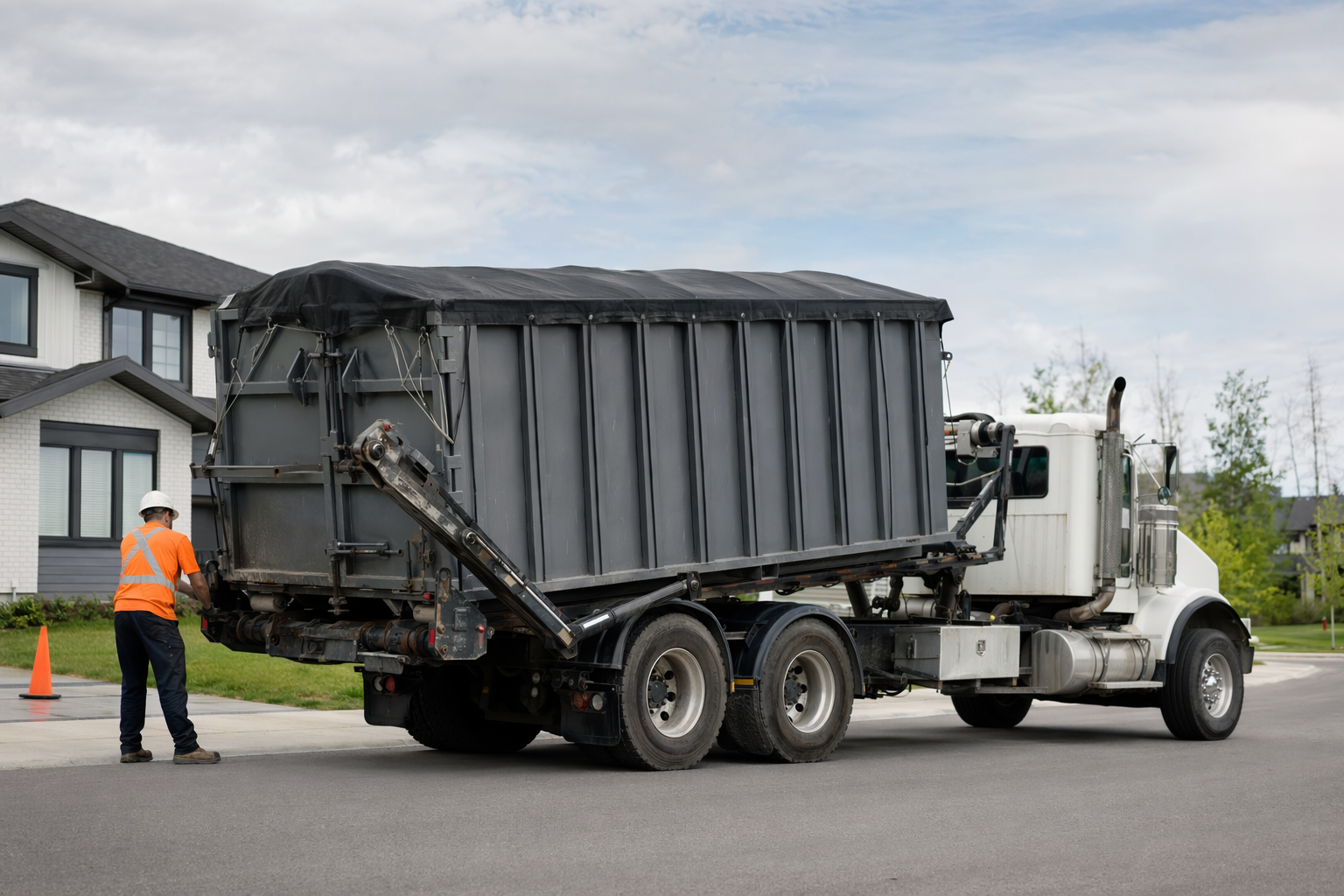
For commercial jobs, order by real debris volume and weight, get the tonnage and all-in price in writing, and use BinRoute free to get matched with a licensed local hauler.
Common questions
What size commercial roll-off do most contractors use?
A 20-yard is a common all-around choice, but it depends on the job. For bulky light debris, 30- and 40-yard bins are common; for concrete, dirt, shingles, or tile, a smaller heavy-debris bin is usually better.
How much does a commercial roll-off dumpster cost?
A rough general range is about $300 to $1,000+ depending on size, area, rental length, weight allowance, and debris type. Those are not quotes, and the real invoice can change with over-tonnage, extra days, or prohibited items.
Can I put construction debris and heavy material in the same commercial dumpster?
Sometimes, but mixed heavy loads can get expensive fast if you exceed the included tonnage. Many jobs are cheaper and simpler with one general debris box and one smaller dedicated bin for concrete, dirt, shingles, or tile.
How long can a commercial dumpster stay on site?
Rental periods vary by hauler and area. Some include a set number of days, and keeping it longer can trigger extra-day fees, so confirm the included period before delivery.
Do I need a permit for a commercial roll-off?
Maybe. If the dumpster goes on a public street or right-of-way, a permit is often required, but the rules vary by city and location. Confirm locally with the hauler and your city before delivery.
What does BinRoute actually do?
BinRoute is a free matching service, not a hauling company. We help connect you with licensed, insured local haulers so you can compare options for your commercial or contractor job.