Sizes
20-yard roll-off dumpster
A 20-yard roll-off is the most common "safe middle" size: big enough for many cleanouts and remodels, but not as pricey or hard to place as a 30-yard. The trick is knowing what really fits before you order.
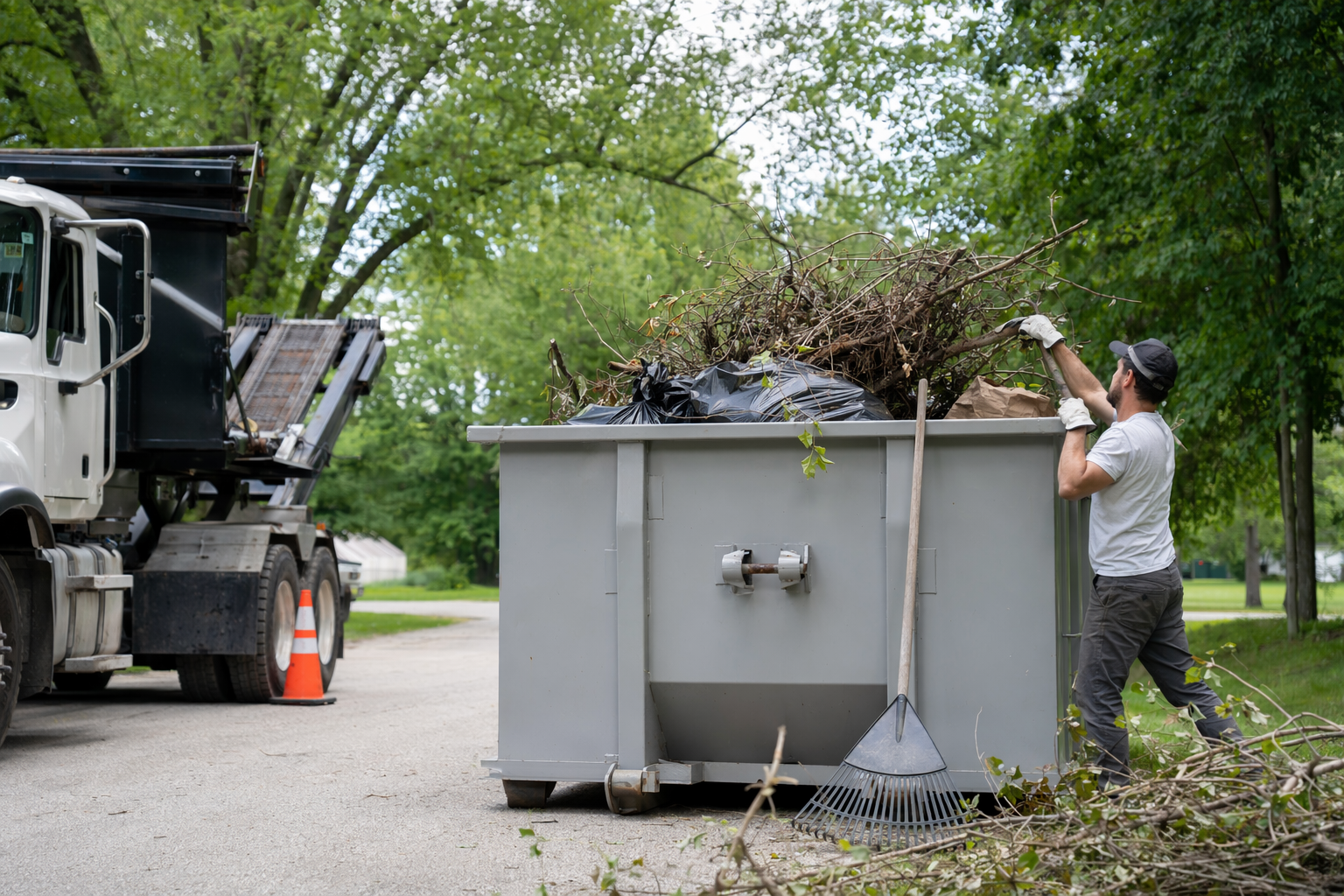
What a 20-yard dumpster fits best
A 20-yard roll-off holds about 20 cubic yards of material. In plain terms, that is roughly 6 to 8 pickup-truck loads, depending on how the truck is loaded. For many homeowners, this is the size that works for a whole-home cleanout, a large garage or basement cleanout, a kitchen remodel, flooring removal, deck removal, or a medium roofing tear-off.
Typical outside dimensions are often around 22 feet long, 7.5 to 8 feet wide, and 4 to 4.5 feet high, but sizes vary by hauler. That low sidewall height matters: it is easier to load than a taller 30-yard bin, especially for heavy bags, busted cabinets, drywall, and furniture.
If you are between sizes, the next size up is often cheaper than filling a 20-yard too fast and then renting a second dumpster. Most people under-order. A 20-yard is a good choice when a 10-yard feels too tight but a 30-yard sounds like more air space than you need.
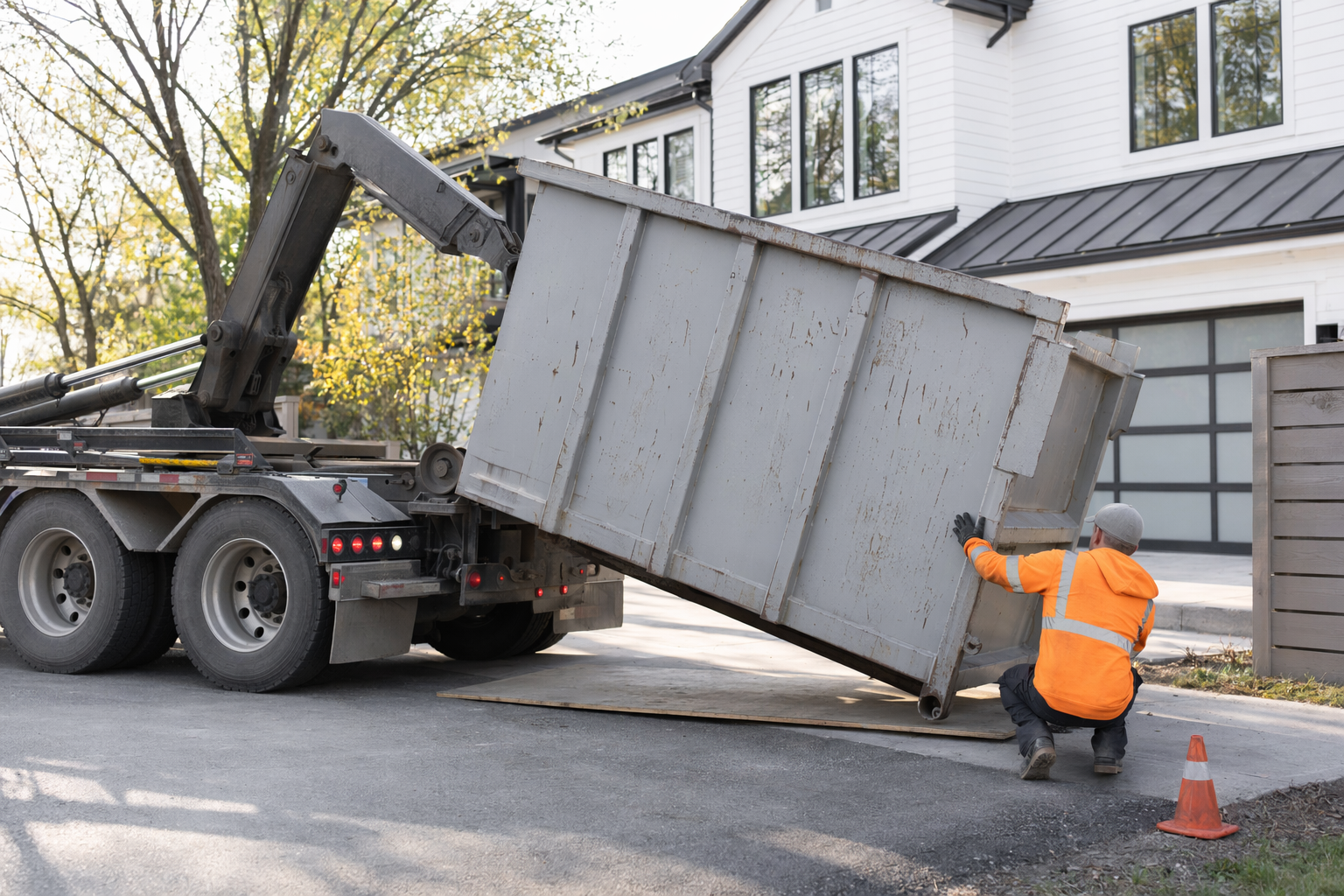
Common jobs for a 20-yard roll-off
This size is often used for estate cleanouts, moving cleanouts, medium remodels, shed tear-downs, and bulky household junk. It also works for many roofing jobs, often around a 2,500 to 3,000 square foot single-layer roof, but roofing weight adds up fast, so confirm locally with the hauler.
For remodeling, a 20-yard is common for kitchens, several rooms of flooring, carpet and padding, drywall, old vanities, doors, trim, and light demolition debris. For outdoor work, it may handle fencing, small deck removal, yard debris, and brush, depending on the weight and how the material is packed.
It is not always the right choice for concrete, dirt, brick, asphalt, tile, or shingles in large amounts. Heavy debris fills a dumpster by weight before volume. For that kind of load, a smaller dedicated heavy-material container is usually the smarter and cheaper move.
Weight allowance: the part people miss
A 20-yard dumpster usually comes with a weight allowance somewhere around 2 to 4 tons, but that varies a lot by area and by hauler. Some rentals include less, some more. This matters because the sticker price is only part of the cost.
If you go over the included tonnage, you can get hit with an over-tonnage fee, usually charged per ton over the allowance. That is one of the most common surprise charges. Ask for the included weight in writing before delivery, and ask what the exact per-ton overage charge will be.
Household junk, wood, drywall, and light construction debris often fit a 20-yard well. Concrete, dirt, plaster, tile, roofing shingles, and wet materials can make a 20-yard overweight long before it looks full. When the debris is heavy, tell the hauler exactly what you are loading and ask whether a smaller heavy-debris bin is required.
Honest 20-yard dumpster cost range
In many US markets, a 20-yard roll-off often runs about $350 to $700 for a basic rental. In higher-cost areas, dense cities, or for heavy debris, it can run higher. That range is general information only, not a quote.
The real price depends on five things: your area, the rental period, the included weight allowance, the kind of debris, and access or placement conditions. A 20-yard for light household junk may price differently than the same size for roofing, plaster, or construction debris.
Watch for these common extra charges:
- over-tonnage fees if you exceed the included weight
- extra-day fees if you keep it longer than the rental period
- trip or dry-run fees if the driver cannot safely drop off or pick up the dumpster
- prohibited-item fees if banned items are found in the load
Get the all-in price in writing before the dumpster is delivered. Ask what is included, how many days you get, how much weight is included, what the overage rate is, and what items are not allowed. For more price background, see dumpster rental costs.
- Typical range: often about $350-$700, but local rates vary
- Heavy debris and extra tonnage are the biggest cost drivers
What you can and cannot put in it
A 20-yard roll-off is usually used for household junk, furniture, wood, drywall, carpet, renovation debris, yard debris, and similar non-hazardous waste. But every hauler and disposal site has its own list, and local rules vary.
Items that are often restricted or banned include paint, chemicals, solvents, fuel, propane tanks, batteries, asbestos-containing material, medical waste, and other hazardous or regulated waste. Tires, mattresses, appliances, and electronics may be allowed only with added fees or at certain facilities.
This is general information only. Always confirm the prohibited-items list with the local hauler before loading. For hazardous, medical, or regulated waste, use the proper local disposal program instead of a roll-off dumpster.
How to get a 20-yard dumpster without getting burned
BinRoute is a free matching service, not a hauling company. We do not rent, deliver, haul, or dispose of dumpsters. We help you get connected with licensed, insured local dumpster-rental and hauling companies so you can compare your options.
When you ask to get matched through BinRoute, you stay in control. You confirm the size, rental period, weight allowance, placement, and all-in price directly with the hauler before anything is delivered. Hire only a licensed, insured local company and verify that yourself.
To get useful pricing faster, be ready with:
1. your ZIP code
2. the type of project
3. the main material you are throwing away
4. whether the dumpster will go in a driveway or on the street
5. how long you think you need it
If it will sit on a public street, you may need a permit, but rules and who handles it vary by area. Ask the local hauler and your city before delivery. You can also browse more dumpster sizes and services or read about common project types.
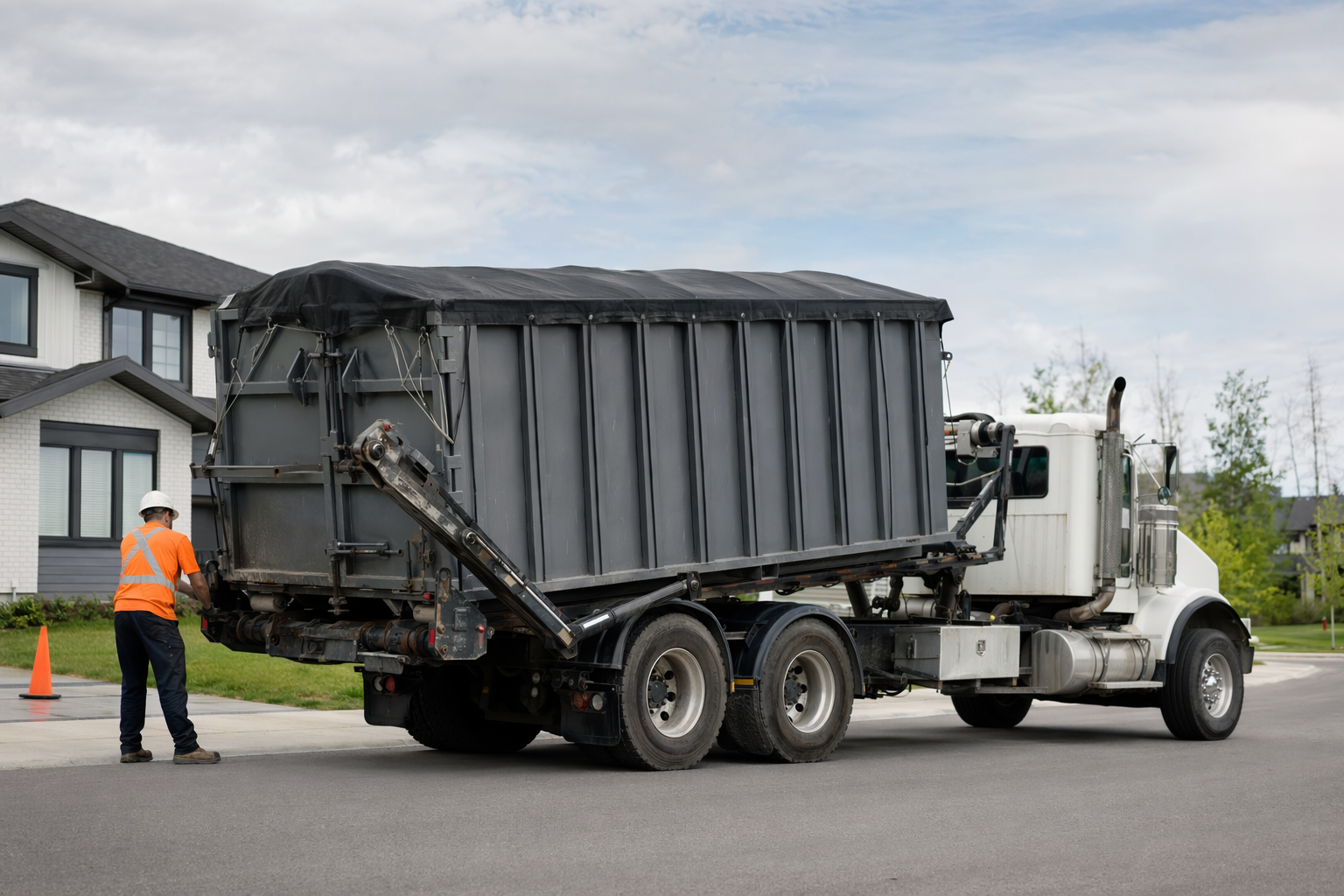
A 20-yard dumpster is the common middle-size choice for cleanouts and remodels, but the real money issue is usually weight, not space.
Common questions
Is a 20-yard dumpster big enough for a whole-house cleanout?
Often, yes for a modest home or a selective cleanout, but not always for a heavily packed house. Most people under-order, so if the house is very full or you are removing furniture from many rooms, compare a 20-yard against a 30-yard before deciding.
How many pickup loads fit in a 20-yard dumpster?
A 20-yard dumpster is roughly equal to about 6 to 8 pickup-truck loads. The exact number depends on truck-bed size and how high the loads are stacked.
Can I put concrete or dirt in a 20-yard roll-off?
Sometimes, but usually only in limited amounts because those materials get heavy fast. Always tell the hauler first, because a smaller dedicated heavy-material dumpster is often required.
What is the normal weight limit for a 20-yard dumpster?
A common included allowance is around 2 to 4 tons, but it varies by local hauler and market. Ask for the included tonnage and the per-ton overage charge in writing.
How much does a 20-yard dumpster cost near me?
In many areas, a 20-yard rental often falls around $350 to $700, but that is not a quote. The real number depends on your area, rental length, debris type, and included weight.
Do I need a permit for a 20-yard dumpster?
Usually not if it sits fully on private property like a driveway, but street placement may require a permit. Rules vary by city, so confirm locally before delivery.