Sizes
Junk removal vs renting a dumpster
Trying to decide between full-service junk removal and a roll-off dumpster you load yourself? Here’s the plain truth on when each one makes sense, what they usually cost, and where people get surprised by fees.
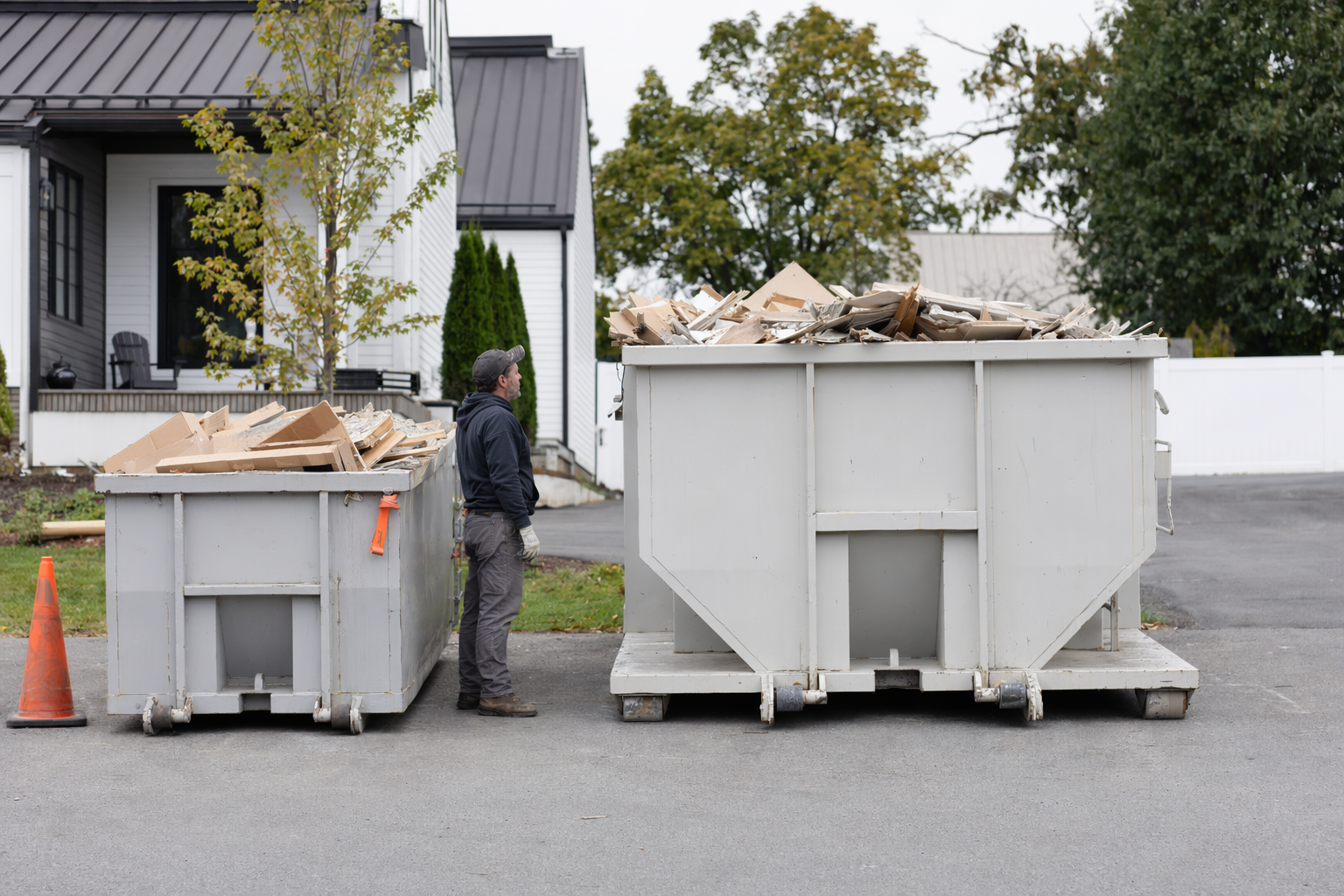
The simple difference: labor vs container
Junk removal usually means a crew shows up, carries the stuff out, loads it, and hauls it away. A dumpster rental means a local hauler drops off a roll-off container, you fill it yourself, and they come back to pick it up.
If you want labor, fast cleanup, and you do not want to carry debris, junk removal can be the better fit. If you have a multi-day project, want time to sort, or have a lot of debris, a dumpster is usually the cheaper tool.
A good rule of thumb: if the job is mostly a few bulky items and you want them gone today, look at junk removal. If you are cleaning out a house, remodeling, roofing, landscaping, or generating debris over several days, a dumpster usually makes more sense.
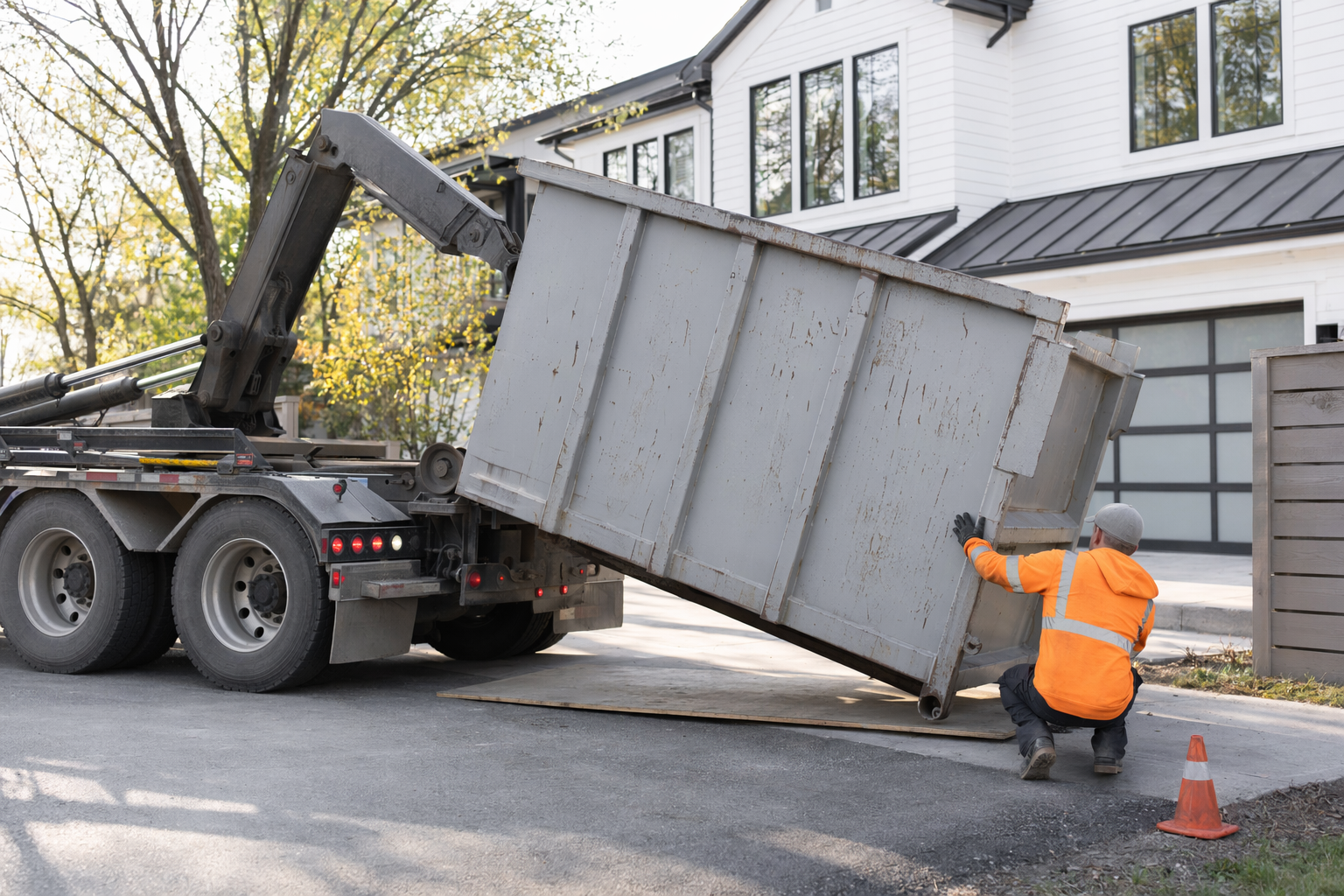
When renting a dumpster is usually the better choice
A roll-off dumpster is usually the better value when you have enough material to fill at least a few pickup-truck loads, or when debris will pile up over time. That is why dumpsters are common for garage cleanouts, estate cleanouts, kitchen and bath remodels, flooring jobs, roofing tear-offs, and small construction work.
Common sizes are 10, 20, 30, and 40 cubic yards. In rough, real-world terms, that is about 3 to 4, 6 to 8, 9 to 12, and 12 to 16 pickup-truck loads. Most people under-order. If you are between sizes, the next size up is almost always cheaper than renting a second bin.
Typical outside dimensions vary by hauler, but many 10-yard bins are around 12 feet long, 8 feet wide, and 3.5 feet high. A 20-yard is often about 22 x 8 x 4.5 feet. A 30-yard may be around 22 x 8 x 6 feet, and a 40-yard around 22 x 8 x 8 feet. Always confirm actual dimensions locally, especially if space is tight.
Weight matters too. A 10-yard container may include around 1 to 2 tons, a 20-yard around 2 to 3 tons, a 30-yard around 3 to 4 tons, and a 40-yard around 4 to 6 tons. These are general ranges, not promises. Heavy debris like concrete, dirt, brick, shingles, and tile fills a bin by weight before volume, so those jobs often need a smaller dedicated container.
When junk removal makes more sense
Junk removal is often the better fit when the main problem is not volume, but labor. If the material is inside the house, upstairs, behind a fence, or you simply cannot move it yourself, paying for a crew may be worth it.
It also makes sense for smaller jobs: an old couch, a mattress, a few appliances, yard clutter, or one room of unwanted items. In those cases, renting a whole dumpster can be overkill.
Another reason people choose junk removal is speed. Some companies can clear a pile the same day or next day. With a dumpster, you still need to load it yourself, and you need enough space for placement.
The trade-off is cost. You are paying for labor, loading, and haul-away, not just disposal. For very small jobs, that can be efficient. For bigger jobs, the price can climb fast.
Honest cost ranges and the fees to watch
Dumpster rental prices are usually based on the container size, your area, the rental period, the included weight allowance, and the type of debris. As a broad US guide, a 10-yard dumpster often runs about $300 to $550, a 20-yard about $350 to $650, a 30-yard about $450 to $750, and a 40-yard about $550 to $900. These are not quotes, and local pricing can be lower or higher.
Junk removal is often priced by how much truck space your material takes up, plus labor and the type of waste. A very small load might be around $150 to $300. A quarter truck or small room can be more like $300 to $600. A half truck may run $450 to $800, and a full truck can reach $700 to $1,200 or more in some areas. Again, these are general ranges, not quotes.
The surprise fees are where people get burned. For dumpsters, ask plainly about over-tonnage fees per ton over the weight allowance, extra-day fees if you keep the bin longer, trip or dry-run fees if the driver cannot drop off or pick up, and prohibited-item fees if banned material is found. For junk removal, ask whether stairs, long carries, heavy items, appliances, mattresses, or special handling add to the price.
Get the all-in price in writing before you book. Ask what weight is included, how long you can keep it, what items cost extra, and what happens if your load is heavier than expected. More on pricing basics is on our costs guide.
What you can and cannot toss
Both junk removal companies and dumpster haulers have rules about what they can take, and those rules vary by area, landfill, and hauler. General household junk and common construction debris are often fine, but many places restrict paint, solvents, fuel, propane tanks, tires, batteries, asbestos, medical waste, and other hazardous or regulated materials.
Appliances, TVs, computer monitors, mattresses, and tires may be allowed in some places but often carry extra fees or require separate handling. Street placement may also require a permit in some cities, while a dumpster on private property may not. The rules are local, so confirm before delivery.
BinRoute gives general information only. We are not a hauling company, and we do not provide legal or hazardous-waste-disposal advice. For hazardous, medical, or regulated waste, use the proper local disposal program.
How to choose and how BinRoute helps
Choose junk removal if you need labor and the job is small or awkward to move. Choose a dumpster if you have several pickup loads or more, want a few days to work, or expect debris to build during a project.
Before you hire anyone, confirm these basics:
- the exact size or service level
- the rental period or appointment window
- the weight allowance or volume pricing
- where the dumpster will sit or how pickup access works
- the all-in price in writing
- prohibited items and extra-fee items
- that the company is licensed and insured locally
BinRoute is a free matching service. We do not rent, deliver, haul, or dispose of waste. We help connect you with licensed, insured local haulers based on your project, ZIP code, and preferred language so you can compare options and choose who to hire.
To get matched, you share contact and project intent only: name, phone, optional email, project type, ZIP, and preferred language. Start here: get matched. If you want to compare common rental options first, see services or browse typical projects.
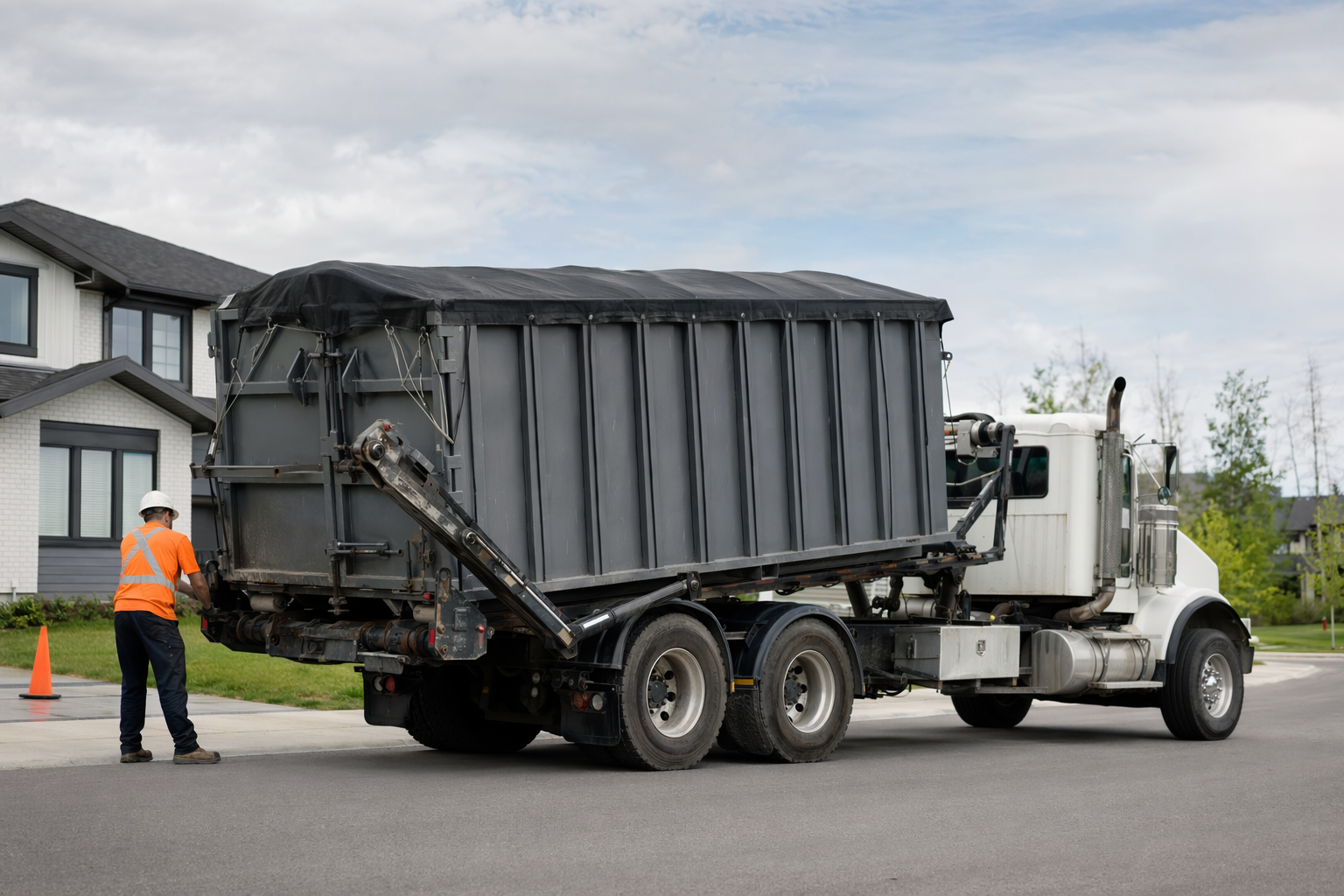
If you need labor for a small job, junk removal may be worth it; if you have several pickup loads or an ongoing project, a dumpster is usually the better value.
Common questions
Is junk removal cheaper than renting a dumpster?
For a very small job, sometimes yes. For bigger cleanouts, remodel debris, or anything that takes several pickup loads, a dumpster is often cheaper because you are not paying for a crew to do all the lifting.
How much junk is enough to justify a dumpster?
If you expect a few pickup-truck loads or more, a dumpster is usually worth pricing. If the debris will build up over several days, that also points toward a dumpster.
What size dumpster do most homeowners need?
A 20-yard is a common choice for cleanouts and mid-size remodeling jobs. But people under-order all the time, so if you are between sizes, the next size up is usually the safer and cheaper move.
Can I put furniture and household junk in a dumpster?
Usually yes, but not always everything. Mattresses, appliances, TVs, tires, batteries, paint, and other restricted items may cost extra or be prohibited, so confirm locally before loading.
Do I need a permit for a dumpster?
Maybe. If the dumpster goes on a street, alley, or public right-of-way, some cities require a permit. Rules vary by area, so check with the city and the local hauler before delivery.
Does BinRoute haul junk or deliver dumpsters?
No. BinRoute is a free matching service, not a waste-management or hauling company. We help you connect with local licensed, insured haulers so you can compare options and choose who to hire.