Free downloads
Dumpster Size Calculator Guide
This free guide helps you estimate your debris in cubic yards and pickup-truck loads so you don’t under-order a roll-off dumpster. It’s built for homeowners, renters, and small contractors who want a simple way to pick the right size before they book.
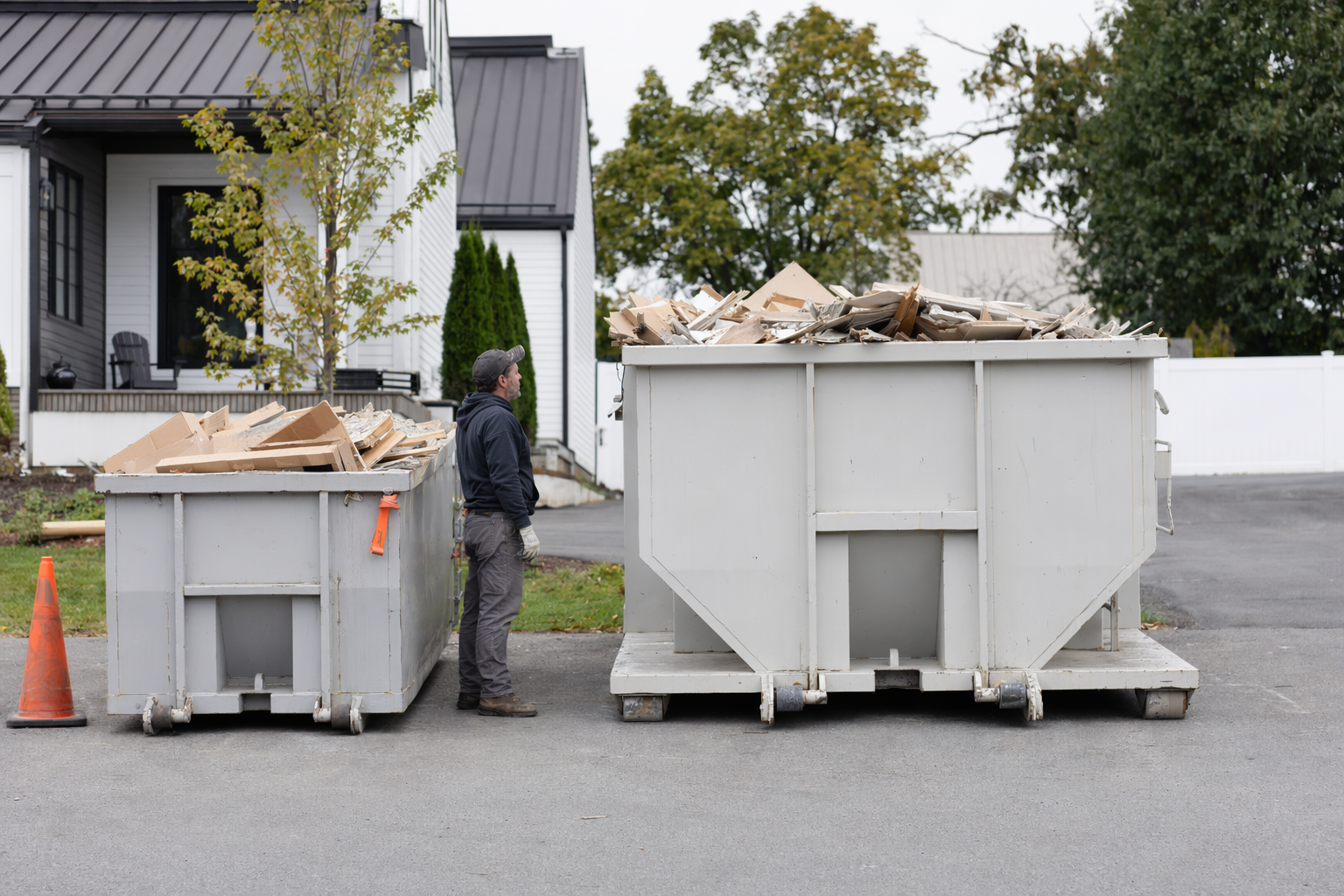
What this guide helps you do
The Dumpster Size Calculator Guide is a printable, plain-English checklist you can use before you rent a roll-off dumpster. It walks you through the two things that matter most: how much debris you really have, and how heavy it is.
That matters because most people guess too small. A bin that looks big enough often fills up fast once you break cabinets, cut drywall, stack roofing, or toss mixed construction debris. If you’re between sizes, the next size up is usually the safer choice than ordering a second bin later.
This guide is especially useful if you’re cleaning out a house, remodeling a room, tearing off a roof, or loading mixed debris from a small job. For concrete, dirt, shingles, or tile, it also reminds you that weight can limit what fits long before the bin looks full.
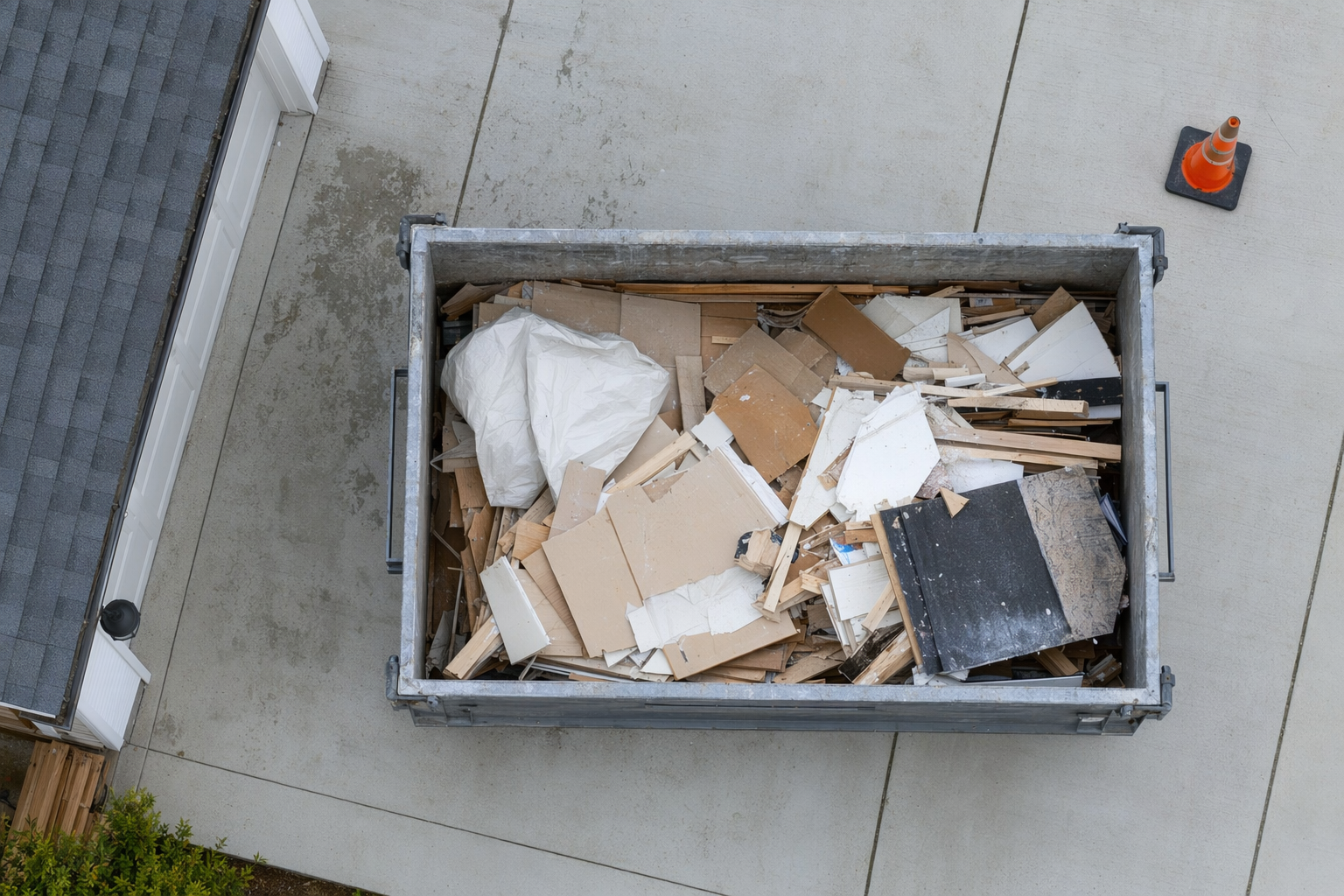
What’s inside the checklist
The guide gives you a simple way to estimate volume without needing special tools. It helps you think in cubic yards, which is how roll-off dumpsters are usually sized.
You’ll see prompts that translate common job-site piles into real-world terms, like pickup-truck loads, contractor bags, or room-by-room debris. That makes it easier to compare your load to common dumpster sizes instead of guessing from the curb.
It also includes a quick reminder to separate heavy material from bulky light debris when needed. Heavy clean fill like concrete or dirt often needs a smaller dedicated container because it can hit the weight limit fast.
In short, the guide is there to help you ask better questions before you book: size, weight allowance, rental period, placement, and the all-in price.
How to use it before you rent
- Walk the job area and estimate the debris by room, pile, or stack.
- Use the guide to convert what you see into cubic yards or pickup loads.
- Round up when you’re close between sizes.
- Check whether your debris is light and bulky, or heavy and dense.
- Confirm the dumpster size, rental period, tonnage allowance, placement, and all-in price in writing before delivery.
- If you need help finding a local company, use Get matched after you’ve estimated your load.
This page is for general planning only. Local rules, size limits, weight limits, and street permit rules vary by area and by hauler, so always confirm those details with the company you choose.
Who this page is for
This guide is for people who have never rented a dumpster before, and for anyone who wants a faster, more honest way to size a bin. It’s a good fit if you’re a homeowner clearing a basement, a renter doing a move-out cleanout, or a small contractor trying to avoid an extra haul.
If you’re browsing project types first, you can also start at Projects to see common cleanup and remodel scenarios. If you already know you need a roll-off but want more sizing help, the related article What size dumpster do I need? explains the basics in more detail.
BinRoute is a free matching service, not a waste-management or hauling company. We help you understand the job and connect with licensed, insured local dumpster-rental and hauling companies, but you still choose who to hire and verify the details yourself.
Costs and fees to keep an eye on
This guide is about sizing, but good sizing helps you avoid surprise costs. The real price depends on the dumpster size, your area, the rental period, the tonnage allowance, and the type of debris.
Common surprise charges to ask about up front are over-tonnage fees, extra-day fees, trip or dry-run fees, and prohibited-item fees. A low starting price can still end up expensive if the bin is too small or the weight goes over.
Ask for the all-in price in writing before the dumpster is delivered. That way you know what you’re paying for and can compare local haulers on the same terms.
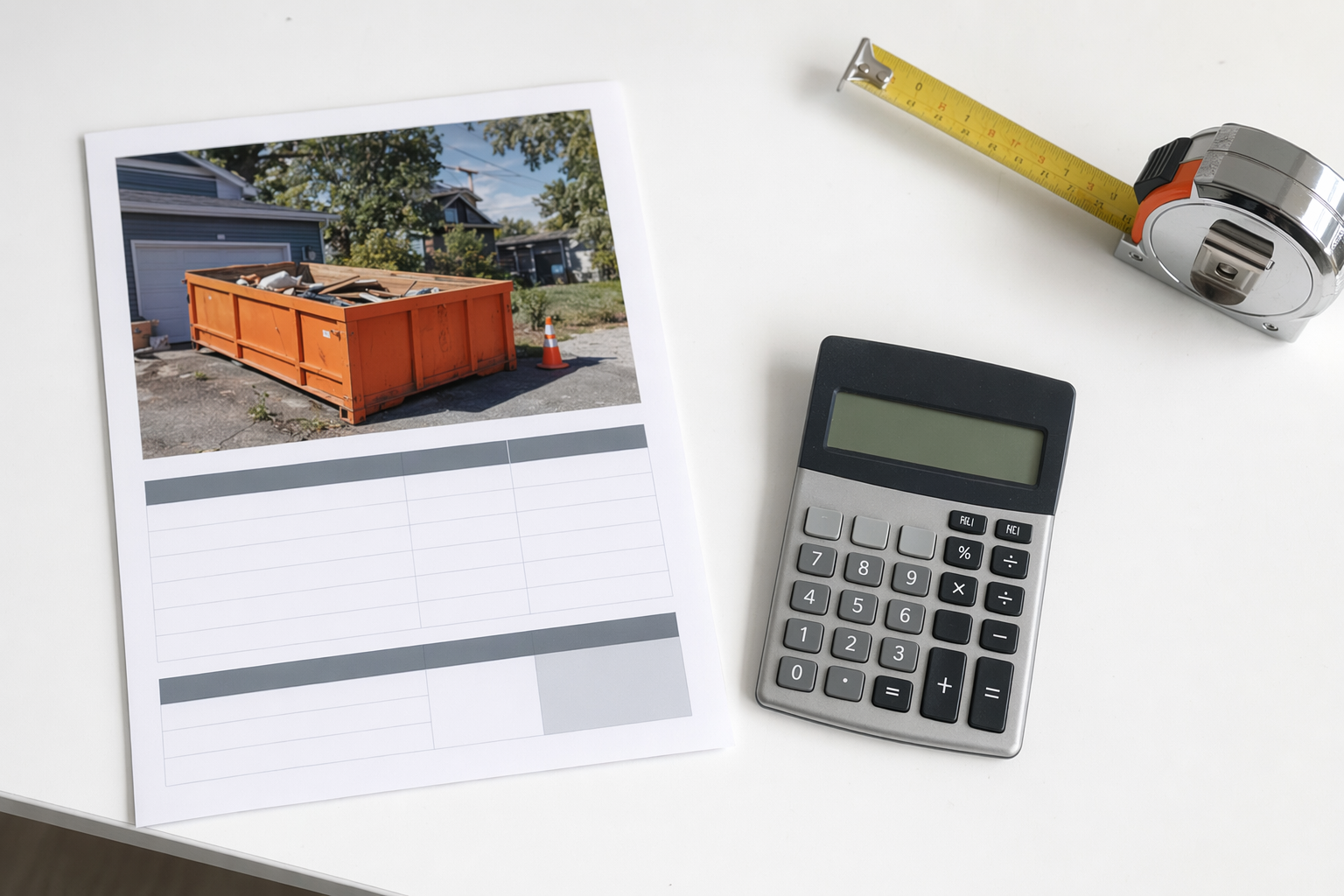
Use this free guide to estimate your debris, choose a safer dumpster size, and avoid surprise fees before you rent.
Common questions
How do I know what dumpster size I need if I’ve never rented one before?
Start by estimating your debris in cubic yards or pickup-truck loads, then round up if you’re between sizes. If the load is heavy, like concrete, dirt, shingles, or tile, check the weight allowance carefully because heavy material can fill a bin by weight before it looks full.
Is this guide a quote or a rental booking?
No. It’s a free planning resource only, and BinRoute is a free matching service, not a hauling company. You still need to confirm the final size, price, rental period, and local rules with the company you choose.
Can I throw anything into a roll-off dumpster?
No. What’s allowed varies by area and hauler, and hazardous, medical, and other regulated waste should go to the proper local disposal program. Always ask the hauler what they accept before you load the bin.
Why does the guide talk so much about rounding up?
Because most people underestimate the amount of debris they have. If you’re close between sizes, the next size up is usually cheaper and easier than paying for a second bin or an extra haul.