Free downloads
Dumpster Cost Comparison Guide
Use this free guide to compare 10, 20, 30, and 40-yard roll-off dumpster costs on the same terms—so you don’t get surprised by weight overages, extra days, or prohibited-item fees. It’s built for real U.S. rentals.
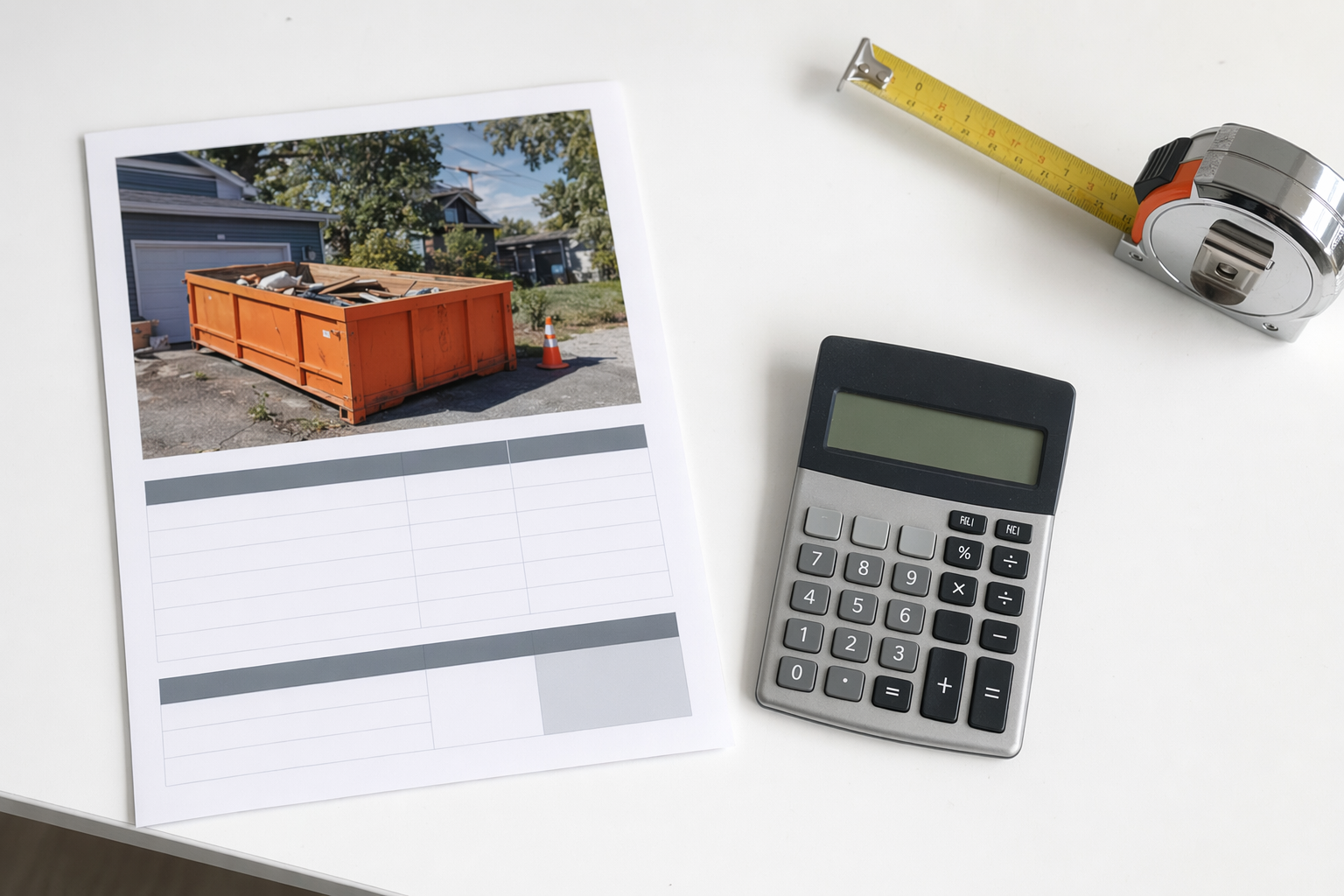
What’s inside the Dumpster Cost Comparison Guide (Free Download)
This guide is a practical checklist and comparison worksheet to help you sort “apples-to-apples” dumpster pricing.
You’ll see typical cost ranges for common roll-off sizes (10, 20, 30, and 40 yards), plus the most common line items that change your final bill. It’s designed to help you ask for the all-in price in writing and compare quotes fairly—especially if you’re new to renting.
You’ll also get a simple guide to understanding size vs. weight (for example, heavy debris like concrete and dirt can fill a bin by weight before it fills by volume). And it includes a plain-language list of common items that often cost extra or are not allowed—so you can avoid “gotchas” later.
Finally, it shows what to confirm with the hauler before delivery: rental period, weight limits/tonnage allowance, placement rules, and any permit/trash-management responsibilities that vary by city.
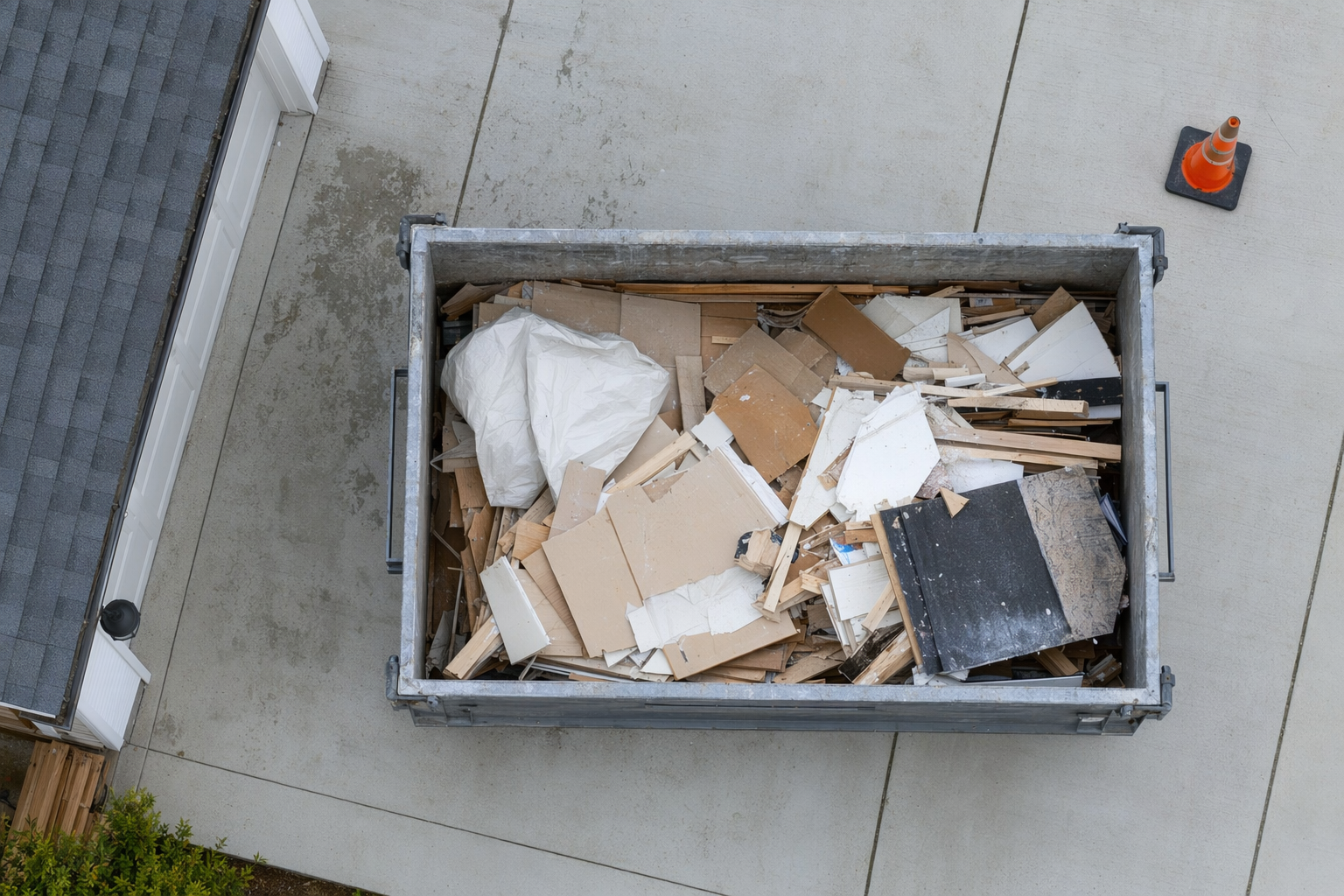
Who this guide helps (and when to use it)
This guide is for homeowners, renters, and small contractors who need a roll-off dumpster and want to compare options without getting lost in confusing pricing.
It’s especially useful if you’re:
- Planning a cleanout, renovation, roofing tear-off, or construction/demolition cleanup
- Considering multiple sizes and want to know which one is usually the smarter choice
- Getting quotes that don’t look comparable and you want a consistent checklist
If you’re new to the U.S. (or new to dumpster rentals), this guide helps you navigate what to ask for, what usually drives costs up, and how to avoid surprise fees—without requiring you to already know the “insider” terms.
How to use the guide before you rent
Start by matching your project to a likely dumpster size range, then use the worksheet to compare quotes on the same basis. Most people under-order, and when debris is heavy (concrete, dirt, shingles, tile), you can hit weight limits fast—so you don’t want to guess.
- Pick your project type and estimate how much debris you have
- Use the guide’s comparison checklist to write down what each quote includes
- Ask each hauler for the all-in price in writing (not just the rental fee)
- Confirm the rental period, weight allowance/tonnage, placement details, and any extra charges
- Only then choose the size and hauler that matches your needs
If you want help choosing the right size first, use what size dumpster do I need? as a starting point. If you’re comparing projects and debris types, browse projects for common real-world scenarios.
What costs and “surprise fees” to compare (common line items)
Dumpster pricing varies by area and by hauler, so the guide gives cost RANGES, not guaranteed quotes. The final price depends on dumpster size, your rental period, debris type, and especially weight/tonnage.
When you compare quotes, watch for these common add-ons:
- Over-tonnage charges: Fees per ton after you exceed the weight allowance
- Extra days: Charges if you keep the dumpster longer than your rental window
- Trip or dry-run charges: Sometimes there’s a fee for a delivery attempt, repositioning, or blocked access
- Prohibited-item fees: Some items are not allowed, and others trigger extra fees or removal requirements
The guide also reminds you that rules vary locally—street placement permits, HOA requirements, and what’s allowed can change city to city and from hauler to hauler. For hazardous, medical, or regulated waste, you’ll need the proper local disposal program (don’t assume a roll-off is the right route).
How BinRoute fits in (free matching, not hauling)
BinRoute is a FREE matching service. We do not rent, deliver, haul, or dispose of dumpsters—we connect you with licensed, insured local dumpster-rental and hauling companies.
To get matched, you provide contact plus basic project intent (for example: your name, phone number, optional email, project type, your ZIP code, and your preferred language). You stay in control: you confirm the dumpster size, rental period, tonnage allowance, placement, and the all-in price before anything is delivered.
If you want to start the matching process after you review the guide, go to get matched.
Cost ranges vs. quotes: what to expect
This guide is meant to help you compare “equal terms,” not to promise a specific price. Even in the same neighborhood, two haulers can price differently based on local demand, disposal costs, and how they handle weight and prohibited items.
Think of the guide as your pre-rental filter: it helps you ask better questions and reduce the chance you’ll be surprised by overage fees or unclear inclusions. Always request the all-in price in writing and confirm details like weight limits and rental dates.
If your debris is heavy (concrete, dirt, roof materials, tile, stone), the guide’s sizing/weight notes are especially important—heavy loads often require a different strategy than lighter “cleanup trash.”
Download the free Dumpster Cost Comparison Guide to compare 10–40 yard roll-off costs using the same checklist—so you spot weight overages, extra-day fees, and prohibited-item surprises before you rent.
Common questions
Is the guide a quote, or will it tell me my exact total?
No—this is a free comparison guide with cost RANGES and a checklist of what to ask for. Your final price depends on your size choice, rental period, debris type, and your area’s weight/fee rules, so quotes are still needed to confirm the all-in cost.
What do I need to compare quotes correctly?
Ask each hauler for the all-in price in writing and confirm the rental period, the weight allowance/tonnage, delivery/placement details, and any extra charges (over-tonnage, extra days, trip/dry-run, and prohibited items). The goal is to compare the same terms across options.
Can I use this guide for roofing tear-offs and concrete/dirt jobs?
Yes—those projects are included in the guide’s focus on weight vs. volume and the fees to watch for. Heavy debris fills bins by weight first, and rules vary by area, so still confirm local requirements and the specific items allowed with the hauler.