Guides
Where to place a roll-off dumpster on your property
Pick a spot that the truck can safely reach and that won’t damage your property or block public access. With roll-off dumpsters, the placement rules (and whether you need a permit) vary by city and by hauler—so confirm locally before delivery.
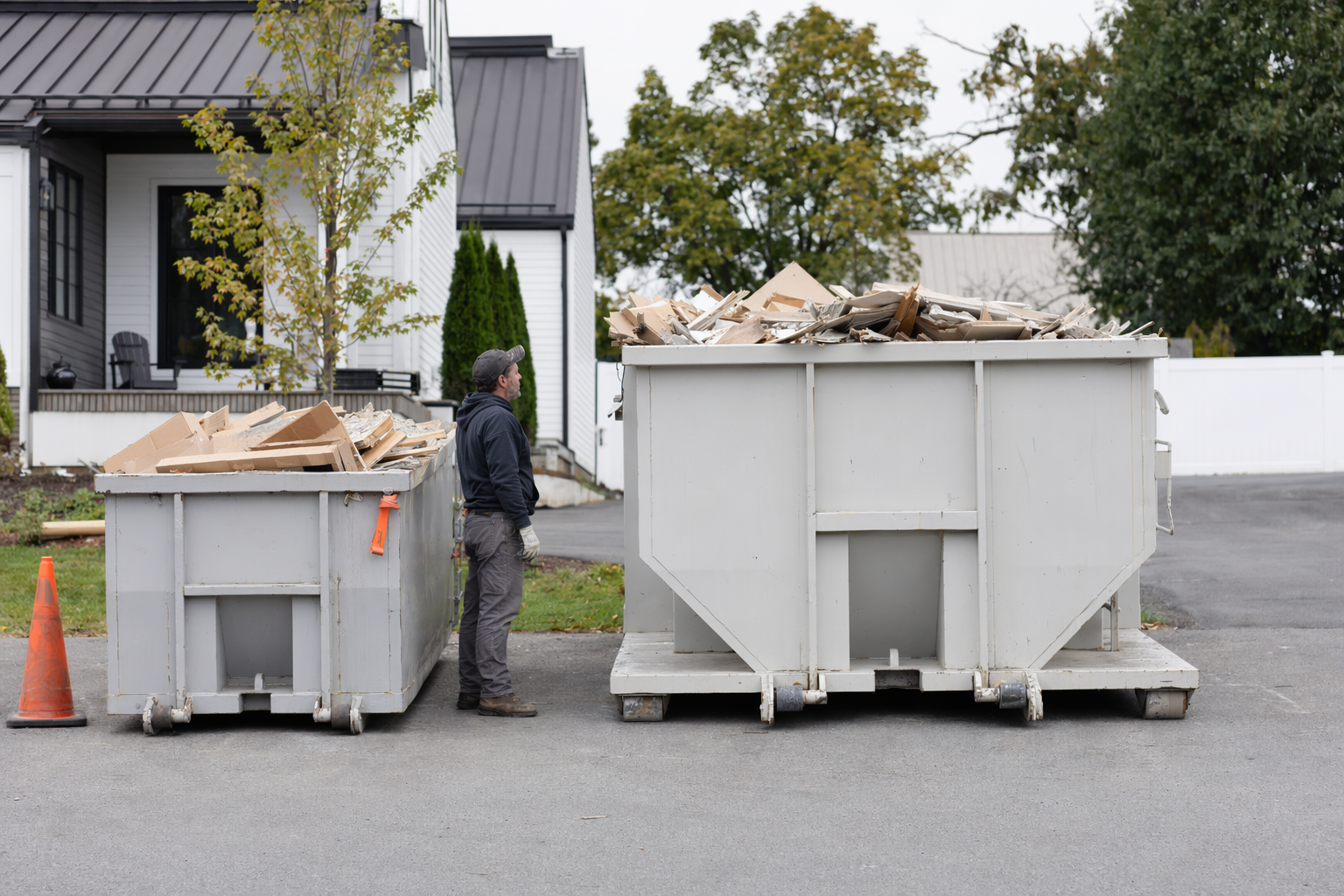
Start here: the right placement is about access, safety, and rules
The best location is the one the delivery truck can line up with, unload safely from, and that keeps heavy bin weight off fragile surfaces.
Before you rent, tell the hauler where you want the dumpster and describe what’s there: driveway type (asphalt/concrete/pavers), slope, overhead wires, gates, trees, and any nearby street parking. A licensed, insured local hauler should review placement options with you.
BinRoute is a free matching service (we connect you with local companies), not a dumpster provider—so make sure you confirm the exact placement plan and the all-in price in writing before the truck shows up.
Rules vary by area. If the dumpster goes near the curb, sidewalk, or street, your city may require a permit and specific placement distances.
- Aim for a spot the truck can reach without backing over lawns or soft ground
- If it touches the street/sidewalk, ask if you need a permit and who arranges it

Driveway vs. street: what to choose (and what to avoid)
Driveway placement is usually simpler and safer for you—less chance of permit issues and fewer restrictions. If you have a wide, level driveway with enough clearance for the roll-off truck, this is often the best option.
Street placement can be allowed, but it’s where permits, signage, and placement rules most often come up. Some cities require the homeowner to get the permit; some require the hauler to manage it. Either way, confirm who is responsible in your area.
Avoid placing the dumpster where it will block hydrants, fire lanes, driveways/egress for neighbors, sidewalks, bike lanes, or mailboxes. If you’re unsure, ask the local hauler and your city—rules vary.
- If you can use the driveway, it’s often the lowest-stress choice
- Street/curb placement can require permits and specific distances
Check clearance: the truck needs room, and the bin needs to land level
Roll-off trucks are big and they’re not gentle. You need clearance for the truck to get close enough and for the bin to swing down safely. Measure the access route and look for anything that can hit: low branches, garage overhangs, fences, and utility lines.
Overhead power lines are a big deal. Don’t try to “make it work” if a truck or boom area feels too close—this is exactly the kind of risk a hauler should assess before delivery.
Also think about level ground. A dumpster can be positioned on many surfaces, but if the landing area is sloped, soft, or unstable, it can cause problems during placement and loading. If your driveway has a steep grade or soft shoulders, ask for alternatives.
- Watch for low branches, gates, fences, and garage overhangs
- Confirm overhead line clearance with the hauler
- Try to place it on a firm, level surface
Protect your property: surfaces, gates, and “don’t crack my driveway”
Most damage complaints happen when the truck crosses weak spots or when the bin lands on fragile surfaces. If your driveway is made of pavers, has a decorative front walkway, or has a known crack/weak section, tell the hauler upfront.
A common approach is to stage the truck on solid ground and place the dumpster on the driveway or a designated area. Some haulers can place plywood or protective mats in limited cases—but don’t assume. Ask what protection they provide and what you’re expected to do.
If the bin will go near a yard, flower beds, or retaining walls, clear the area. Remove loose items, trim encroaching branches, and make sure there’s nothing for the truck to catch on.
How placement choices affect cost and surprise fees
Your placement can change your total price. Getting the bin positioned easily usually means fewer complications. Hard-to-reach locations, tight turns, or moving the truck position can raise costs.
Here are common “surprise fee” categories to ask about before delivery—make sure you get the all-in price in writing:
- Extra day fees if you need more time than the rental period
- Over-tonnage charges if your load exceeds the included weight allowance
- Trip/dry-run or access fees if the truck can’t place the dumpster as planned
- Prohibited item disposal fees if you’re trying to toss items that aren’t allowed (rules vary, and hazardous/regulated waste often must go through separate local programs)
Even if your location is perfect, heavy debris fills a bin by WEIGHT before volume. That’s why people often under-order: a “smaller” bin can fill up fast and cost more once you hit the weight limit. When you’re choosing what size bin fits your project, round up if your debris is heavy (concrete, dirt, shingles, tile). For heavy clean fill, a smaller dedicated container for that material is usually the cheaper move than loading it into a general debris bin.
For exact pricing in your area, check the dumpster costs guide and then confirm everything with the matched hauler. BinRoute can help you get matched based on your ZIP, project type, and preferred language.
Get matched the right way: confirm placement before the truck arrives
When you request a match, you’ll share your contact and project intent (your name, phone, optional email, project type, ZIP, and preferred language). Then the local companies can propose the correct dumpster size and the placement plan for your location.
Before delivery, confirm these items directly with the hauler—don’t rely on assumptions:
- Dumpster size and rental period
- Weight/tonnage allowance and how overage is charged
- The exact placement location (driveway spot vs. curb spot)
- Any permit requirements in your area and who handles them
- The all-in price and what “surprise fees” could apply
If you’re planning a specific project, review the right project guide so you can estimate what you’ll be throwing away and whether you need a heavier-duty plan for concrete, dirt, or shingles.
Choose a firm, level spot the truck can safely reach—driveway first, curb/street only if permits and local placement rules allow it—and confirm the placement plan and all-in price before delivery.
Common questions
Can I put a roll-off dumpster on the street in front of my house?
Sometimes, but it depends on your city’s rules and whether a permit is required. Ask the hauler what’s allowed in your area and confirm who handles the permit and the exact placement location before delivery.
What’s the safest place on my property to drop the dumpster?
Usually a wide, firm, level spot on your driveway where the truck can set the bin without backing over soft ground or crossing weak surfaces. If you have pavers, a slope, or a narrow driveway, tell the hauler upfront so they can plan safe placement.
Will the dumpster damage my driveway?
It can, especially if the truck crosses cracks, soft spots, or landscaping, or if the bin lands unevenly. Confirm what protection (if any) the hauler uses and decide where the bin should go before they arrive.
Why would placement change my dumpster cost?
Access problems can trigger extra fees—like a dry-run/trip if the truck can’t place it where planned. Also, your total cost depends on size, rental length, and especially weight/tonnage limits, which can lead to overage charges.
Do I need a permit to place a dumpster near the curb or sidewalk?
Often yes, but the requirement varies by area and sometimes by the hauler’s process. Always confirm locally (and in your contract) who is responsible for permits and what rules apply where you live.