Guides
How to rent a roll-off dumpster, step by step
Renting a roll-off dumpster is mostly choosing the right size, confirming the real all-in price, and making sure your drop-off spot and items are allowed. Follow these steps and you’ll avoid the most common “surprise fee” problems.
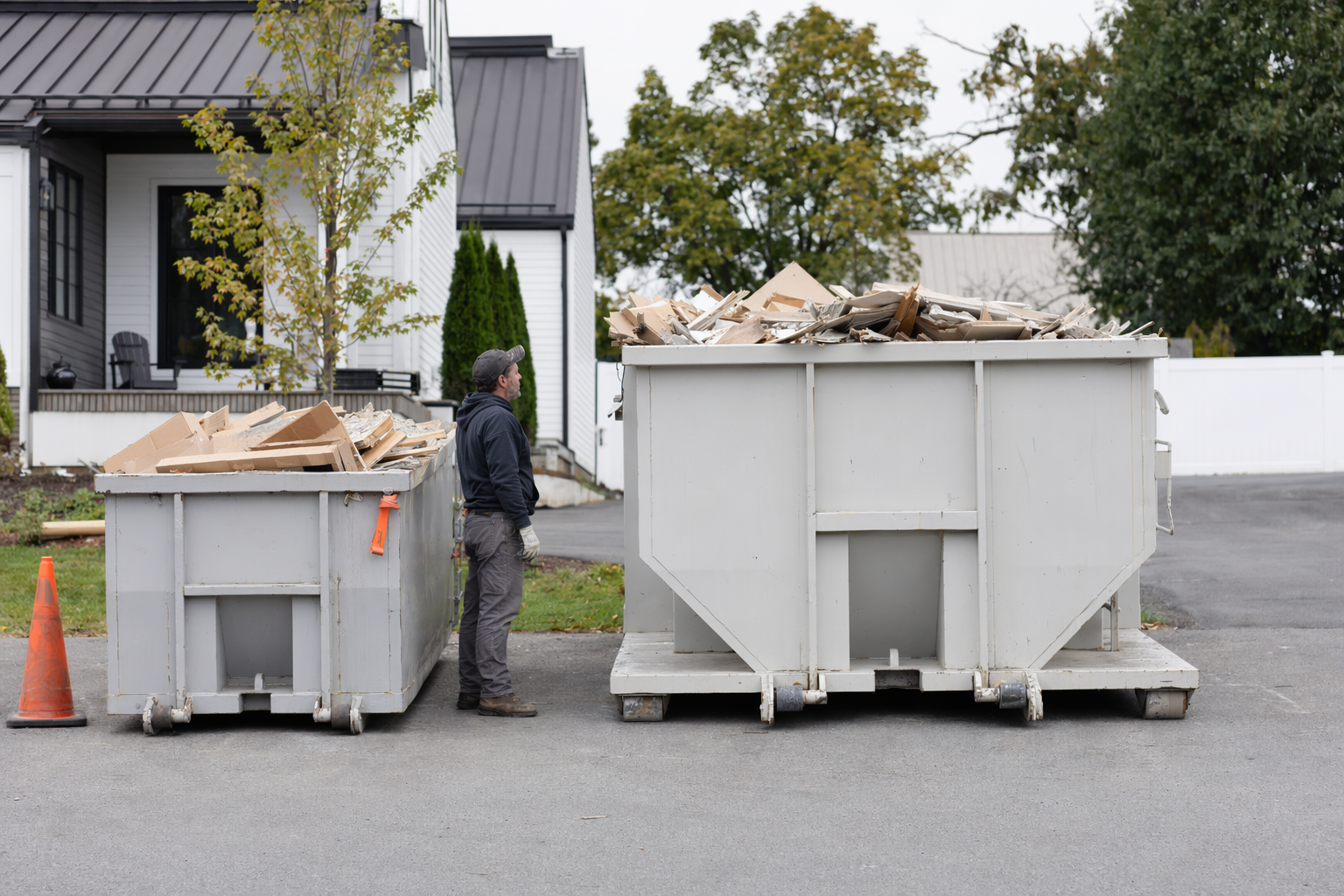
1) Start with the right size (most people under-order)
Here’s the blunt truth: most homeowners and small contractors rent a dumpster that’s too small. It’s almost always cheaper to rent the next size up than to pay to bring a second bin.
To pick your size, think in “how full will it be,” not just how many boxes you can see. Roll-off bins are measured in cubic yards (cu yd). Heavier debris fills a bin by WEIGHT before volume—so concrete, dirt, tile, shingles, and roof tear-offs can hit weight limits fast.
Use these quick starting points:
- 10–12 cu yd: small cleanouts, a garage sweep-out, light debris
- 15–20 cu yd: most remodels, bigger room cleanouts, mixed debris
- 25–30 cu yd: heavy cleanouts, roofing tear-offs, whole-home debris
If you’re between sizes, round UP. For heavy clean fill (concrete/dirt), a smaller dedicated container for that material is often smarter—because you’ll be paying for weight limits anyway.
For project-specific sizing help, use project guides and then compare to the size range you’re considering.

2) Know what affects price (and what “cheap” can hide)
Dumpster pricing isn’t one simple number. Typical all-in costs usually depend on the bin size, how long you keep it, your area, and the type of debris (because weight limits can trigger fees).
A realistic way to think about it: even when the “rental” looks affordable, surprises usually come from (1) weight/tonnage overages, (2) keeping it longer than the rental period, or (3) prohibited items that the hauler must refuse or handle differently.
To get honest budget ranges, check dumpster rental costs. Ranges are helpful, but they’re not quotes—your final price depends on your exact job and hauling conditions.
Important: when you ask for a price, don’t just ask for the rental line item. Ask for the “all-in” price and what’s included before delivery.
3) Ask the right questions before you book (to avoid surprise fees)
Before you schedule delivery, confirm these details with the dumpster company you choose (or with whoever you’re matched to):
- Rental period: how many days are included, and the per-day cost if you need extra time
- Weight/tonnage allowance: what the included weight limit is and the fee per ton (or per unit) for being over
- Prohibited items: what you can’t throw in (common examples include certain electronics, paint/chemicals, mattresses in some areas, and regulated waste—rules vary)
- Additional fees: trip/dry-run fees, blocking/long carry fees, or extra charges if the truck can’t place the bin where expected
- Placement: how close the bin can be set and whether a permit is needed for street placement
Name the problem items up front. Don’t assume “it’s just construction debris.” Rules and acceptance lists vary by area and by hauler.
If you want to avoid surprises, insist on an all-in price in writing first—then you can compare apples to apples.
For more general do/don’t guidance, start with the service’s guidance on getting matched so you can tell the hauler exactly what you’re removing.
4) Pick a drop-off spot that works for the truck
The placement controls everything. Before delivery day, walk the route and choose a spot the roll-off truck can safely access.
- Pick a solid, flat area where the bin won’t block emergency access
- Keep the bin away from overhead wires and anything it could damage
- Plan for vehicle access: the truck needs enough space to set the bin and later pick it up
- Think about the “path of least effort” for loading (so you’re not carrying debris across your yard)
Street placement and permits: if you plan to place the bin on a public street/sidewalk, some areas require a permit. Requirements vary by city and county, and the hauler usually knows the local process—but you should confirm locally before you plan on public placement.
Also confirm the bin placement rules you’ll be held to. For example, some companies won’t set a bin on certain surfaces or where it would interfere with driveways.
5) Fill it correctly (by weight first) and plan your loading
Most dumpsters fill up by weight before they look “full.” That’s especially true for concrete, dirt, roof shingles, tile, and other dense materials.
Quick loading reminders:
- Put heavy material in a way that keeps you under the weight limit
- Avoid mixing materials that you already suspect might be restricted
- Don’t pack it tight enough to exceed the fill rules (companies often have “max fill” expectations)
If you’re dealing with heavy debris, consider whether you need a plan that’s different from a mixed-debris job. Often the best move is to use the right bin size for the heavy material and keep other lighter waste separate.
For regulated or hazardous waste, don’t guess. For anything that’s hazardous, medical, or otherwise regulated, use the proper local disposal program instead of the dumpster.
6) Schedule delivery and pickup (and stay in control)
Once you’ve confirmed size, rental period, weight allowance, and the all-in price, schedule delivery for a time that matches your cleanup schedule.
On the day of delivery:
- Be ready with your placement spot chosen and clear of obstacles
- Confirm the bin size on delivery
- Confirm the included days and what counts as an extra day
On the day of pickup:
- Don’t overload beyond the company’s stated limits
- Keep access clear so the truck doesn’t need an extra trip
You stay in control. BinRoute is a free matching service that helps you connect with licensed, insured local dumpster-rental and hauling companies—it doesn’t rent, deliver, or haul dumpsters, and it doesn’t dispose of waste. Verify the company’s licensing/insurance and confirm all terms directly with them before delivery.
Choose the right size, confirm the all-in price (including weight and extra-day fees), place the bin safely (permits may be needed for street placement), and confirm what items are allowed before delivery—BinRoute helps you get matched with local licensed, insured companies, but you handle the final booking details.
Common questions
What size roll-off dumpster should I rent for a home cleanout?
Most cleanouts end up needing more space than people expect. A common starting point is 15–20 cu yd for a big room-to-garage cleanout and 25–30 cu yd for whole-home debris, especially if there’s mixed heavy material. If you’re between sizes, round up and confirm weight limits—heavy debris fills by weight.
How much does it cost to rent a roll-off dumpster?
Typical costs vary by bin size, your area, rental period, and the type of debris. Weight/tonnage overages and extra days can add real money, so ask for the all-in price and the exact fee schedule for over-limit weight and extra time. Check [dumpster rental costs](/costs/) for realistic ranges in your situation.
What are the most common surprise fees?
The big ones are (1) over-tonnage/weight fees after you exceed the included allowance, (2) extra-day charges when you keep the bin longer than the rental period, and (3) fees tied to prohibited items or failed/blocked placement that causes an extra trip. Get the all-in price in writing and ask what triggers each fee.
Do I need a permit to place a roll-off dumpster on the street?
Sometimes, yes—often depending on city rules and whether the bin is on public right-of-way. Permit requirements vary by area, so confirm locally and with the dumpster company before you plan street placement.
Can I throw anything in the dumpster?
No—each hauler and local rule set has its own prohibited items list, especially for regulated waste, some electronics, certain chemicals, and other special categories. When in doubt, don’t guess; ask the hauler what’s allowed. For hazardous or regulated waste, use your local proper disposal program.