Guides
Dumpster weight limits and tonnage, explained
Tonnage (weight) limits are usually what surprises people—not the dumpster size. This guide explains how weight allowances work, why heavy debris fills bins fast, and what fees to confirm before delivery.
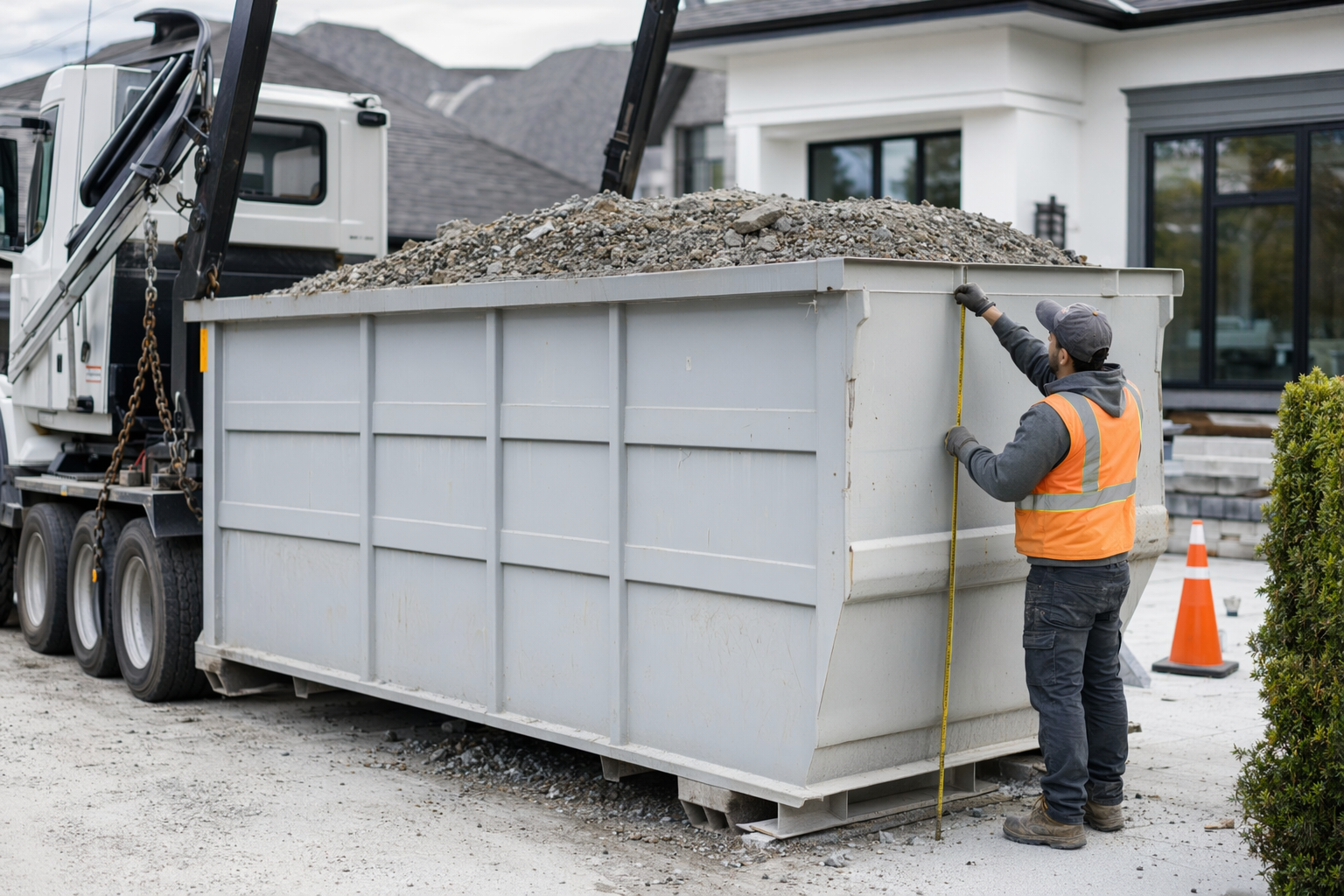
The short answer: weight (tonnage) is the real limit
Most roll-off dumpsters come with a weight allowance (often described as “tons” or a “tonnage included” number). If your load weighs more than that allowance, the hauler typically charges an over-tonnage fee—sometimes per additional ton, and it can add up fast.
Here’s the practical takeaway: with heavy debris (concrete, dirt, rocks, shingles, tile), you can hit the weight limit while the bin still looks “not full.” That’s why “I’ll just put a little more in” can turn into a big bill.
Before you rent, make sure you understand the all-in pricing for:
- the included tonnage allowance
- the over-tonnage rate (per ton)
- any extra-day, trip/dry-run, or prohibited-item fees
- Confirm the included tonnage and the over-tonnage price in writing before the dumpster is delivered.
- When in doubt between sizes for heavy debris, a dedicated smaller “heavy” bin often beats overloading a regular one.

How tonnage limits work (and why heavy debris fills by weight)
A roll-off dumpster has two “limits”: size (cubic yards) and weight (tonnage). People focus on volume, but haulers charge based on weight because hauling and disposal costs scale with what the load weighs.
Heavy materials pack a lot of weight into a small space. For example, concrete, bricks, pavers, dirt, sand, roofing shingles, and tile can reach weight limits at a fraction of the bin’s “visual height.”
Rule of thumb for planning: if your debris is heavy, you should expect to use the weight limit as your sizing guide—not the amount of air you can see in the bin.
- Concrete and dirt are typically the biggest “weight early” problems.
- If you’re mixing light trash with heavy material, the heavy part still drives the tonnage.
What can cause surprise over-tonnage charges
Over-tonnage charges usually come from one of these situations:
- Your debris is heavier than you expected (common with roofing tear-offs, tile, masonry, and concrete fill)
- You mix in extra heavy loads mid-project without adjusting your plan
- You “level it off” with more material, but weight is still climbing
Other fee categories that can surprise people (ask for the full list):
- per-ton overage beyond the included allowance
- extra days if the rental runs long
- trip/dry-run fees if placement or access changes
- fees for prohibited items (certain materials aren’t allowed or must go to a specific program)
- Get the all-in price details in writing: tonnage allowance, overage rate, and any per-day or trip fees.
- If a hauler says “we’ll figure it out later,” push for the numbers up front.
Sizing advice: the “round up” mindset (but with a weight plan)
Most homeowners and small contractors under-order. The fix is often simple: if you’re between sizes, it’s usually cheaper to rent the next size up than to scramble for a second bin.
But heavy debris is different. Concrete, dirt, and similar “heavy clean fill” materials can make you hit the weight cap quickly. In those cases, you may need a smaller bin dedicated to heavy material so you don’t pay over-tonnage.
Practical approach:
1. Estimate the debris type first (light vs heavy).
2. Use volume estimates for light debris (demo junk, general debris).
3. For heavy debris, plan around weight—don’t assume “it’ll be fine because the bin isn’t full.”
- When between sizes for light debris: next size up is often the safer move.
- When dealing with heavy debris: consider a smaller dedicated bin for weight reasons.
Permits, rules, and who’s responsible vary by area
Weight limits and tonnage allowances aren’t the same everywhere, and rules about dumpster placement can vary by city and even by neighborhood. Some locations require street placement permits; others require specific placement rules or set limits on where a roll-off can sit.
Also, prohibited items and how they must be handled vary by area and by hauler. For hazardous, medical, or regulated waste, you generally need the proper local disposal program—not the regular dumpster.
BinRoute can help you find licensed, insured local haulers, but you should still confirm the local requirements and prohibited-item list for your exact address before loading up. Verify placement rules with the provider you hire.
- Confirm whether you need a permit for where the dumpster will be placed (street vs driveway/yard).
- For hazardous/regulated waste, use the proper local disposal program.
How to get matched with the right dumpster (so weight isn’t a surprise)
BinRoute is a FREE matching service. We don’t rent or haul dumpsters; we help you connect with licensed, insured local dumpster-rental and hauling companies that match your project.
To get the right weight plan, you’ll want to share your project type and ZIP code, and be clear about what you’re throwing away (especially heavy debris like concrete, dirt, shingles, or tile). Then the hauler you choose can tell you the included tonnage, over-tonnage fee, rental period options, and whether your items are allowed.
Next steps:
1. Use get matched with your ZIP and project details.
2. Review the size recommendation and ask about included tonnage and overage rates.
3. Confirm the all-in price (not just the base rental) before delivery.
For more guidance, see cost factors and project examples.
- Customer stays in control: confirm size, rental period, placement, and all-in pricing before delivery.
- Licenses and insurance matter—choose a qualified local provider and verify details with them.
Weight limits (tonnage) are often the real constraint—especially with concrete, dirt, shingles, and tile—so confirm the included tons, over-tonnage fees, and local rules before you load up.
Common questions
What happens if I accidentally go over the dumpster weight limit?
Most haulers charge an over-tonnage fee per additional ton beyond the included allowance. The exact rate and how they measure weight can vary, so ask for the overage price and tonnage details in writing before delivery.
Why does concrete or roofing fill a dumpster “so fast”?
Because those materials are heavy. You can reach the weight allowance before the bin looks full, so sizing by volume alone often leads to an expensive over-tonnage bill.
Is tonnage included different for different dumpster sizes?
It usually is. The included tonnage allowance typically changes with dumpster size and the hauler’s pricing rules, so confirm the included tons for the specific size you’re renting.
What should I ask for when getting a dumpster rental quote?
Ask for the included tonnage allowance, the over-tonnage rate, the rental period length (and extra-day fee if any), and any trip/dry-run or prohibited-item fees. Make sure it’s an all-in price—ranges are normal, but fees should be clear.
Do I need a permit for a roll-off dumpster?
Sometimes. Permit needs depend on your city, the placement location (street vs driveway/yard), and local rules—so confirm locally and with the hauler you choose.