Guides
What a dumpster rental really costs
Most roll-off dumpster rentals land in a pretty normal price range, but the cheap ad price is often not the real total. The size, your area, rental days, weight allowance, and what you throw in are what really move the number.
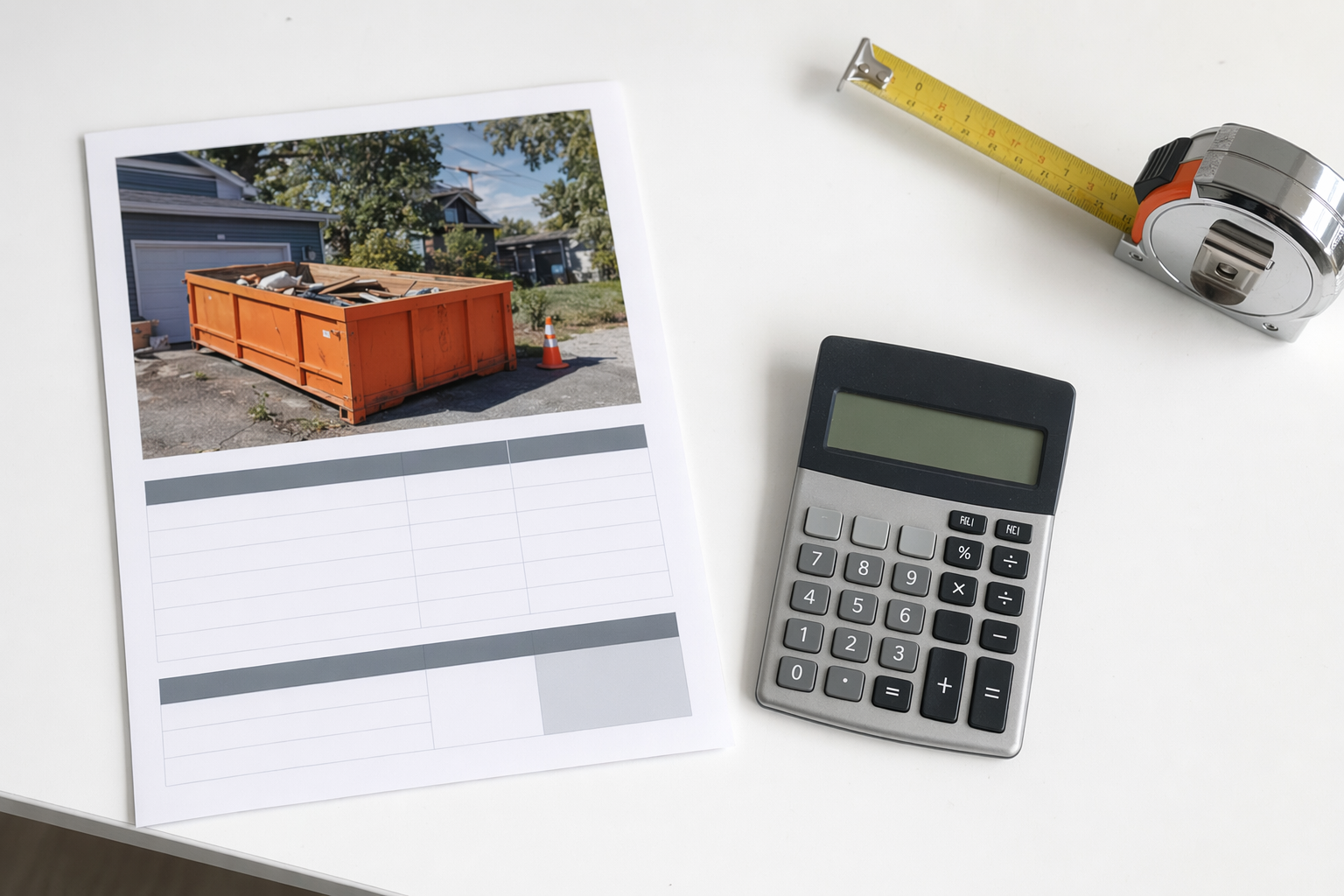
Short answer: what a dumpster rental usually costs
For a standard roll-off dumpster rental, many people see rough starting ranges like this: 10-yard about $300-$550, 20-yard about $375-$650, 30-yard about $450-$750, and 40-yard about $550-$900+. In some cities or for heavy debris, the real number can run higher.
Those are general ranges, not quotes. Your actual price depends on five big things: the dumpster size, your local area, how many days you keep it, how much weight is included, and what kind of debris you load.
A bigger bin does cost more, but not always by as much as people expect. If you are between sizes, the next size up is often cheaper than ordering a second dumpster later. Most people under-order, especially on cleanouts and remodels.
- 10-yard: about $300-$550
- 20-yard: about $375-$650
- 30-yard: about $450-$750
- 40-yard: about $550-$900+

What the base price usually covers
A normal dumpster quote often includes delivery, pickup, a set rental period, and a certain weight or tonnage allowance. That is the basic package people are really paying for.
The rental period is how long you can keep the dumpster before extra-day charges start. In many areas that might be around 7 to 14 days, but it varies. The tonnage allowance is the amount of debris weight included before overage charges kick in.
This is where people get tripped up. Two companies can both offer a '20-yard dumpster,' but one may include more days or more weight than the other. The lower price is not always the better deal if the allowance is too small for your job.
- Delivery and pickup
- A set number of rental days
- A weight allowance
- One container size
What drives the price up or down
Location matters a lot. Dump fees, landfill costs, traffic, local demand, and driving distance all affect the price. That is why the same 20-yard dumpster can cost one number in one ZIP code and a very different number in another.
The debris type matters just as much. Light material like household junk, brush, or packaging usually prices differently from heavy material like roofing shingles, tile, concrete, brick, dirt, or plaster. Heavy debris fills a dumpster by weight long before it looks full.
Rental length also changes the cost. If you keep the bin past the included period, expect extra-day charges. If the driver cannot drop it because the space is blocked, or cannot pick it up because the load is overfilled or inaccessible, you may also see a trip or dry-run fee.
- Area and ZIP code
- Dumpster size
- Rental period length
- Weight included
- Debris type
- Access and placement
The surprise fees to ask about before you book
Ask for the all-in price in writing before the dumpster is delivered. Plainly ask what happens if you go over the included weight, keep it longer, or toss in something the hauler does not accept.
The most common surprise charge is over-tonnage: a per-ton fee for weight above the allowance. This matters a lot on roofing, masonry, dirt, concrete, and heavy renovation debris. Another common charge is the extra-day fee if your project runs long.
Also ask about trip or dry-run fees. Those can happen if the truck shows up and the placement area is blocked, cars are in the way, overhead wires are an issue, or the dumpster is loaded too high to haul safely. Prohibited-item fees can be expensive too if banned items are found in the load.
Rules on prohibited items vary by area and by hauler, so confirm locally. For hazardous, medical, or other regulated waste, use the proper local disposal program instead of a roll-off dumpster.
- Over-tonnage fee
- Extra-day fee
- Trip or dry-run fee
- Prohibited-item fee
How size and weight affect cost more than people expect
A 10-yard dumpster is often used for small cleanouts, dirt, concrete, or a modest remodeling job. A 20-yard is the common middle ground for bigger cleanouts, flooring, deck removal, and many remodeling projects. A 30-yard or 40-yard is more common for large home cleanouts, major renovations, construction, or demolition.
But cubic yards are only half the story. A 20-yard dumpster full of attic junk is a very different load from a 20-yard dumpster full of shingles or dirt. Heavy debris can trigger overage fees fast, which is why many haulers want heavy clean fill in a smaller dedicated container.
That is the sizing truth people learn the hard way: for bulky mixed debris, round up a size if you are unsure. For concrete, dirt, brick, shingles, and similar heavy material, do not just order the biggest box. Confirm the allowed material and weight limits with the local hauler first.
- Most people under-order on volume
- Heavy debris fills by weight, not volume
- When between sizes, the next size up is often cheaper than a second bin
How to compare quotes the right way
Do not compare only the headline price. Compare the size, included days, included tonnage, accepted debris, and every possible extra fee. A low starting number can become the expensive option once weight and time are added.
A simple way to shop is to ask each company the same questions:
1. What is the all-in price for my ZIP code and debris type?
2. How many days are included?
3. How much weight is included?
4. What is the per-ton charge if I go over?
5. What items are prohibited?
6. What extra-day or dry-run fees could apply?
BinRoute is a free matching service, not a hauling company. We do not rent, deliver, haul, or dispose of dumpsters. We help you get connected with local licensed, insured dumpster rental providers so you can compare options, confirm the real terms, and choose who to hire. You can read more in our cost guides, browse project guides, see more dumpster guides, or get matched.
A dumpster rental usually costs a few hundred dollars, but the real total depends on size, local area, rental days, weight included, and surprise fees if you do not confirm the details first.
Common questions
Why is one 20-yard dumpster much cheaper than another?
Usually because the included days or weight allowance are different, or because the debris type is priced differently. Always compare the all-in price, not just the ad price.
Does the rental price include dumping fees?
Often yes, up to the included weight allowance. If your load goes over that limit, over-tonnage charges usually apply.
What is a tonnage allowance?
It is the amount of debris weight included in the base rental price. If the loaded dumpster weighs more than that amount, you usually pay a per-ton overage fee.
How many days do you usually get with a dumpster rental?
Many rentals include around 7 to 14 days, but it varies by area and by hauler. Confirm the rental period before delivery so you know when extra-day fees start.
Is it cheaper to get a bigger dumpster once or a smaller dumpster twice?
If you are between sizes for a mixed-debris job, one larger dumpster is often cheaper than filling a smaller one and ordering a second. Most people under-order.
Why do heavy materials cost more even in a small dumpster?
Because concrete, dirt, brick, shingles, and similar debris hit weight limits fast. Heavy loads are usually priced around tonnage, not just container size.
Can I throw anything I want into a roll-off dumpster if I pay for it?
No. Prohibited items vary by area and by hauler, and hazardous, medical, and regulated waste need proper local disposal programs. Always confirm accepted materials locally before loading.
What information does BinRoute need to help me get matched?
Just basic contact and project intent: your name, phone, optional email, project type, ZIP code, and preferred language. The service is free for the customer.