Guides
Do you need a permit for a dumpster?
Usually, you need a permit only if the dumpster has to sit on a street, sidewalk, alley, or other public right-of-way. If it stays on your own driveway or private property, you often do not—but always check locally because rules vary by city and county.
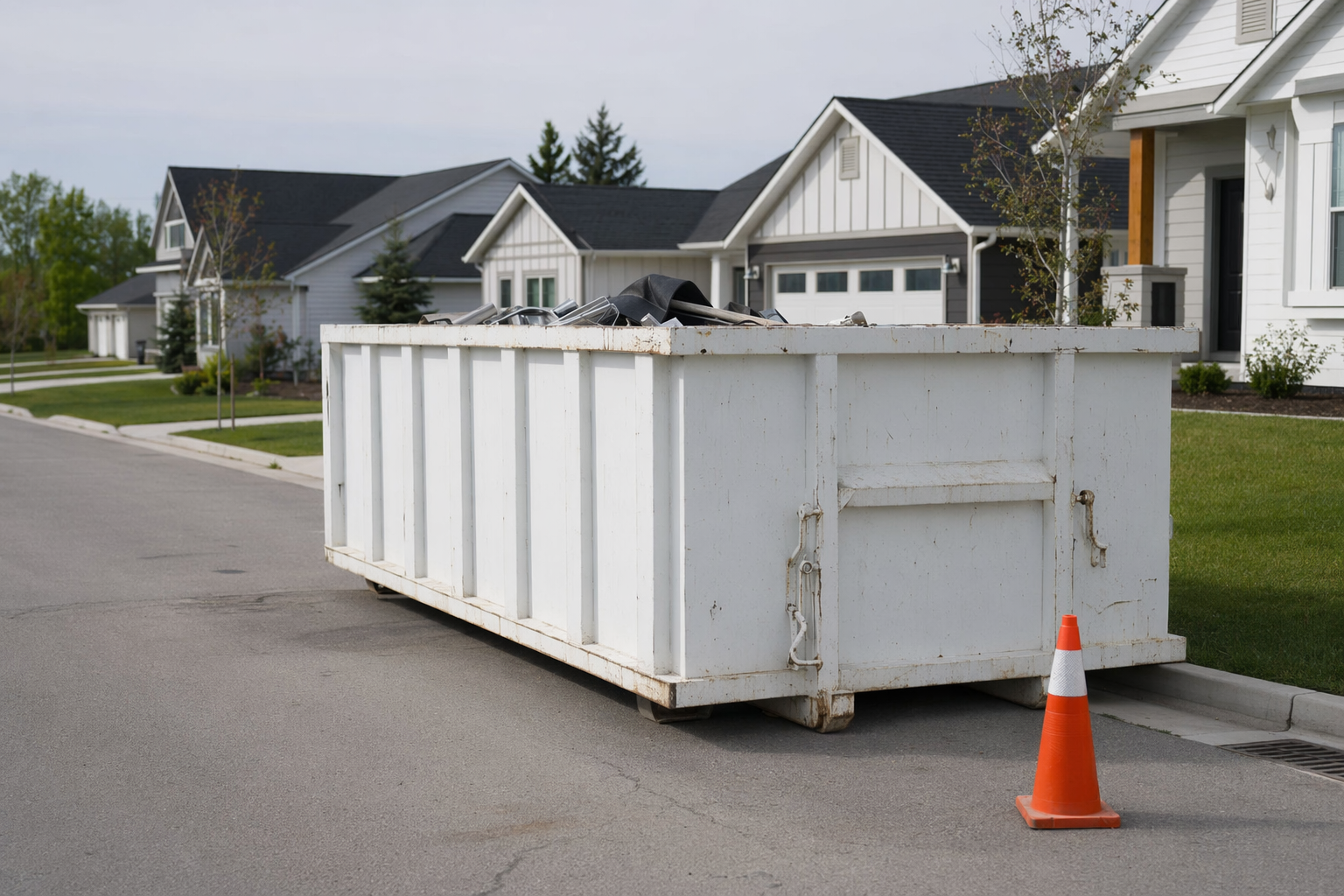
The short answer: where the dumpster sits is what matters
If the roll-off goes on your own private property, like a driveway, parking pad, or yard, many places do not require a permit. If it has to go on public space—street, curb lane, sidewalk, or alley—you usually need one from the local city, county, or transportation office.
That said, there is no single U.S. rule. Some towns are strict, some are lenient, and some require a permit for anything that sticks out into the street, even a little. Before you book, confirm the rules with your local office and the hauler you choose.
BinRoute is a free matching service, not a dumpster rental or hauling company. We connect customers with licensed, insured local haulers, but you should still verify the permit responsibility, placement rules, and all-in price in writing before delivery.

When a permit is more likely needed
A permit is more likely if any part of the bin will be on public property or affecting traffic, parking, pedestrians, or utilities. That can include curb placement, street placement, blocking a sidewalk, or using a lane where cars normally park.
Common situations that often trigger a permit:
- Dumpster on the street in front of a house
- Dumpster in an alley or shared access road
- Dumpster placed where it partly blocks traffic or a sidewalk
- Dumpster near signs, fire lanes, hydrants, or utility access
Even if a permit is required, the permit process and who applies for it vary by area. In some places, the customer gets it; in others, the hauler handles it; in some, either may be allowed. Confirm this before you say yes to the rental.
If it stays on your property, do you still need to check?
Yes. Even on private property, you may still have local rules about driveway protection, distance from the street, HOA rules, apartment or landlord rules, or weight limits on the surface under the container. Those are local and property-specific, so do not assume the answer.
If you are unsure, ask the hauler where the dumpster can safely sit and whether they have delivered to your type of driveway or lot before. A licensed, insured hauler is a good idea because they are more likely to know the local placement and permit issues.
For cleanouts, renovations, roofing, and other common projects, you can also start with project guides to figure out the right size first, then check placement and permit needs before delivery.
Who issues the permit and what it may cost
The permit usually comes from the city, county, public works department, transportation department, or another local office. If the dumpster is going on a state road or in a special district, a different office may handle it. There is no standard nationwide permit office.
Permit fees also vary a lot. Some areas charge only a small administrative fee; others charge more, especially if the dumpster sits in a busy street or needs extra review. Any cost you hear online is only a rough range, not a quote.
If you are comparing total rental costs, ask for the all-in price in writing and watch for surprise fees like over-tonnage charges, extra-day fees, dry-run or trip fees, and prohibited-item fees. For dumpster cost basics, see common price factors.
How to avoid delays and surprise fees
Before you schedule delivery, confirm these basics:
1. The dumpster size you really need—most people under-order, and the next size up is often cheaper than renting a second bin.
2. Where it will sit and whether that spot needs a permit.
3. Who is responsible for the permit application.
4. The rental period, tonnage allowance, and all-in price.
5. Which materials are not allowed.
This matters even more for heavy debris like concrete, dirt, shingles, and tile. Those loads fill by weight before volume, so a smaller dedicated bin is often the smarter choice. Always ask about the tonnage limit so you do not get hit with overage charges later.
The practical way to handle it
If you want the simplest path, tell the hauler exactly what you are throwing away, where the dumpster has to go, and your ZIP code. Then have them confirm the size, placement, permit expectation, and written price before anything is delivered.
If you want help getting connected to local options, use get matched. BinRoute collects only contact and project details like name, phone, optional email, project type, ZIP, and preferred language—nothing financial or sensitive.
For a broader overview of dumpster renting basics, you can also read the guides hub.
If the dumpster stays on your private property, you often do not need a permit; if it goes on a street, sidewalk, or other public space, you usually do—so check locally and get the rules in writing first.
Common questions
Do I need a permit for a dumpster in my driveway?
Often no, because it is on private property. But driveway rules can still vary by city, county, HOA, or landlord, so check locally before delivery.
Who usually gets the permit: me or the hauler?
It depends on the area and the company. Some haulers handle it, some expect the customer to do it, and some allow either—so confirm that in writing before you book.
What if the dumpster has to go partly on the street?
That usually makes a permit more likely. Street, curb, sidewalk, and alley placement are common reasons local offices require approval.
How can I avoid surprise charges?
Get the all-in price in writing and confirm the rental period, tonnage allowance, placement, and prohibited items. Watch for over-tonnage, extra-day, dry-run, and prohibited-item fees.