Guides
Avoiding surprise dumpster fees and overcharges
Most dumpster overcharges are avoidable if you ask the right questions before delivery. Get the all-in price in writing, confirm the weight allowance, and know which fees usually show up later.
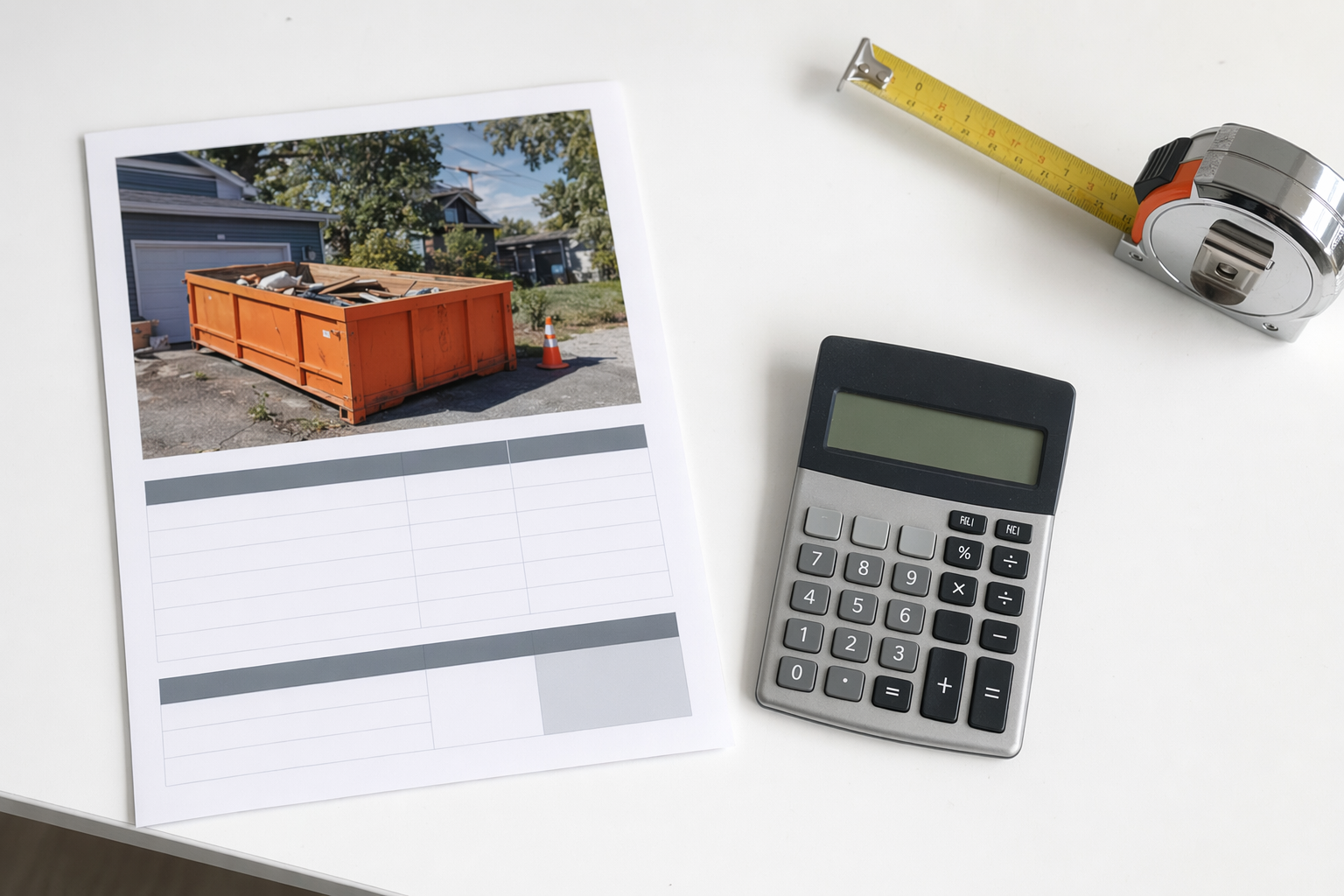
The short answer: how to avoid surprise fees
Before you book, ask for the all-in price in writing and make sure it includes five things: dumpster size, rental period, weight allowance, delivery/pickup, and the exact fees for going over. If any of that is vague, slow down and ask again.
The fees that catch people most often are over-tonnage charges, extra-day charges, trip or dry-run fees, and prohibited-item fees. A lot of people also get charged because they ordered too small and needed a second dumpster. When you are between sizes, the next size up is usually cheaper than renting another bin later.
Heavy debris like concrete, dirt, brick, shingles, and tile is where people get surprised fastest. Those materials hit the weight limit long before the dumpster looks full, so a smaller dedicated heavy-load container is usually the safer choice. Rules, weight limits, and accepted materials vary by area and by hauler, so always confirm locally.

What the real price should spell out
A fair dumpster quote should be simple enough that you can repeat it back in one sentence. Example: "A 20-yard dumpster for up to 7 days, with X tons included, delivered and picked up for $___, plus $___ per ton over, and $___ per extra day." If you cannot get that level of clarity, you do not really have a usable quote.
Across many US markets, a common roll-off dumpster rental might run roughly $300 to $850 or more depending on size, area, rental period, included weight, and debris type. Heavy materials, dense roofing loads, longer rentals, tight delivery conditions, and high-disposal-cost areas usually push the number up. These are general ranges, not quotes.
Ask whether taxes, fuel, environmental or disposal-related line items, and delivery/pickup are already included. Some companies present a low starting number that looks good at first but leaves out the parts you were always going to need anyway.
If you are comparing offers, compare the same size, same rental period, and same weight allowance. A cheaper number with less tonnage included is not always the cheaper rental.
The four surprise fees people run into most
Over-tonnage fees are the biggest one. Every dumpster comes with a weight allowance, and if your load goes over, you usually pay per ton over that limit. This is common on roofing tear-offs, remodeling debris, yard material with dirt mixed in, and anything with concrete, plaster, brick, or tile.
Extra-day fees are straightforward: you kept the dumpster longer than the included rental period. If your job might slip, ask the extra-day rate before delivery so you know the real cost of keeping it longer.
Trip or dry-run fees happen when the driver shows up but cannot deliver or cannot pick up. Common reasons are blocked driveways, locked gates, low wires, cars in the way, overloaded bins, or debris sticking up over the top. Prohibited-item fees show up when banned or regulated items are found in the load.
Get each of those charges in writing before you book. Not just "there may be extra fees" but the actual trigger for the fee and how it is calculated.
How to protect yourself before the dumpster arrives
Use this simple checklist before you say yes:
- Confirm the exact dumpster size in cubic yards.
- Confirm the rental period in days.
- Confirm the included weight allowance in tons.
- Ask the over-tonnage rate per ton over.
- Ask the extra-day rate.
- Ask when a trip or dry-run fee applies.
- Ask what items are prohibited locally.
- Ask whether the quoted price already includes delivery and pickup.
- Ask whether placement on the street needs a permit in your area.
- Get the all-in price terms in writing.
Also ask where the dumpster will sit and make sure the space is really usable. A truck needs room to roll the container off safely. If the drop spot is on a slope, soft ground, a crowded alley, or a narrow street, discuss that before delivery, not after the driver is on site.
Hire a licensed, insured local hauler and verify it. BinRoute is a free matching service, not a hauling company, so the customer stays in control and confirms the size, placement, rental period, tonnage allowance, and all-in price directly before the dumpster is delivered.
Load the dumpster in a way that avoids extra charges
Do not fill past the top rail. If debris is sticking up over the top, the hauler may not be able to tarp and haul it safely, which can lead to a return trip, a dry-run fee, or a requirement to unload material before pickup.
Keep heavy materials separate when possible. Concrete, dirt, asphalt, brick, shingles, and tile should usually go in smaller dedicated heavy-debris containers. A big bin that looks half full can still be overweight.
Try not to mix in items that often trigger problems, like mattresses, tires, paint, batteries, electronics, appliances containing refrigerants, propane cylinders, chemicals, or medical waste. What is accepted varies by area and by hauler. For hazardous, medical, or otherwise regulated waste, use the proper local disposal program.
If you are unsure what size you need, round up. Most people under-order, and the next size up is usually cheaper than ordering a second dumpster because the first one filled too fast. You can browse more practical help in guides, compare typical pricing on costs, or review common job types under projects.
How BinRoute can help without adding cost to you
BinRoute is free for the customer. We do not rent, deliver, haul dumpsters, or dispose of waste. We are a free matching service that helps you connect with licensed, insured local dumpster-rental and hauling companies so you can compare your options.
We only collect basic contact and project-intent details: name, phone, optional email, project type, ZIP code, and preferred language. You choose who to speak with and who to hire.
When you are ready, use get matched and ask each company the same questions about size, rental period, included tonnage, accepted materials, permit needs, and all-in price. That is the simplest way to avoid paying for surprises later.
- Free for the customer
- You compare local options yourself
- Confirm all terms before delivery
To avoid dumpster overcharges, get the full price, weight limit, rental days, and all possible extra fees in writing before the bin is delivered.
Common questions
What is the most common hidden dumpster fee?
Usually it is the over-tonnage fee. People see the dumpster size but miss the weight allowance, then get charged per ton over when the debris is heavier than expected.
How do I ask for an all-in dumpster price?
Ask for the size, rental period, included weight, delivery and pickup, and the exact overage fees in writing. Also ask about extra-day, trip or dry-run, and prohibited-item charges.
Why was my dumpster quote so much lower than the final bill?
Often the low number did not include enough weight, enough rental days, or all required charges. Compare quotes line by line, not just by the starting price.
Can I avoid over-tonnage charges by renting a bigger dumpster?
Not always. Bigger helps with volume, but heavy debris reaches weight limits first. For concrete, dirt, shingles, brick, or tile, a smaller dedicated heavy-load container is usually the better move.
What causes a trip or dry-run fee?
It usually happens when the driver cannot deliver or pick up because the area is blocked, unsafe, inaccessible, or the dumpster is overloaded. Ask exactly when that fee applies before booking.
Do I need a permit for a dumpster?
Maybe. If the dumpster goes on a street, sidewalk, or other public space, a permit is often required, but rules vary by city, county, and sometimes by neighborhood. Confirm locally before delivery.
Does BinRoute charge me to get matched with a hauler?
No. BinRoute is free for the customer. BinRoute is a matching service only and does not rent or haul dumpsters.