Quick answers
Will a dumpster damage my driveway?
Sometimes, yes — a roll-off dumpster can crack, scratch, stain, or dent a driveway, especially if the surface is older, thin, or already weak. The risk is manageable, but you should plan for placement before delivery.
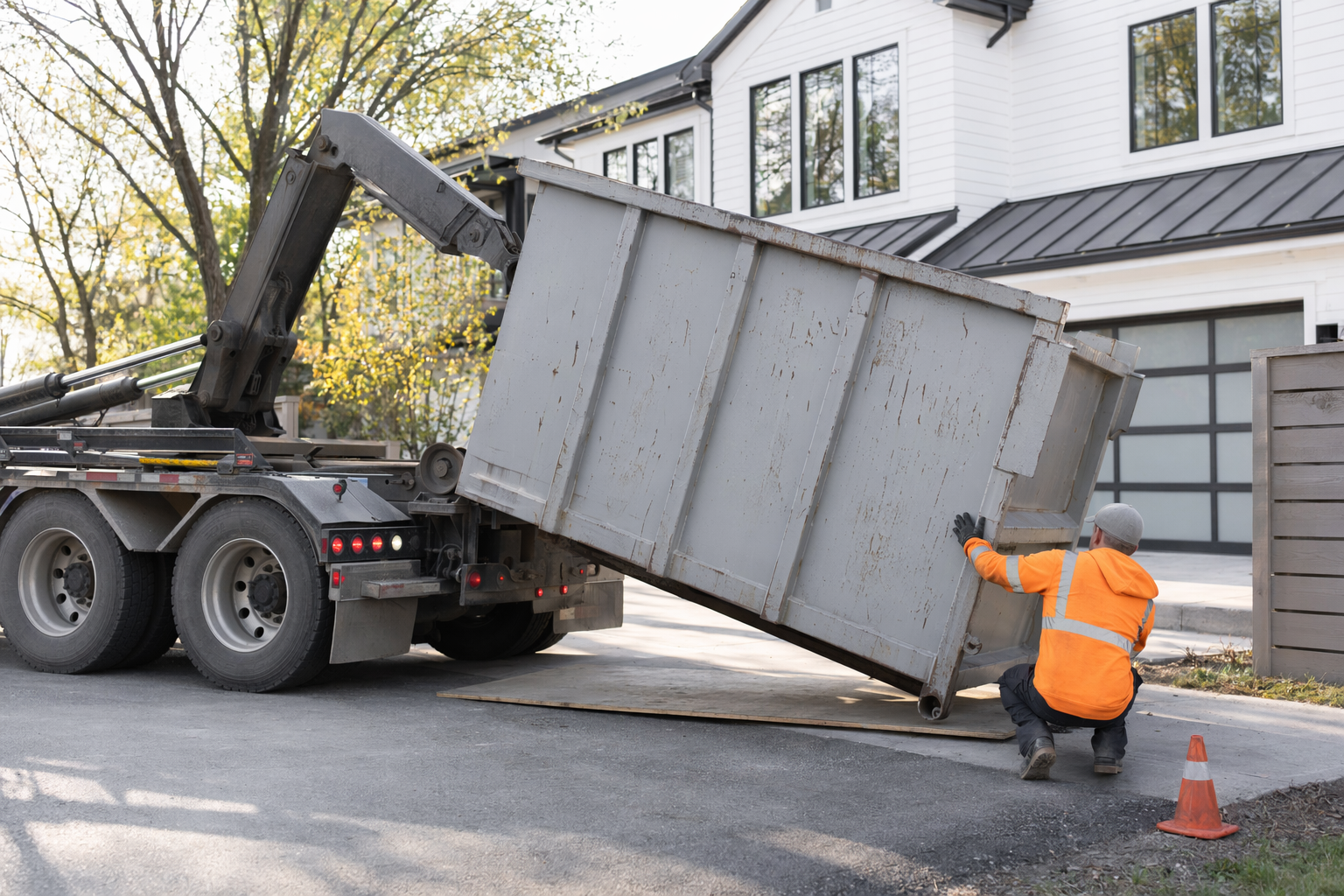
Short answer: yes, it can — but not every driveway gets damaged
A roll-off dumpster is heavy before you put anything in it. Once it is loaded with roofing, concrete, dirt, tile, or a whole-house cleanout, the weight can get serious fast. That weight sits on steel wheels or rails and is moved by a large truck that also puts pressure on the driveway when dropping off and picking up.
Some driveways handle that just fine. Others do not. Asphalt is usually more likely to get gouged or depressed, especially in hot weather. Older concrete can crack if it already has weak spots. Pavers can shift. Decorative surfaces can chip or stain.
The biggest mistake is assuming "it'll probably be fine" without looking at the condition of the surface first. If your driveway already has cracks, edges breaking off, low spots, fresh concrete, thin asphalt, or poor base support underneath, the risk goes up.

What makes driveway damage more likely
The main risk factors are weight, surface type, and how the dumpster is handled. Heavy debris matters more than volume. Concrete, dirt, brick, shingles, sand, and tile can make even a smaller container extremely heavy. That is why heavy clean fill usually belongs in a smaller dedicated dumpster, not the biggest bin you can get.
Surface matters too. Asphalt is softer than concrete and can soften more in summer heat. A newer driveway may not be fully cured yet. An older driveway may look solid but have weak spots under the surface. Edges are especially vulnerable, so placing a dumpster partly near the side of a drive can be risky.
Truck movement is another issue. Damage does not only happen from the dumpster sitting there. It can happen while the truck rolls in, drops the container, drags it slightly into place, or pulls it back up. A tight approach, slope, or uneven ground can increase scraping and pressure points.
When people are between dumpster sizes, rounding up is often cheaper than ordering a second bin — but that does not mean bigger is always better for a driveway. For very heavy debris, a smaller container is usually safer because weight, not cubic yards, is the real limit.
How to lower the risk before delivery
Start by deciding whether the driveway is really the best spot. If you have room on private property somewhere flatter and sturdier, that may be better. If the dumpster may need to go on the street, sidewalk area, or public right-of-way, permit rules may apply and they vary by city and by location. Always confirm locally.
If the dumpster will go on the driveway, ask the hauler what protection they use or allow. Many people place thick wood boards under the contact points to spread the load and reduce scratching. That can help, but it is not a guarantee against damage. The hauler should know what setup is common in your area and for that container type.
Before delivery, take photos of the driveway from several angles. Note existing cracks, stains, chipped corners, or uneven spots. Then confirm the exact placement with the hauler before the dumpster is dropped.
Use this simple checklist:
- Tell the hauler what kind of driveway you have: asphalt, concrete, pavers, gravel, or other.
- Mention any slope, tight turn, soft edge, or existing cracks.
- Ask whether wood protection is recommended or allowed.
- Keep the placement away from garage slabs, weak edges, and utility covers if possible.
- Do not overfill the dumpster or load debris above the rim.
What it might cost if you want to avoid driveway risk
There usually is not a separate "driveway protection" price listed everywhere, but placement choices can affect the overall rental cost. If the dumpster has to go in a harder-to-reach spot, stay longer, or be swapped for a different size, the price can change. In many areas, a basic roll-off rental may run roughly $300 to $800+, but that is a general range, not a quote.
The real price depends on the dumpster size, your area, the rental period, the weight allowance, and the type of debris. Heavy materials cost more to haul and dump. Street placement may also mean permit costs in some cities, and those are separate from the dumpster price when required.
Watch for the surprise fees people miss most often:
- over-tonnage fees if you go over the included weight allowance
- extra-day fees if you keep it longer than the rental period
- trip or dry-run fees if the driver cannot safely deliver or pick up
- prohibited-item fees if banned items are found in the load
Get the all-in price in writing before delivery. Ask exactly what tonnage is included, how much extra weight costs per ton, how many days are included, and what happens if the driver arrives and placement is not workable. More on pricing basics is in costs.
When you should think twice about putting it on the driveway
Be extra cautious if your driveway is new, visibly cracked, very steep, narrow, or made from decorative concrete, pavers, or softer asphalt. The same goes if you are planning to load concrete, dirt, roofing shingles, brick, or tile. Those loads get heavy quickly and can turn a normal delivery into a high-risk placement.
If you are not sure the surface can handle it, ask about other options: a smaller heavy-debris container, a different placement spot, or staged hauling. General information can help, but no online guide can inspect your driveway. Local conditions and the hauler's equipment matter.
This is also where choosing a licensed, insured local hauler matters. Verify that yourself before you hire anyone. BinRoute is a free matching service — not a dumpster company, hauler, or disposal company — and does not deliver or pick up dumpsters. We simply help you connect with local companies so you can compare and decide.
How to get matched with a local hauler
If you want help finding a local roll-off company, you can use get matched. The service is free for the customer. You stay in control and choose who to contact or hire.
We only collect basic contact and project-intent details: name, phone, optional email, project type, ZIP code, and preferred language. No bank information, Social Security number, or income details.
When you talk with a hauler, confirm five things before delivery:
1. the dumpster size you need
2. the rental period
3. the included weight allowance
4. the exact placement spot
5. the all-in price and any possible extra fees
If you want more plain-language help first, start with answers or browse guides.
Yes, a dumpster can damage a driveway, so pick the placement carefully, use protection if appropriate, and confirm weight, placement, and fees with a licensed local hauler before delivery.
Common questions
Will plywood or boards fully protect my driveway from a dumpster?
They can help reduce scratching and spread out some pressure, but they do not guarantee zero damage. The surface condition, total weight, weather, and how the truck handles the container still matter.
Is asphalt or concrete more likely to get damaged?
In general, asphalt is more vulnerable because it is softer and can deform in heat. But older or already cracked concrete can also crack under a heavy load.
Can I put a dumpster on the street instead of the driveway?
Sometimes, yes, but permit rules vary by city, neighborhood, and street type. Always confirm locally with the hauler and the city if public placement may be involved.
Does a bigger dumpster always mean more driveway risk?
Not always, but bigger containers can mean more total weight. For heavy debris, a smaller dedicated dumpster is often the safer choice because those materials hit weight limits long before the bin looks full.
Who is responsible if a driveway gets damaged?
That depends on local rules, the contract, the condition of the driveway, and what happened during delivery or pickup. Ask the hauler directly about placement terms and insurance, and verify licensing and insurance yourself.