Quick answers
What size dumpster for concrete?
For concrete, you usually need less cubic volume than you think—but you’ll hit the weight limit fast. Use this guide to pick the right roll-off size, understand the real cost range, and avoid the common overage fees.
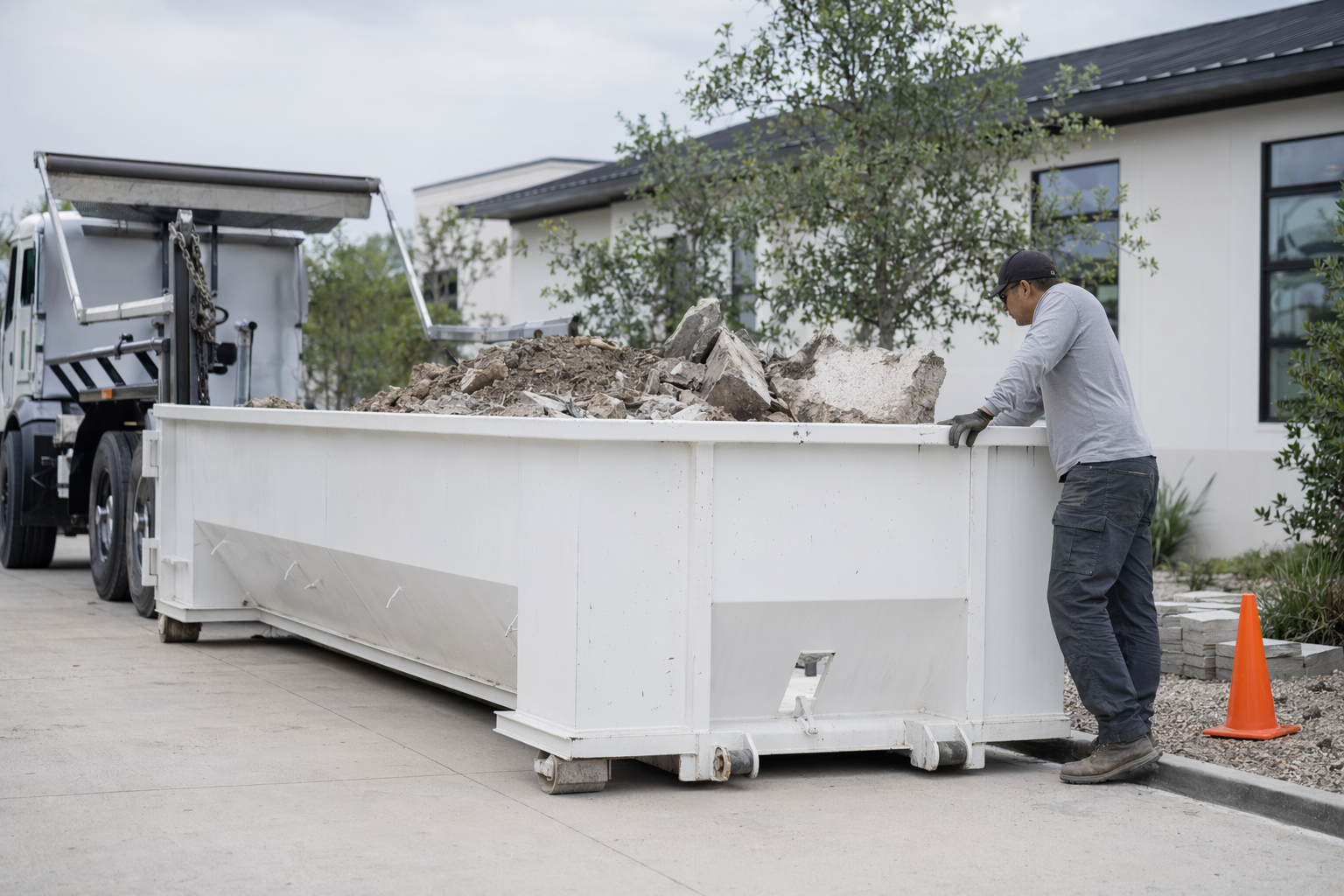
Quick answer: what size dumpster for concrete?
Most people start with a “medium” size and end up overfilling by weight. For concrete demo, concrete dust, and chunks, a 20-yard or 30-yard roll-off is the usual starting point—depending on how much you have.
If your concrete is mixed with dirt, fill, or gravel, you may need a different approach because heavy clean fill fills by WEIGHT before volume. In that case, a smaller, dedicated bin for the heavy stuff is often cheaper than trying to “make do” with a larger volume.
Cost and rules vary by area and by hauler, so think of the size guidance below as a planning tool—not a quote. Confirm your size, rental days, and the all-in price in writing before delivery.
- Concrete that’s mostly chunks/demolition debris: often 20-yard or 30-yard
- Concrete + dirt/gravel mixed load: weight can surprise you—ask for the weight allowance for each bin size
- If you’re unsure between two sizes: the next size up is frequently cheaper than needing a second bin

Size it right: concrete is heavy (weight limits matter more than volume)
Concrete is dense. That means you can fill the bin “on paper” with fewer cubic yards, and still exceed the hauler’s weight allowance. When that happens, you usually pay an over-tonnage fee per ton (the exact amount varies by company).
A simple way to plan is to estimate either (1) roughly how many truckloads you have, or (2) how thick the slab/section is. Concrete removal is commonly priced and managed by weight tolerance, not just space.
When in doubt, round up your container size. People who under-order often end up paying for an extra bin or extra time—both can be more expensive than choosing the next size at the start.
- Concrete fills by WEIGHT first: more chance of overage fees than with lighter debris
- Next size up is often the safer (and sometimes cheaper) call than renting a second bin
- Get the hauler’s weight allowance and overage fee details before the first load
Practical sizing guide (rule-of-thumb ranges)
These are planning ranges for roll-off dumpsters for concrete debris. Your actual need depends on thickness, break-up size (small rubble packs tighter), and how much comes mixed with rebar, brick, tile, or dirt.
As a rough starting point:
- Small demo (patches, a few square yards, light break-up): 10-yard or 20-yard
- Typical driveway/sidewalk section removal, garage slab cleanup: 20-yard
- Bigger patio, full driveway, or extensive concrete demo with mixed debris: 30-yard
- Large jobs (multi-area demolition): 40-yard may be appropriate, but confirm the weight allowance and whether the site/placement supports it
If you’re removing reinforced concrete or you have concrete plus a lot of dirt/fill, plan around weight. In those cases, you may be better off using a smaller bin for the heavy concrete and a separate bin for lighter/volumetric materials—if your project allows it.
- Concrete chunks + rebar: can weigh a lot even if the bin looks “not full”
- Concrete + dirt/gravel: heavy clean fill can be a weight problem fast
- Re-load with smaller debris can compact more than you expect—still a weight limit issue
What it should cost (typical ranges + the fees that surprise people)
For concrete, you’ll usually be charged based on bin size, rental days, and the weight allowance. In many areas, a common planning range is:
- 20-yard roll-off: often about $400–$900 total for typical rental windows
- 30-yard roll-off: often about $550–$1,200 total
- 40-yard roll-off: often about $700–$1,500 total
These are not quotes. The real number depends on your ZIP code, how many days you need, the job type (demo vs. fill), the included weight/tonnage allowance, and whether the hauler has to manage special site conditions.
Surprise fees to watch for (ask for an all-in price in writing): over-tonnage/per additional ton, extra days, trip or dry-run fees if the placement can’t work, and prohibited-item charges if anything isn’t allowed. For concrete-related jobs, the most common surprise is hitting the weight limit—so confirm the tonnage allowance before you order.
- Get the all-in price in writing: include delivery + pickup + rental days + overage fees
- Confirm weight/tonnage allowance for your exact bin size
- Ask about extra-day and trip/dry-run charges—these are common for tight sites
Rules, permits, and “can I toss it all in?” (confirm locally)
Disposal rules for roll-off dumpsters vary by city/county and even by the specific hauling company’s acceptance policy. Concrete is often accepted, but other materials mixed in with it may be handled differently.
General guidance: separate what you can. If you have separate piles (concrete chunks vs. dirt vs. asphalt vs. drywall/tile/wood), it can help avoid prohibited-item issues and keep you from exceeding weight allowances on a mixed load.
For anything that’s regulated (hazardous, medical, or other special waste), do not assume it’s allowed in a roll-off—use your local disposal program. Also, if you’re placing the bin on a street/sidewalk or in a restricted area, you may need a permit. The requirement depends on where you live and where the bin will sit.
- Permits vary by area: confirm street/sidewalk placement requirements
- Rules vary by hauler: verify what’s accepted and what isn’t before loading
- For regulated/hazardous waste, use the proper local disposal program
How to get matched to a licensed local hauler for concrete
BinRoute is a free matching service. We don’t rent, deliver, or haul dumpsters—we help you connect with licensed, insured local roll-off companies and understand the questions to ask.
- Tell us your project type (concrete demo, sidewalk removal, driveway tear-out, foundation breakup, etc.) and your ZIP code
- Share what’s in the pile (mostly concrete chunks, concrete + dirt, concrete dust, any mixed debris)
- Choose your preferred language (if you need one)
- Get matched and confirm: bin size, rental days, weight/tonnage allowance, placement requirements, and the all-in price (including overage fees)
Before the driver shows up, you should confirm the size you’re ordering and the exact terms so there are no surprises later. If you’re unsure on size, it’s often better to discuss it up front than to plan on “making it fit.”
For concrete, pick a bin based on weight (not just space), usually 20–30 yards for most jobs, and confirm the all-in price, weight allowance, and local rules before you load.
Common questions
I’m breaking up a concrete driveway—what size dumpster should I rent?
Most driveway tear-outs end up needing a 20-yard or 30-yard for concrete debris, depending on how much you’re removing and whether it’s mixed with dirt. Concrete is heavy, so confirm the weight/tonnage allowance to avoid overage fees.
Will a 10-yard dumpster work for concrete?
Sometimes for small patches or limited sections, but 10-yard bins fill by weight quickly with concrete chunks and rebar. If you’re unsure, consider stepping up to avoid paying for another bin or over-tonnage charges.
What extra fees should I expect when hauling concrete?
Common add-ons include over-tonnage (per ton over the allowance), extra days, and possible trip/dry-run fees if the site can’t be set up as planned. Ask for the all-in price in writing before delivery.
Can I put concrete, dirt, and old brick all in the same dumpster?
Often concrete and brick are accepted, but acceptance rules vary by area and by hauler—especially for mixed loads. Confirm what’s allowed and whether mixing changes your weight/handling limits.
Do I need a permit to place a dumpster for concrete removal?
Maybe. Permit requirements vary by city/county and where the dumpster will be placed (street vs. driveway vs. private property). Confirm locally before scheduling delivery.
Is concrete considered hazardous waste?
Concrete debris is usually not treated as hazardous waste by default. But your situation could change based on what’s mixed in or prior coatings/materials, and rules vary—so use your local disposal guidance for anything regulated or unclear.