Quick answers
What size dumpster for a whole-house cleanout?
For a whole-house cleanout, you usually end up needing a bigger roll-off than you think—most people under-order. Use this guide to pick a realistic size, understand common costs, and avoid surprise fees.
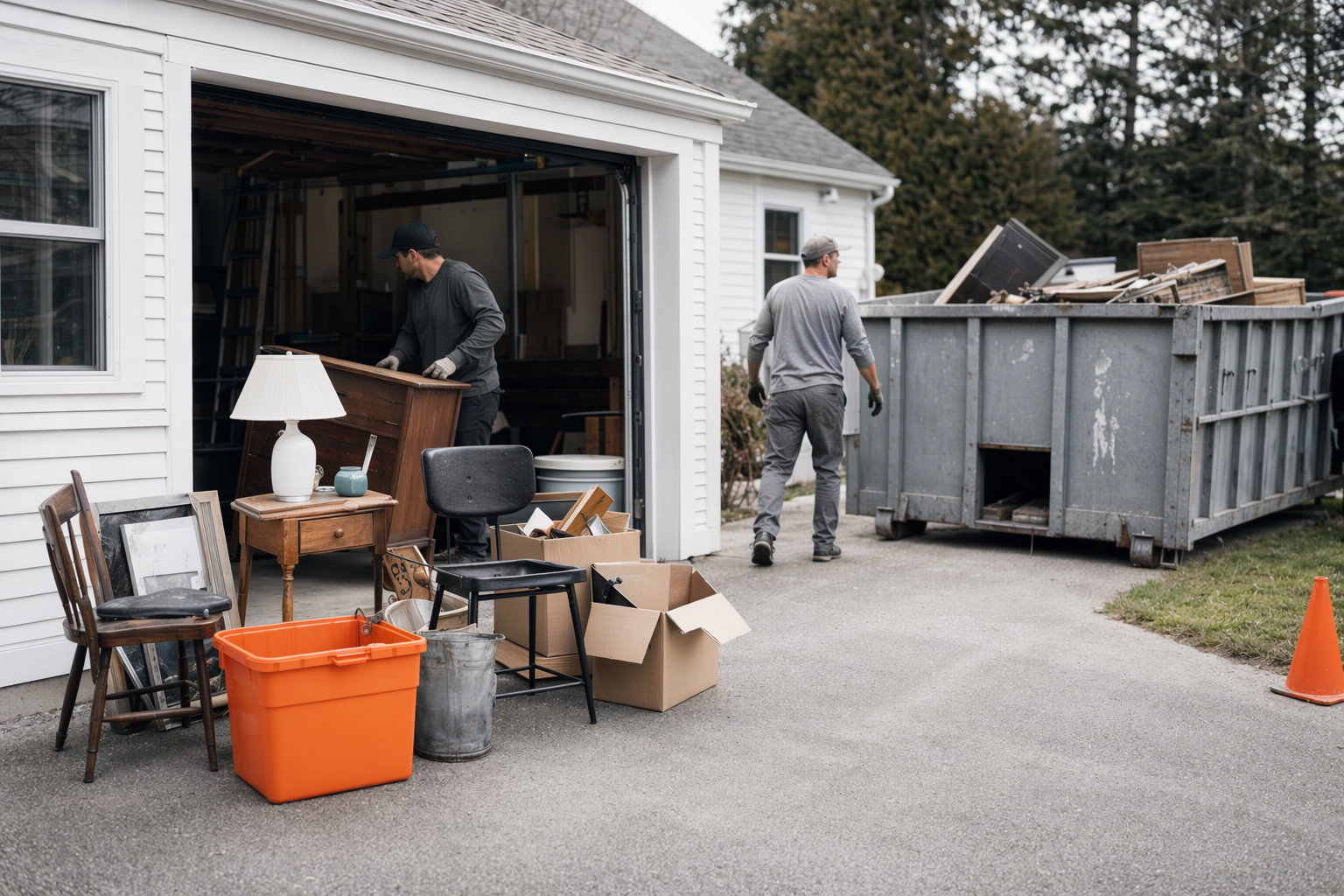
Quick answer: what size most people need
For a typical whole-house cleanout (doors open, every room, plus closets/attics), many homeowners land on a 20–30 cubic yard roll-off.
If there’s a lot of bulky stuff—lots of furniture, carpet padding, old bedding, boxes, and general “stuff”—go with 30 cubic yards to reduce the odds of filling it too early. If the home is smaller or you’re only doing a light cleanup (mostly trash and a few rooms), 20 yards can work.
Key point: if you’re unsure between two sizes, the next size up is often cheaper overall than renting a second dumpster. With cleanouts, it’s usually easier (and cleaner) to empty everything once than to “re-do” the job.

How to size it (cubic yards) without guessing
Roll-off dumpsters are measured in cubic yards, which is volume—not “how long it lasts.” A whole-house cleanout fills by volume fast when you have bulky items.
A few practical rules of thumb:
- 10–15 yards: small room, garage corner, or a “one-weekend” cleanup
- 20 yards: smaller home or lighter cleanout (several rooms but not packed)
- 30 yards: most whole-house cleanouts (especially with furniture and lots of boxed items)
- 40 yards: very large homes, heavy curbside-style loading, or you’re also removing a lot of bulky flooring/trim
When you’re between sizes, round up. You’ll also usually avoid extra-day charges or the hassle of a second delivery.
If your cleanout includes heavy debris (concrete, dirt, tile, bricks), talk to your local hauler about weight limits. Heavy loads fill by weight before volume—this can change the best container choice. For heavy clean fill, you may need a smaller bin dedicated to that material.
What it should cost (realistic ranges, not quotes)
Costs vary by city, distance, time of year, and the exact debris mix, but here are common planning ranges for whole-house cleanouts in the U.S.:
- 20-yard roll-off: roughly $450–$900
- 30-yard roll-off: roughly $550–$1,100
- 40-yard roll-off: roughly $650–$1,400
These are not quotes. Your all-in price depends on rental length (often 7 days or so, but varies), the load weight, and whether you need any extra services.
Before you agree, ask for the “all-in” price in writing. That should include delivery and pickup, the rental period, the weight/tonnage allowance (if used in your area), and any item-prohibited or over-limit fees.
Surprise fees to watch for (ask before you book)
Dumpster rentals commonly get more expensive because of a few add-ons. Don’t assume—confirm what’s included.
Common surprise fees include:
- Over-tonnage / weight overage: If you exceed the included weight allowance, haulers may charge per ton over
- Extra days: If you keep the bin longer than your rental period, you may pay a daily rate
- Trip / dry-run charges: If the hauler can’t access the site or needs to come back due to placement issues
- Prohibited-item fees: Some items are not allowed, and others may be charged as special handling
Because each area and each hauler’s rules differ, you should confirm local restrictions before loading. If you’re dealing with regulated waste (for example, certain chemicals, medical waste, or other hazardous materials), use your local drop-off program instead of the dumpster rental.
Permits, placement, and who’s responsible
Whether you need a street permit depends on where you’re placing the dumpster—driveway vs. street, city rules, and sometimes even the exact location on the property.
In general, you (the renter/homeowner/contractor) should confirm:
- Whether the bin can sit in your driveway without permits
- If you need a permit for street placement or public right-of-way
- Setback rules (how far it must be from corners, hydrants, or traffic lanes)
- Ground/space requirements so the truck can access and place the bin safely
BinRoute helps you connect with licensed, insured local haulers, but rules and responsibility vary by area. Always confirm placement requirements with the hauler and local authority before delivery.
Want a deeper rundown? See Dumpster permit basics and review how costs are calculated.
How BinRoute helps you get the right size and an honest all-in price
BinRoute is a free matching service. We don’t rent, deliver, or haul dumpsters, and we don’t dispose of waste. Your job stays with you: you choose the hauler and confirm the details before the bin shows up.
Here’s how to use BinRoute for a whole-house cleanout:
- Fill out the short request on get matched with your ZIP code, project type (whole-house cleanout), and your preferred language
- Tell us (briefly) what you’re removing—furniture, carpet, drywall, insulation, junk, etc.
- Compare options from local licensed, insured companies and confirm the exact dumpster size and rental period
- Get the all-in price in writing before delivery, including weight allowance and any prohibited-item rules
- Confirm placement details (driveway vs. street) so you don’t get charged for access issues later
If you’re unsure, ask for a size recommendation based on your home size and how packed the rooms are. For most whole-house cleanouts, the safer bet is often 30 yards, unless your home is smaller or the cleanup is lighter.
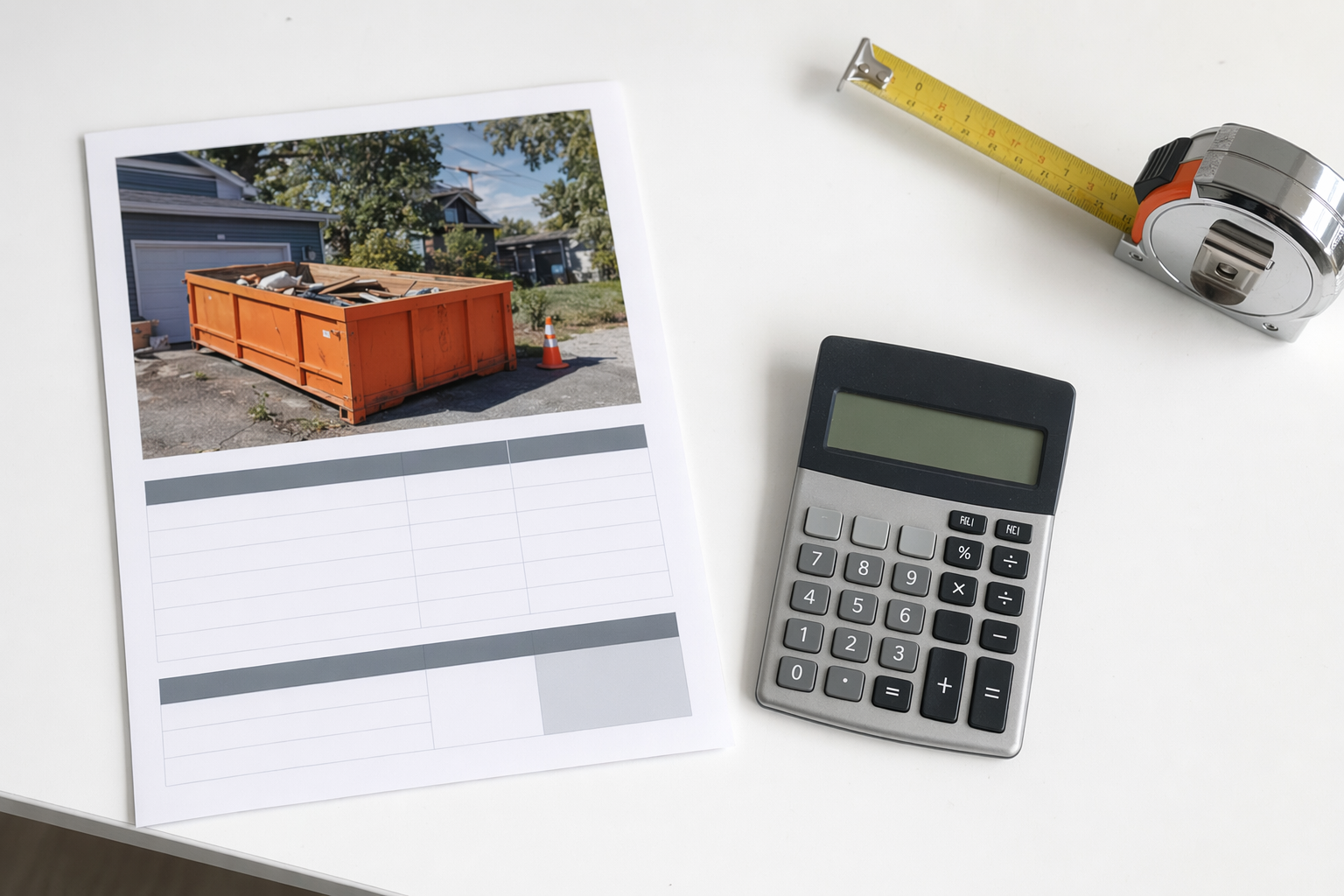
For a whole-house cleanout, plan on 30 cubic yards most of the time, confirm an all-in price (including weight and extra-day fees), and verify permits and prohibited items for your specific area.
Common questions
My house is around 1,500 sq ft. Should I get a 20 or 30-yard dumpster for a cleanout?
For a whole-house cleanout, many 1,500 sq ft homes land on 30 yards—especially if you have lots of furniture, carpet, or boxed items. If it’s a lighter cleanup (a few rooms, mostly trash, not packed), 20 yards may work. If you’re unsure, round up rather than planning on a second rental.
What’s the most common reason people run out of space during a cleanout?
They under-order. Cleanouts fill by volume quickly when you have bulky items, and it’s hard to predict how much you’ve got until everything is out. When between sizes, the next size up usually avoids extra days or a second dumpster.
Are there things I can’t throw in a roll-off dumpster for a cleanout?
Yes—rules vary by hauler and by area, and some items may be prohibited or require special handling. For regulated waste (and hazardous chemicals), use the proper local disposal program instead. Always ask the hauler for an item list before you load.
How much does a 30-yard dumpster cost for a whole-house cleanout?
A common planning range is about $550–$1,100, depending on your area, rental period, and the debris/weight. The final all-in price can change with over-tonnage charges, extra days, access issues, or prohibited-item fees—so confirm everything in writing first.
Do I need a permit to place the dumpster in front of my house?
It depends on your city and the exact placement. Street placement often needs a permit, while driveway placement usually doesn’t, but you can’t assume. Confirm with your local authority and the hauler before delivery.