Quick answers
What size dumpster do I need for a roof?
For most roofing jobs, the right dumpster depends more on shingle weight than roof size alone. Most people under-order, so if you’re between sizes, round up on volume — but use a smaller bin for very heavy loads when the hauler recommends it.
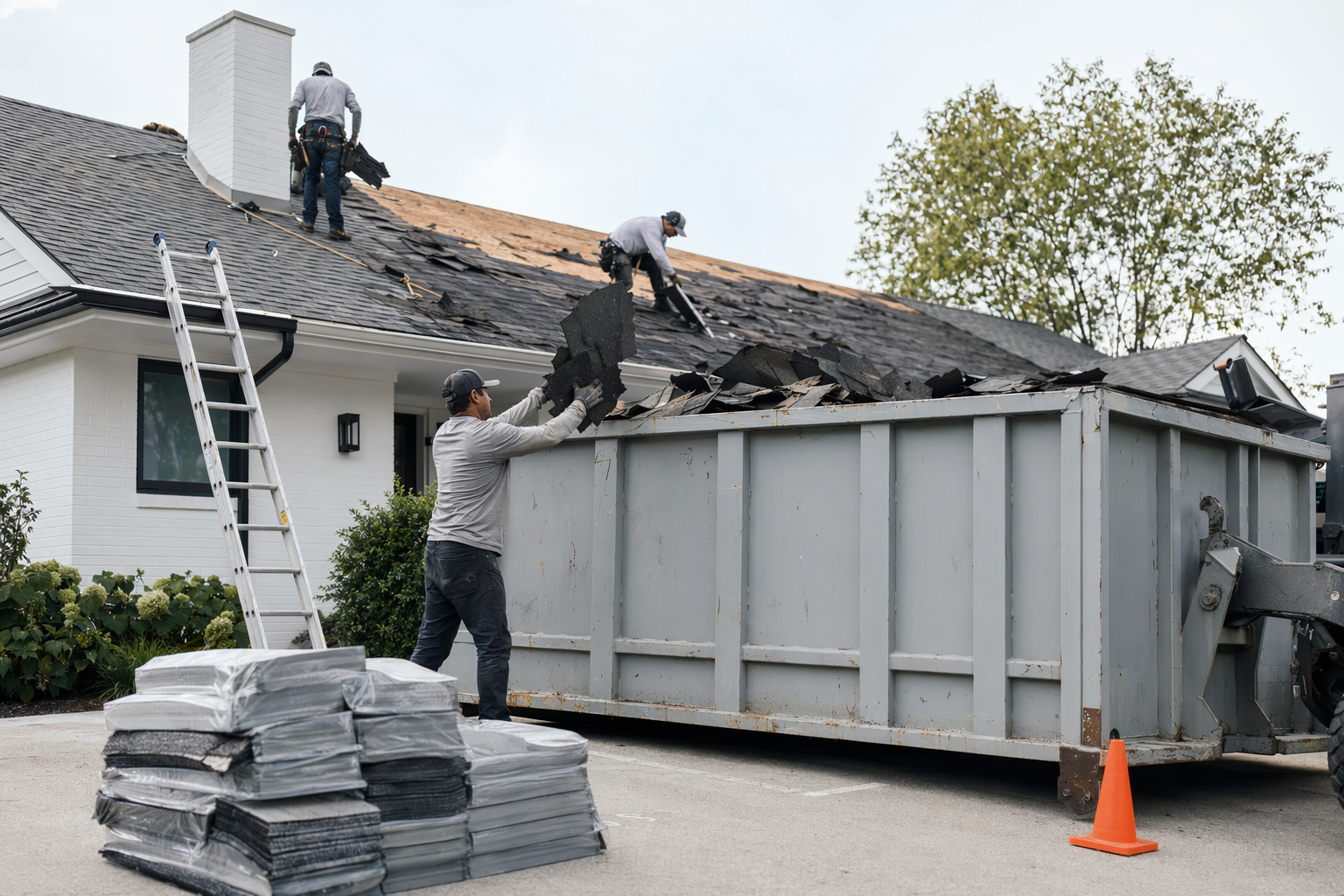
Start with size: most roof tear-offs fit a 10, 15, or 20 yard dumpster
For a roof, dumpster size is usually about weight first, volume second. Asphalt shingles, tile, slate, and multiple layers get heavy fast. That means a roof can "fit" in a bin by space but still go over the included weight allowance.
A simple rule of thumb: a small single-layer roof on a modest house often uses a 10 yard dumpster. A medium roof tear-off often lands in a 15 yard. A larger single-layer roof, or a job with more tear-off debris, often needs a 20 yard. Very large roofs, multiple layers, or commercial work may need more than one container.
In pickup-truck terms, a 10 yard dumpster is about 3 to 4 pickup loads, a 15 yard is about 4 to 5, and a 20 yard is about 6 to 8. But for roofing, don’t choose by truck-load space alone. Shingles are dense, and heavy debris fills a dumpster by weight before it looks full.
If you’re between sizes, the next size up is usually cheaper than needing a second dumpster later. The exception is very heavy roofing material: sometimes a smaller dedicated container is the smarter, cheaper choice because of tonnage limits.

Quick sizing guide by roof type
Use these as rough starting points only. Actual needs vary by roof square count, layers, shingle type, decking damage, and local hauler weight limits.
- 10 yard: small garage roof, shed, porch roof, or a smaller single-layer house roof
- 15 yard: common choice for a medium single-layer residential roof tear-off
- 20 yard: larger house roof, more tear-off debris, or jobs where you want extra room
- Multiple dumpsters or special heavy-load containers: large roofs, two-layer tear-offs, tile, slate, or big repairs with a lot of wood and underlayment
If your roof has two layers of shingles, tell the hauler that up front. Two layers can change the right dumpster size and the weight allowance more than people expect.
If you’re removing tile, slate, or a lot of rotted wood, say that too. Those materials can trigger a smaller heavy-debris container instead of one larger mixed bin.
Roofing debris is heavy: ask about tonnage before you book
This is where people get surprised. A roofing dumpster quote usually includes a weight allowance, often listed in tons. If you go over that allowance, you usually pay an over-tonnage fee per ton over the limit.
That means the cheapest-looking quote is not always the cheapest final bill. Ask for the all-in price in writing, including the dumpster size, rental period, included tonnage, over-tonnage rate, and any extra-day fees.
Also ask whether the hauler allows roofing material mixed with wood, gutters, or other cleanup debris in the same bin. Some do, some limit certain loads, and rules vary by area and by hauler.
If the dumpster is going on the street, you may also need to confirm whether a local permit is required and who handles it. Permit rules vary by city, county, and placement.
What a roofing dumpster usually costs
Honest general range: many residential roofing dumpsters run about $350 to $850, but that is not a quote. The real number depends on dumpster size, your area, rental length, included weight, and the type of roofing debris.
A small 10 yard roofing container may be at the lower end. A 15 or 20 yard with more included tonnage may cost more up front but save money if it prevents overage charges. Heavier materials, longer rentals, tight-access delivery, and urban areas can push the price up.
Watch for the surprise fees people miss:
- over-tonnage fees, charged per ton over the included allowance
- extra-day fees if the container stays longer than the rental period
- trip or dry-run fees if the driver shows up and cannot place or remove the dumpster
- prohibited-item fees if banned materials are found in the load
Before delivery, confirm the size, weight allowance, rental period, placement, and total expected charges. You stay in control of what you agree to before the dumpster arrives. For more on pricing, see dumpster rental costs.
What you can and can’t throw in with roofing debris
In many areas, standard roof tear-off debris like asphalt shingles, felt, nails, flashing, and some related construction debris can go in the dumpster. But prohibited items vary by area and by hauler, so always confirm locally first.
Common problem items can include paint, solvents, fuel, asbestos-containing material, batteries, propane tanks, tires, and certain appliances or electronics. For hazardous, medical, or regulated waste, use the proper local disposal program. This page is general information only, not legal or hazardous-waste-disposal advice.
If your home is older and there is any concern about regulated material, stop and confirm local requirements before the tear-off starts. Do not guess. A prohibited-item fee or rejected load can cost far more than asking first.
How to get matched with a local hauler
BinRoute is a free matching service, not a dumpster company. We do not rent, deliver, haul, or dispose of waste. We help you get connected with licensed, insured local roll-off haulers so you can compare your options.
- Tell us the job type, ZIP code, and preferred language.
- Share basic contact info: name, phone, and optional email.
- Describe the roof job clearly: approximate roof size, one layer or two, and material type.
- Confirm with the hauler the dumpster size, tonnage allowance, rental period, placement, and all-in price before delivery.
Only contact and project-intent details are needed. You choose who to hire, and it is always free for the customer to use BinRoute. Start here: get matched, or browse more plain-language answers and guides.
- Ask whether the quote is for roofing debris specifically
- Verify the hauler is licensed and insured
- If the bin goes on a street, confirm permit responsibility locally
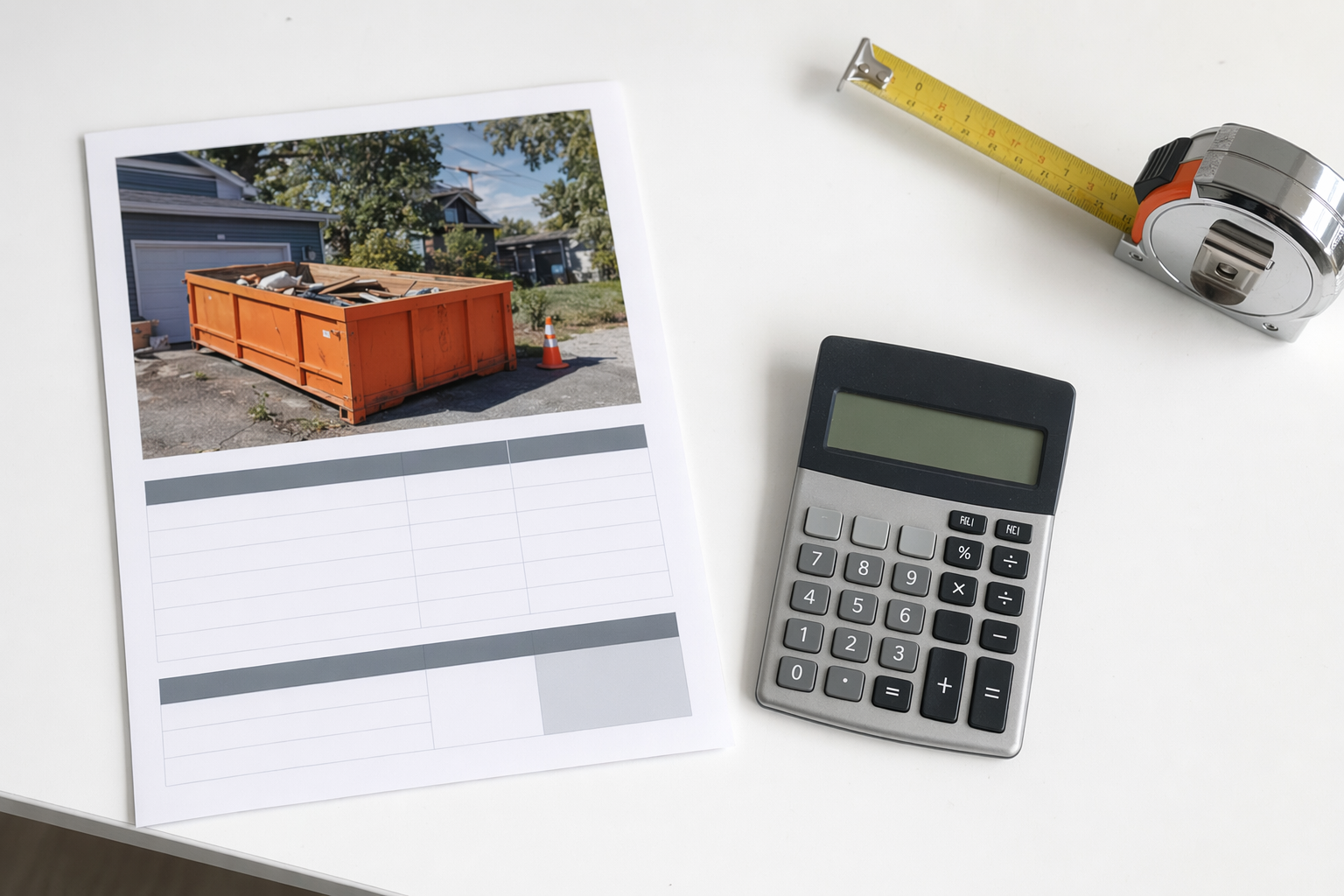
For most roof tear-offs, start with a 10, 15, or 20 yard dumpster, but pay closest attention to weight limits because shingles get heavy fast.
Common questions
What size dumpster do I need for a 1,500 to 2,000 square foot roof?
Often a 10 or 15 yard dumpster works for a single-layer asphalt shingle tear-off, but weight matters more than square footage alone. If there are two layers or heavier materials, you may need a different setup, so confirm with the local hauler.
Is a 20 yard dumpster too big for a roof?
Not necessarily. A 20 yard can be a smart choice for a larger residential roof or when you want extra room, but heavy roofing debris can still hit weight limits before the container looks full.
Should I get a bigger dumpster just to be safe?
If you are between sizes, rounding up is usually cheaper than ordering a second bin later. But for very heavy debris like tile or multiple-layer shingles, a smaller dedicated heavy-load container may be the better call.
How much do overage fees cost on a roofing dumpster?
They are usually charged per ton over the included weight allowance, but the exact amount varies by area and by hauler. Ask for that number in writing before you book so there are no surprises.
Can I throw wood and gutters in with roofing shingles?
Sometimes yes, sometimes no. Hauler rules and landfill rules vary by area, so ask before loading mixed debris into the container.
Do I need a permit for a roofing dumpster?
Usually not if it stays on private property like a driveway, but street placement may require a local permit. Rules and who handles the permit vary by city and county, so confirm locally.