Quick answers
What size dumpster for a kitchen remodel?
For most kitchen remodels, the usual sweet spot is a 20-yard dumpster, but many homeowners need a 30-yard if cabinets, drywall, flooring, and demo debris add up fast. The right size depends on how big the kitchen is, how much you’re tearing out, and how heavy the debris is.
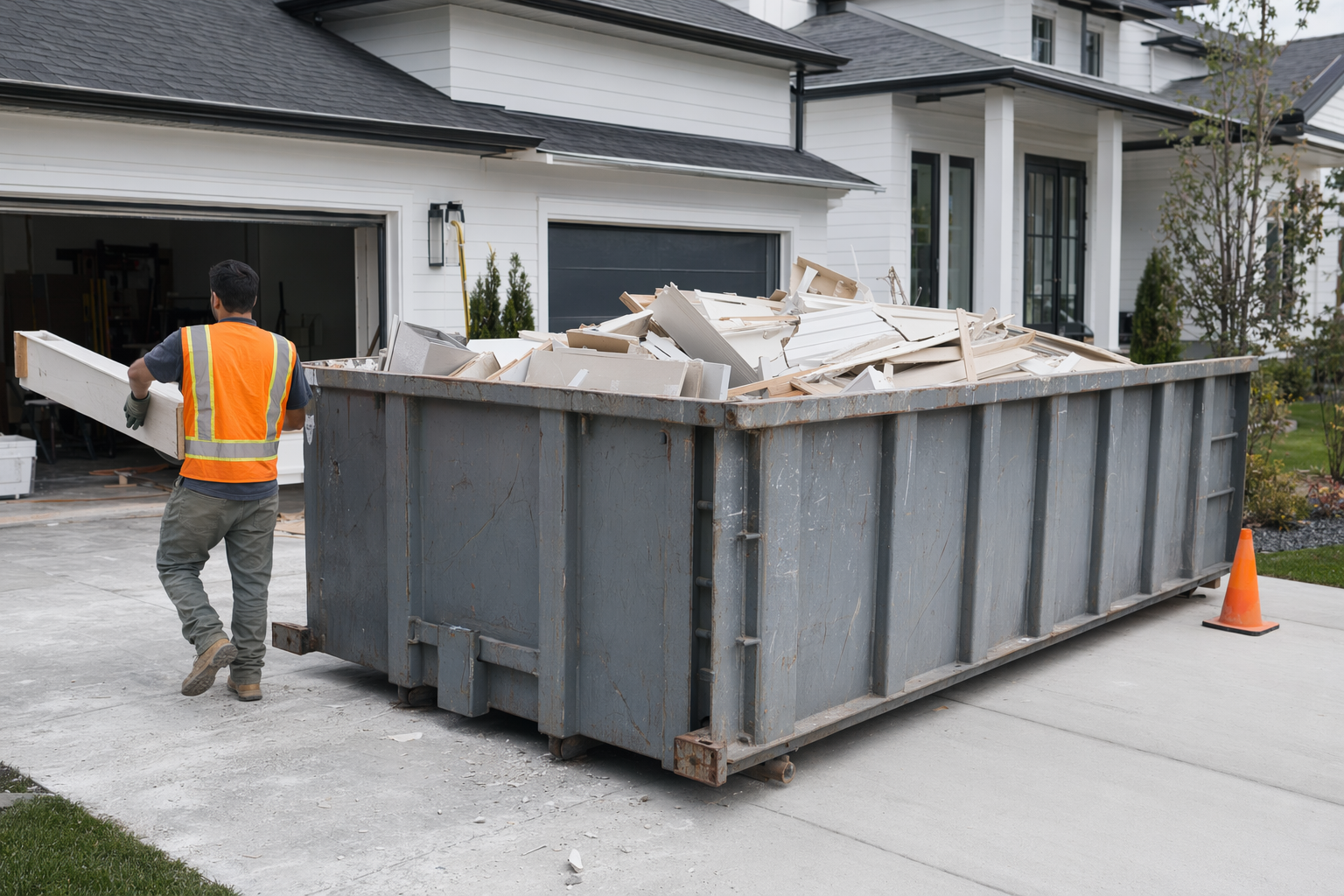
The short answer: start by looking at a 20-yard bin
If you’re doing a typical kitchen remodel — cabinets, countertops, sink, flooring, drywall, and some trim — a 20-yard roll-off is often the best first guess. It usually gives you enough room without jumping to a much bigger bin you may not need.
If the remodel is larger, if you’re removing a lot of wallboard or subfloor, or if the kitchen opens into nearby rooms, a 30-yard can be the safer pick. Most people under-order. When you’re between sizes, the next size up is usually cheaper than needing a second dumpster.
A rough way to think about it: 10 yards is about 3 pickup-truck loads, 20 yards is about 6 pickup-truck loads, and 30 yards is about 9 pickup-truck loads. Those are only rough comparisons, but they help you picture how fast demo debris piles up.

When a smaller dumpster is enough
A 10-yard dumpster can work for a smaller kitchen update, especially if you’re mostly tossing cabinets, a vanity-sized amount of drywall, or a limited amount of flooring. It’s also a smart choice if the hauler gives a lower weight allowance and your debris is heavy.
Heavy material matters. Kitchen remodels often include tile, mortar, plaster, plasterboard, or old flooring. Those materials can fill a bin by weight before they fill it by volume. If you’ve got a lot of heavy debris, ask for a dedicated container and confirm the tonnage allowance before you book.
If you’re not sure, size up rather than down. An overfilled dumpster can lead to extra charges or a refusal to haul it until material is removed.
What the dumpster size usually means in real life
Here’s the practical way to think about common sizes for a kitchen project:
- 10-yard: small kitchen refresh, light demo, or heavy debris with a lower volume
- 20-yard: the most common choice for a standard kitchen remodel
- 30-yard: bigger gut job, open-concept demo, or a kitchen plus adjacent space
The exact size names vary a little by hauler, but the important part is the usable space and the weight limit. A bin that looks big can still be the wrong choice if you’re throwing in dense material.
Also remember placement. If the dumpster has to sit in a driveway, that’s usually easier than street placement. If it has to go on the street, rules and permit requirements vary by area, so confirm locally before delivery.
What it should cost, and the surprise fees to watch
For a kitchen remodel, a roll-off dumpster often runs roughly $300 to $700 for a smaller bin, and about $400 to $850 or more for a 20-yard. Larger bins or heavier debris can cost more, sometimes $600 to $1,000+ depending on your area, rental period, and weight allowance. These are general ranges, not quotes.
The real price depends on the dumpster size, your ZIP code, how long you keep it, how much it weighs, and what kind of debris is inside. A cheap starting price can look good until fees show up later.
Ask for the all-in price in writing first and look out for:
- over-tonnage fees if you go over the weight limit
- extra-day fees if you keep it longer than planned
- trip or dry-run fees if delivery or pickup can’t happen as scheduled
- prohibited-item fees if banned materials are found inside
Kitchen remodels can also trigger extra charges if the load is mixed with heavy debris or if the hauler has to sort out unacceptable material. Rules and fees vary by area and by hauler, so confirm before you book.
How to choose the right hauler and avoid headaches
BinRoute is a FREE matching service, not a waste-management or hauling company. We help connect people with licensed, insured local dumpster-rental and hauling companies, but you still choose who to hire and confirm the details yourself.
Before delivery, make sure you confirm:
1. the dumpster size
2. the rental period
3. the tonnage allowance
4. where it will be placed
5. the all-in price in writing
6. whether the hauler is licensed and insured
That last part matters. A remodel is messy enough without guessing on coverage or rules. And if you’re dealing with hazardous, medical, or regulated waste, use the proper local disposal program instead of tossing it in the roll-off.
A simple way to decide if you should round up
If your kitchen remodel is small and tidy, a 10-yard may be enough. If it’s a normal full kitchen tear-out, a 20-yard is usually the safe bet. If you’re opening walls, taking out flooring, and cleaning out an adjoining room too, move up to 30 yards.
A good rule: if you think you might need more than one pickup truck load beyond what fits in the smaller size, round up. Renting one larger bin is often easier and cheaper than paying for a second dumpster, extra time, or overage fees.
If you want help sorting through size and price options, start with answers and costs, or use get matched to connect with local providers. For more how-to guidance, see our guides.
For most kitchen remodels, start with a 20-yard dumpster, round up if you’re unsure, and always confirm the all-in price, weight limit, and local rules before it’s delivered.
Common questions
What size dumpster do I need for a kitchen remodel?
Most kitchen remodels fit best in a 20-yard dumpster. Smaller updates may fit in 10 yards, while bigger gut jobs often need 30 yards.
Should I choose a 10-yard or 20-yard dumpster for kitchen demo?
If you’re only removing part of the kitchen or a small amount of material, 10 yards may work. For a full tear-out, 20 yards is usually the safer choice because most people under-order.
Do cabinets and drywall make a kitchen remodel dumpster heavy?
Yes, they can. Kitchen debris often includes heavy materials like tile, mortar, and old flooring, so the load can hit the weight limit before the bin looks full.
How much does a dumpster for a kitchen remodel cost?
A general range is about $300 to $700 for smaller bins and about $400 to $850+ for a 20-yard, but the real price depends on your area, size, rental period, weight, and debris type.
Can I put anything from my kitchen remodel in the dumpster?
Not always. Rules vary by area and hauler, and hazardous, medical, or regulated waste should go to the proper local disposal program. Ask the hauler what’s allowed before delivery.