Quick answers
What size dumpster for a bathroom remodel?
For a bathroom remodel, the right roll-off size usually comes down to how much demo you’re doing and what’s in the debris (drywall, tile, flooring, vanity, sometimes tub/shower). Use the quick sizing below, then double-check the all-in price and weight rules before you commit.
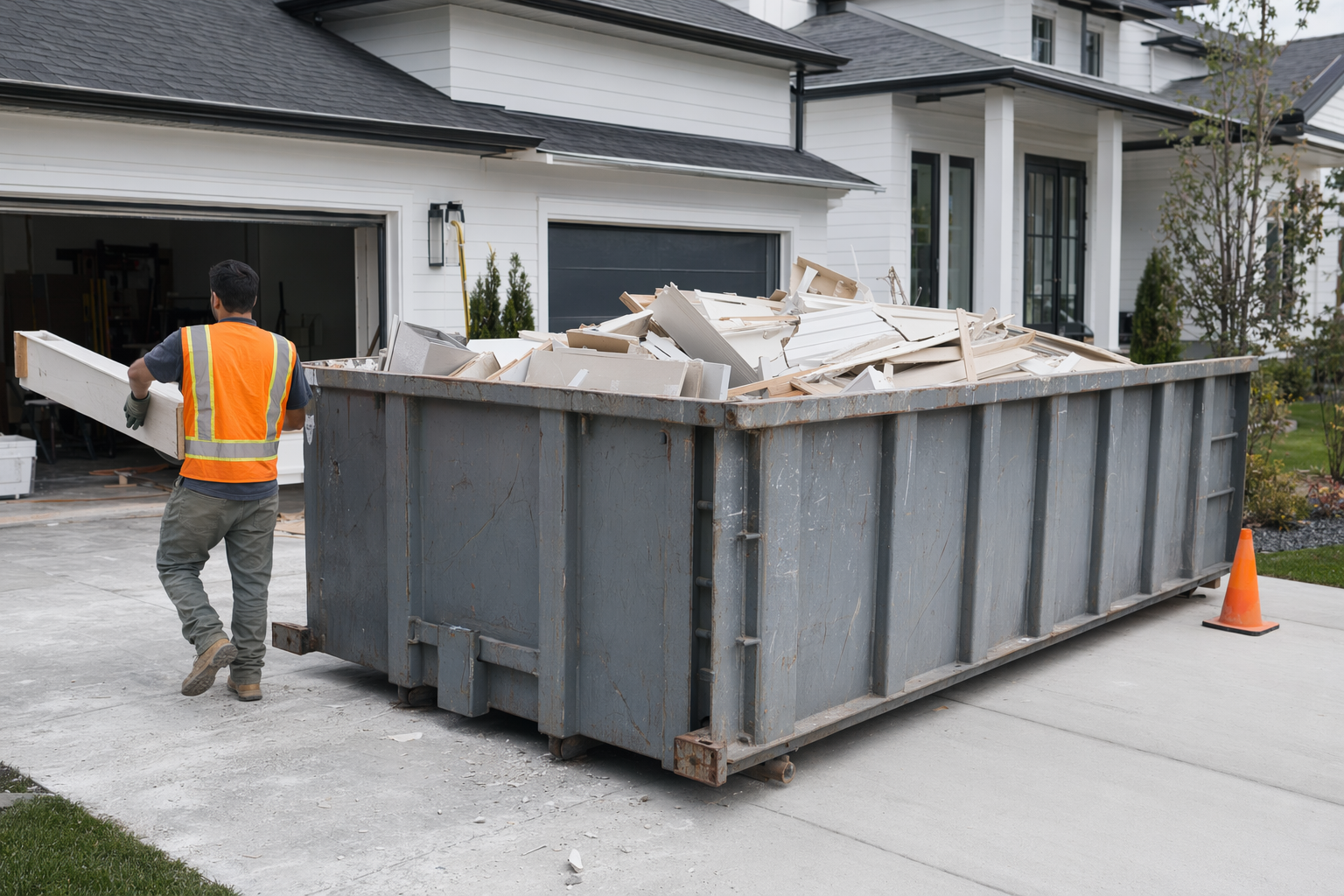
Start here: the most common bathroom remodel dumpster sizes
Most bathroom remodels land in one of these ranges:
- 10-yard: small jobs—replace a vanity, a little flooring demo, remove a toilet, and clear out light-to-medium debris.
- 15-yard: the most common “full” bathroom demo—walls/soffit drywall removal, floor tile or vinyl removal, ripping out a tub or shower base (if it’s not extremely heavy), and getting rid of typical remodel trash.
- 20-yard: bigger layouts or heavy tear-out—multiple rooms/one larger bathroom, lots of tile, stone, backer board, or lots of framing and debris that adds up.
A key truth: people almost always under-order. If you’re between sizes, the next size up is often cheaper than renting a second dumpster. Also remember that heavy debris (tile, concrete backer, mud, dirt) fills bins by WEIGHT before volume—so your “looks like it fits” pile may hit the weight limit first.
- If you’re removing tile/stone or a lot of backer board, lean toward 15-yard (or 20-yard for larger/heavier tear-outs).
- If you’re only doing a light refresh (paint, fixtures, small flooring area), 10-yard may be enough—confirm with your exact demo plan.

Quick sizing by what you’re throwing away (rough yard guide)
Use this as a practical starting point. Your exact pile size depends on bathroom size, how much gets removed, and how tightly the debris packs.
1. Drywall and framing (typical demo):
- Often fits in a 10-yard to 15-yard depending on how far you go (walls only vs. walls + ceiling + studs).
2. Flooring demo (vinyl/laminate vs. tile):
- Vinyl/laminate usually stays closer to 10–15 yards.
- Tile and cement/mortar backer boards are heavier and often push you toward 15–20 yards even when the pile doesn’t look enormous.
3. Tub/shower removal and plumbing fixtures:
- Fixtures can add bulk, but the big factor is whether you’re also removing a lot of tile/mud/concrete-style materials around them.
4. “Wet area” rebuild cleanup (water damage demo):
- If you’re removing lots of wallboard, studs, insulation, and base build-up, plan like it’s a full demo and consider 15-yard. Rules and what to do with water-damaged materials can vary—check local guidance and work with the right disposal method for your situation.
- If you have questions about whether something is “normal construction trash” vs. regulated waste, use your local program or the proper disposal option—don’t guess.
Cost: what you’ll likely pay (and what can change the price)
Dumpster rental pricing is usually described as “size + rental period + weight/tonnage rules,” and then adjustments if you exceed limits. For a bathroom remodel, a typical all-in cost range often falls somewhere around:
- 10-yard: roughly $300–$600
- 15-yard: roughly $350–$750
- 20-yard: roughly $450–$900
These are general ranges, not quotes. Your final price depends on your area, how long you need the dumpster, the type of debris (tile and concrete-type materials can affect weight), and whether there are extra charges.
Common “price creepers” to ask about upfront:
- Over-tonnage fees: if you exceed the weight allowance for that bin, you may pay per ton (or similar). Bathroom remodel debris that’s heavy (tile/mud/concrete backer) is a frequent cause.
- Extra-day fees: if you keep the bin past your rental period.
- Trip or dry-run fees: if the truck has trouble placing the bin because of access issues.
- Prohibited-item fees: if you accidentally include something that can’t go in a roll-off.
Before delivery, ask the hauler for the all-in price in writing and confirm the weight allowance and what triggers an overage fee—no surprises.
- Cost tip: If you’re deciding between two sizes, the next size up can be cheaper overall than a second rental.
- Get the all-in price first—ranges help you budget, but don’t promise you’ll land at the low end.
What you can usually throw in (and the items to double-check)
For a typical bathroom remodel, roll-off dumpsters are usually meant for construction and household debris like:
- Drywall and plaster
- Wood framing and baseboards
- Flooring materials (depending on type)
- Tile (often accepted, but heavy piles may hit weight limits)
- Toilets/vanities/fixtures if they’re treated as regular construction debris
- Bagged trash from the remodel
But the exact list of prohibited items varies by area and by hauler. Before you load the bin, confirm what’s allowed and what isn’t. In many places, certain items are restricted or need special disposal:
- Hazardous materials (chemicals, paints, solvents, gasoline—anything hazardous)
- Electronics
- Tires
- Batteries
- Asbestos or regulated building materials
- Medical waste
If you run into water-damaged materials or anything that seems contaminated or regulated, don’t guess—use the proper local disposal program or guidance.
- Rules vary by area. Always confirm prohibited items and special disposal requirements with your local licensed, insured hauler.
Placement, permits, and staying in control of the rental
Placement can make or break the job. Before the dumpster shows up, confirm these basics:
- Where the bin will sit (driveway vs. street). Street placement is more likely to require a permit.
- Access for the truck (a roll-off needs space to swing and set the bin).
- Surface safety (avoid placing on unstable ground without confirming suitability with the hauler).
Who needs a permit can vary by city, county, and sometimes by the property setup. Don’t assume. Ask the hauler what’s required for your location. For anything regulated, like asbestos-related work, follow local requirements and use the correct disposal process.
Finally, stay in control:
- You confirm the dumpster size, rental period, placement, and the weight allowance.
- You confirm the all-in price before delivery.
- You choose which licensed, insured local company to hire.
- If the bin is going on the street, ask about permit requirements early—don’t wait until the truck is at your curb.
How to get matched with a local hauler (free, no obligation)
BinRoute is a free matching service. We don’t haul or dispose of waste—we connect you with licensed, insured local roll-off dumpster companies so you can get an all-in rental price that fits your project.
- Tell us your ZIP code, your project type (bathroom remodel), and your preferred language.
- Share a couple details about the demo (roughly: light demo vs. full tear-out, tile removed, tub/shower removed).
- We connect you with local options for the size and rental period you choose.
- Before delivery, confirm the dumpster size, rental timeframe, weight allowance, prohibited items, and the all-in price in writing.
If you want more general guidance, start with our bathroom/renovation basics and see typical dumpster cost factors. For next steps, use get matched.
- Helpful reminder: if your debris includes a lot of tile/mud/backer board, weight can be the limiting factor—consider sizing up or ask about weight allowances.
For most bathroom remodels, start with a 15-yard dumpster (10-yard only for light demo), watch for weight-related overage fees from tile/mud, and confirm local rules/permits plus the all-in price before delivery—BinRoute helps you find licensed local haulers for free.
Common questions
Do I need a 10-yard or 15-yard dumpster for a bathroom remodel?
If you’re doing a full demo with walls/floor and removing tile or backer board, 15-yard is usually the safer bet. If it’s a smaller refresh with limited removal, 10-yard may work—but heavy tile and cement-style materials can hit weight limits sooner than you’d expect, so confirm the weight allowance.
Will tile and mortar/backer board make the dumpster fill up faster?
Tile and cement/mortar/backer board are heavy, so they can reach the weight limit before the dumpster looks full. That can trigger over-tonnage fees, so ask for the weight allowance and plan your size accordingly.
What bathroom remodel items are not allowed in a roll-off dumpster?
Rules vary by area and hauler, but hazardous materials (like paint chemicals/solvents), regulated waste, and certain items like tires and electronics are commonly restricted. If anything feels “special” or regulated, use the proper local disposal program.
How much does a dumpster rental cost for a bathroom remodel?
Many bathroom remodel rentals commonly land in rough ranges like $300–$600 for 10-yard, $350–$750 for 15-yard, and $450–$900 for 20-yard, depending on area and rental period. Your real price depends on the all-in factors: size, timeframe, debris type/weight, and any extra-day or over-tonnage charges.
Do I need a permit to place the dumpster on the street?
Often it depends on your city or county, and sometimes on where exactly you’re placing the bin. Ask your local licensed, insured hauler what’s required before you schedule delivery.