Quick answers
What is a dumpster overage fee?
A dumpster overage fee is the extra charge you pay if your load goes over the weight allowance in your rental. It’s one of the most common surprise fees, and it can be expensive if you guess too small or toss in heavy debris.
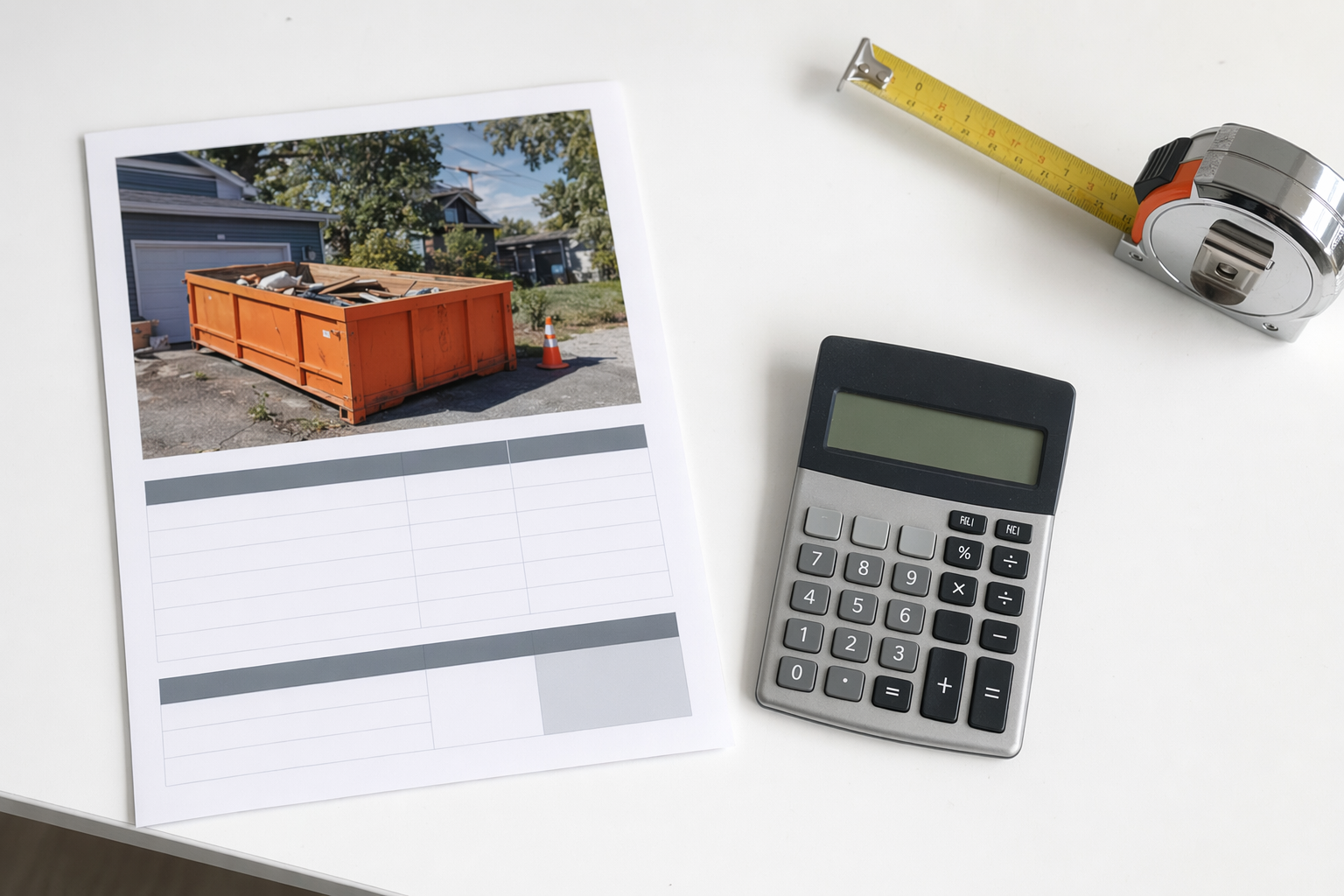
What an overage fee means
A roll-off dumpster usually comes with a weight limit, often shown as a tonnage allowance. If your debris weighs more than that limit, the hauler charges an overage fee for the extra weight.
This is different from a rental fee. The rental fee covers the dumpster, the haul, and a set rental period. The overage fee kicks in after the scale ticket shows you went over the included tonnage.
In plain English: you rented a container with a weight cap, and you filled it past the cap. The extra pounds cost extra money.
- Overage fees are usually priced per ton over the allowance.
- They often show up after pickup, when the dumpster is weighed.
- Heavy materials like dirt, concrete, brick, tile, and shingles can trigger them fast.

Why people get hit with overage charges
Most people underestimate how heavy debris is. A bin can look half full and still be near the weight limit if it has roofing tear-off, drywall mixed with plaster, or a lot of renovation debris packed tight.
This is why round-up advice matters: if you are between sizes, the next size up is often cheaper than paying for a second dumpster or getting overage charges on the smaller one. That is especially true when the project includes mixed heavy material.
If you have mostly clean fill — concrete, dirt, rock, or masonry — ask about a smaller dedicated heavy-debris container. Those materials fill by weight long before they fill by volume, and a big general debris bin is often the wrong choice.
- Roofing shingles are heavier than many people expect.
- Wet debris weighs more than dry debris.
- Mixed loads can be tricky, so ask the hauler how they count the material.
What overage fees usually cost
The real number depends on the area, the hauler, the dumpster size, the rental period, and what you threw away. As a rough general range, overage fees are often charged by the ton and can land anywhere from about $75 to $150+ per extra ton, but that is not a quote and it can be higher in some areas.
Some haulers also charge related surprise fees: extra-day fees if you keep the bin longer than planned, trip or dry-run fees if they cannot place or pick up the dumpster, and prohibited-item fees if banned material is found.
Because fee structures vary, always ask for the all-in price in writing before delivery: the rental period, the tonnage allowance, the overage rate, and any extra charges that could apply.
- Ask what the included weight allowance is before you book.
- Ask whether the price includes pickup, dump fees, and taxes or other pass-through charges.
- Get the overage rate in writing so you are not guessing later.
How to avoid an overage fee
Start by sizing the dumpster honestly. Most people under-order, especially on cleanouts and remodels. If you are between two sizes, choosing the bigger one usually saves money compared with paying overage or renting a second bin.
Keep heavy debris separate if possible. Do not mix dirt, concrete, or roofing tear-off into a general debris load unless the hauler says that is allowed and you know the weight limit you are working with.
Before you confirm, ask the local hauler these questions:
1. What is the weight allowance?
2. What is the overage fee per ton?
3. Are there extra-day, trip, dry-run, or prohibited-item fees?
4. What items are not allowed in this dumpster?
5. Do I need a street permit for where I want it placed?
Rules vary by area, so confirm locally every time. For hazardous, medical, or other regulated waste, use the proper local disposal program instead of a roll-off dumpster.
- Round up in size when you are unsure.
- Do not assume a flat price includes heavy debris.
- Keep the load level and avoid sneaking in banned items.
How BinRoute helps you shop smarter
BinRoute is a free matching service, not a dumpster rental company and not a hauling company. We connect people with licensed, insured local roll-off haulers so you can compare options and choose who to hire.
You stay in control. You confirm the dumpster size, the rental period, the tonnage allowance, the placement, and the all-in price before anything is delivered. We only collect basic contact and project details like your name, phone, optional email, project type, ZIP, and preferred language.
If you want help finding a local provider, start here: get matched. If you want to compare common pricing and fee basics first, check the costs and guides pages, or browse more answers at [/answers/].
- BinRoute is free for the customer.
- Always verify the hauler is licensed and insured in your area.
- A written price is better than a guess every time.
An overage fee is the extra charge for going over your dumpster’s weight limit, so ask for the allowance and overage rate in writing and round up if you are unsure.
Common questions
Is a dumpster overage fee the same as a late fee?
No. An overage fee is for going over the weight allowance. A late fee, often called an extra-day fee, is for keeping the dumpster longer than the rental period.
Can I avoid overage fees by just filling the dumpster halfway?
Sometimes, but not always. Heavy materials can push you over the limit even when the bin looks only partly full, so weight matters as much as volume.
What should I ask before I book a dumpster?
Ask for the dumpster size, weight allowance, overage rate, rental period, and any extra fees in writing. Also confirm what items are prohibited and whether you need a permit for the placement.