Quick answers
What is a trip or dry-run fee?
A trip or dry-run fee is a charge some haulers add when the truck shows up but cannot complete the delivery, swap, pickup, or removal. It is one of the most common surprise fees, so ask about it before you book.
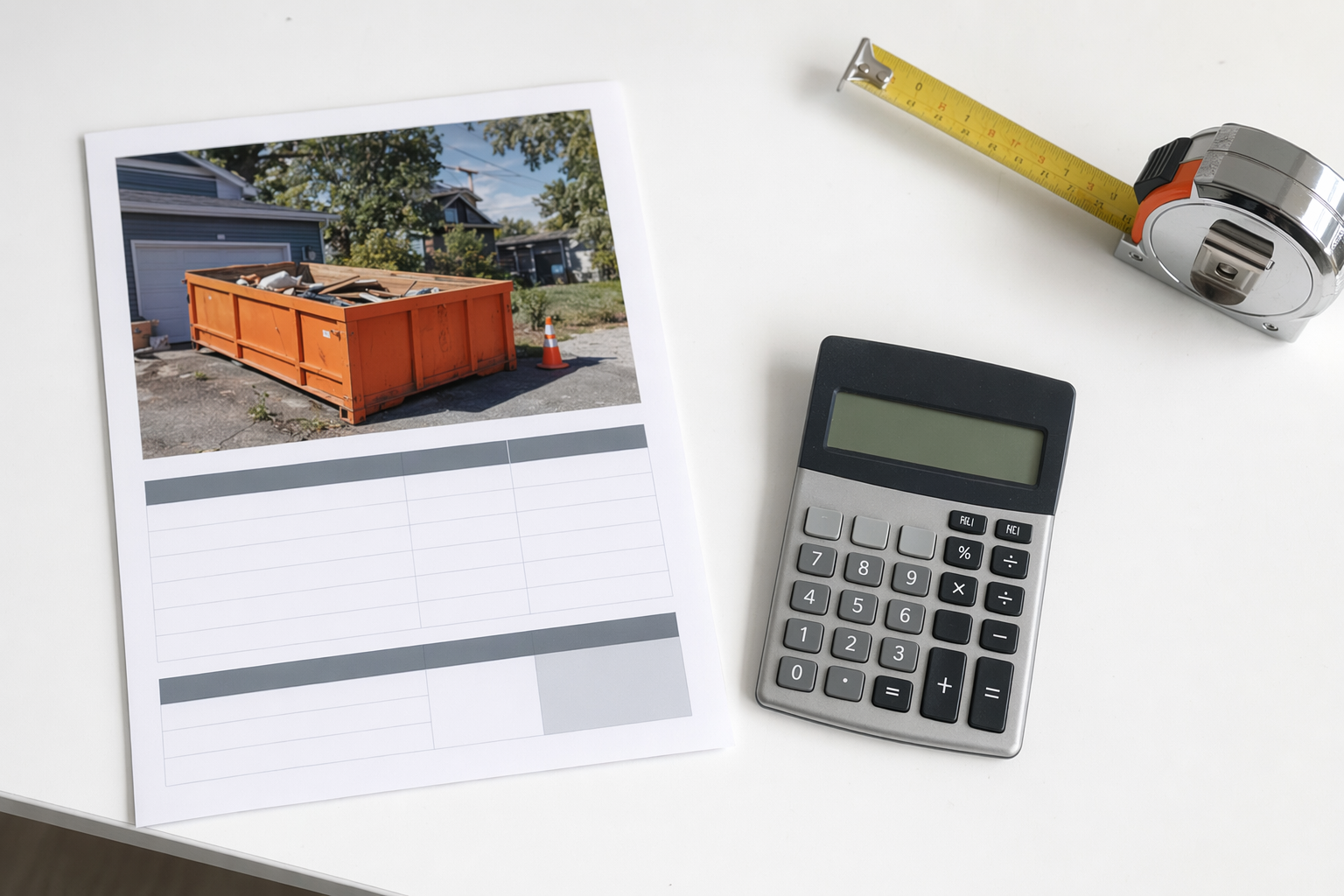
What a trip or dry-run fee means
In plain English: the driver made the trip, but the job could not be finished. The truck, driver time, fuel, and scheduling were still used, so some local dumpster companies charge a trip fee or dry-run fee.
This can happen on delivery day, pickup day, or when you ask for a swap-out. The exact name, amount, and rules vary by area and by hauler, so always confirm locally before the dumpster is dropped off.
Typical ranges are often about $75 to $200+, but that is not a quote. The real number depends on your area, the truck trip, the container size, and the company's policy.

Common reasons people get charged one
The most common reason is blocked access. If the driver cannot safely place or remove the dumpster because a car, gate, low wire, locked fence, building overhang, or pile of debris is in the way, the truck may have to leave and come back later.
Another common reason is overfilling. If debris is sticking up above the top rail, hanging over the sides, or loaded in a way that is unsafe to tarp or transport, the driver may refuse pickup until the load is corrected. Heavy materials can also cause trouble if the bin is overloaded by weight.
You may also see a trip fee if the wrong placement area was prepared, the surface is unsafe, the customer is not ready for delivery, or the street or permit issue was not handled. Rules on street placement and permits vary by city, county, HOA, and hauler.
Illustrative example: a 20-yard dumpster is scheduled for pickup, but two cars are parked in front of it and the driver cannot reach it. The truck leaves, comes back the next day, and the customer may be charged for the extra trip.
How to avoid a trip or dry-run fee
Most of these fees are preventable if you plan the placement and pickup carefully. Before delivery, make sure the driver has clear, safe access and enough room to roll the dumpster off the truck.
Use this simple checklist:
- Keep cars, trailers, and equipment away from the drop area and pickup path.
- Make sure gates are unlocked and someone has handled any access codes if needed.
- Look for low branches, wires, awnings, and tight turns.
- Keep debris level with the top edge of the dumpster, not piled above it.
- Do not mix in prohibited items; rules vary by hauler and area.
- If the dumpster will go on the street, confirm whether a permit is needed and who handles it.
If you think access may be tight, tell the hauler before delivery. A good local company can often tell you whether the spot works for a roll-off truck. BinRoute can help you get connected with licensed, insured local haulers, but BinRoute is a free matching service only — not a dumpster company, not a hauler, and not the one delivering or removing the bin.
Ask these questions before you book
Get the all-in price in writing before the dumpster is delivered. That means asking not just for the base rental, but also for the extra charges that commonly surprise people.
Ask directly:
1. Do you charge a trip fee or dry-run fee if the driver cannot deliver or pick up?
2. What situations trigger that fee?
3. Is there an extra-day fee if I need the dumpster longer?
4. What is the weight allowance, and what is the over-tonnage charge per ton over?
5. Are there prohibited-item fees?
6. Is there a trip charge if the load is overfilled or blocked at pickup?
Those questions matter because the cheapest starting price is not always the cheapest final bill. Trip or dry-run fees often show up alongside over-tonnage, extra-day, and prohibited-item fees. Get all of it in writing first.
Why sizing and loading still matter
A trip fee is about access or failed service, but dumpster size still affects whether pickup goes smoothly. Most people under-order. If you are between sizes, the next size up is usually cheaper than renting a second dumpster or trying to heap the first one above the top.
Heavy debris is its own issue. Concrete, dirt, brick, shingles, and tile fill a container by weight before volume, so those materials usually belong in a smaller dedicated dumpster. If you put too much heavy material into a larger mixed-use bin, pickup can be delayed or extra charges may apply.
If you want a quick refresher on pricing and common charges, see dumpster cost guides and more plain-language help in answers and guides.
How BinRoute helps
BinRoute is a free matching service. We do not rent, deliver, haul, or dispose of dumpsters or waste. We help you compare local roll-off options so you can choose who to hire.
We collect only basic contact and project-intent details: your name, phone, optional email, project type, ZIP code, and preferred language. Then you can talk with local providers, confirm the size, rental period, tonnage allowance, placement, and all-in price before anything is delivered.
If you are ready to compare local options, you can get matched. Always verify that the company you hire is licensed and insured, and confirm local rules on placement, permits, weight, and prohibited items.
A trip or dry-run fee is what you may pay if the dumpster truck shows up but cannot deliver or remove the bin, so clear the access and get that fee policy in writing first.
Common questions
Is a trip fee the same as a delivery fee?
No. A delivery fee is part of the normal service price in many cases, while a trip or dry-run fee is usually charged when the truck makes the trip but cannot complete the job. Policies vary by hauler.
Can I be charged a trip fee on pickup day?
Yes. A common example is when the dumpster is blocked by parked cars or loaded above the top rail so it cannot be safely removed. Ask the hauler what conditions can trigger the fee.
How much is a dry-run fee for a dumpster?
A common range is around $75 to $200+, but it depends on the area, the trip, the size, and the hauler's rules. It is not included the same way everywhere, so get it in writing.
How do I avoid getting charged a trip or dry-run fee?
Keep the path clear, make sure the spot is accessible, do not overfill the dumpster, and confirm any permit or street-placement rules ahead of time. The best move is to ask the hauler exactly what would cause the driver to leave without completing the job.
What other surprise dumpster fees should I ask about?
Ask about over-tonnage charges per ton over the allowance, extra-day fees, prohibited-item fees, and trip or dry-run fees. The all-in price matters more than the starting price.