Quick answers
What is a tonnage limit on a dumpster?
A dumpster tonnage limit is the maximum weight of debris a roll-off hauler will allow during your rental. It affects the “all-in” cost, so you should ask about the tonnage allowance and any over-tonnage fees before delivery.
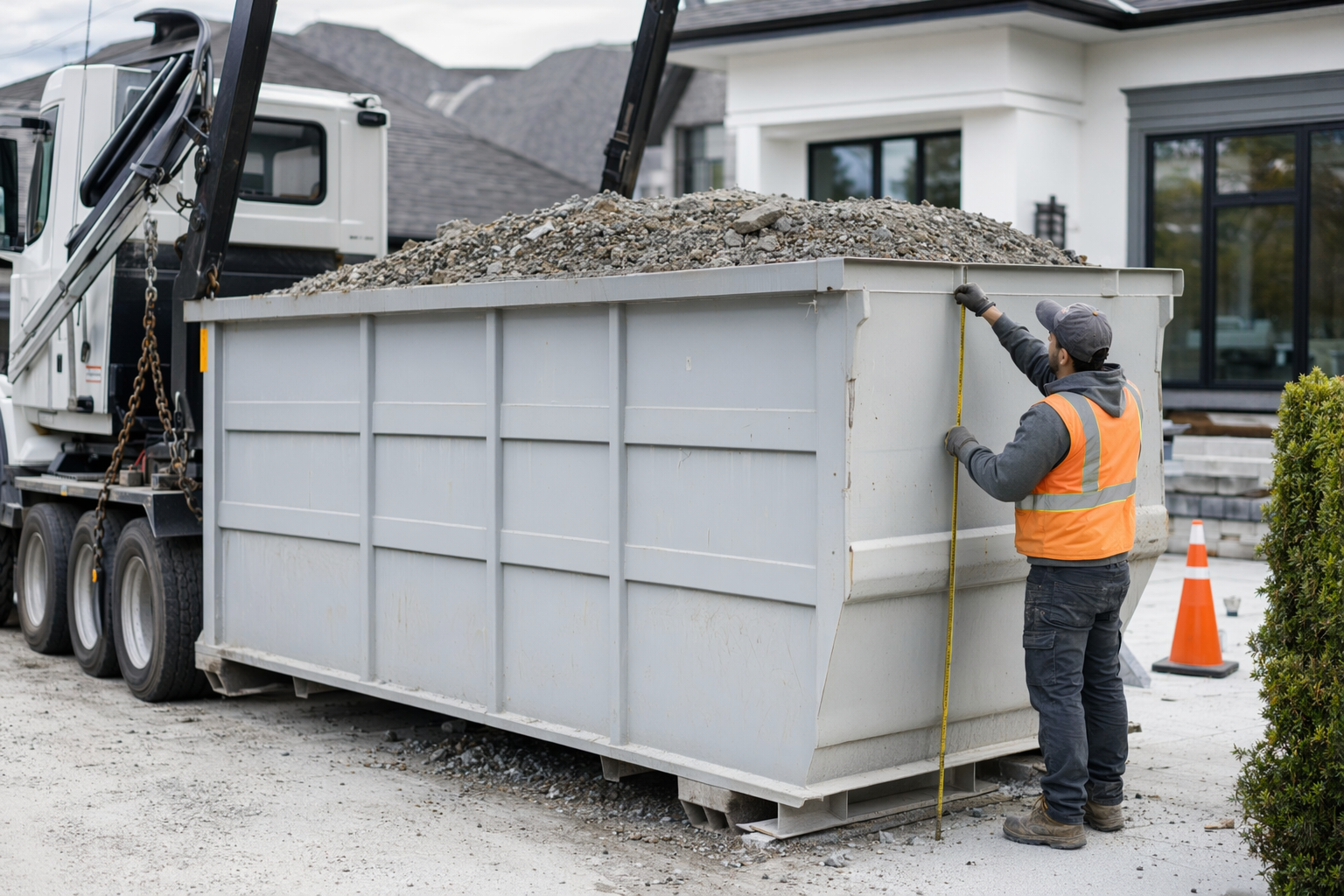
Quick answer: what a “tonnage limit” means
A tonnage limit is the weight cap (usually in tons) that your dumpster rental includes. If your debris weighs more than that allowance, the hauler typically charges an over-tonnage fee.
This limit is there because heavy loads (concrete, dirt, brick, roofing tear-offs, tile) can damage equipment and the hauler’s routes—and because disposal and hauling costs often scale with weight.
Important: exact limits and fees vary a lot by area and by hauler, so treat any number you hear as “their policy,” not a universal rule.

Why weight matters more than volume (especially for concrete and dirt)
People usually pick a bin size by how much space the junk takes up. But for heavy debris, your dumpster fills by WEIGHT long before it fills by “volume.”
That’s why a 20-yard bin full of concrete or soil can hit the tonnage limit even if there’s still some headroom. For heavy clean fill or demolition debris, a smaller dedicated container is often cheaper than overfilling a larger one.
If your project includes heavy materials, plan to weigh your priorities: quantity of heavy stuff, not just the “pile height.”
Common ways tonnage limits show up on your quote (and where surprise fees happen)
When you get a price, look for these items (names vary by hauler):
- Tonnage allowance (the included max weight)
- Over-tonnage fee (often per ton above the allowance)
- Rental days included, plus extra-day charges
- Trip / dry-run / re-load charges (if they have to come back or adjust the load)
- Prohibited-item fees (for items they won’t accept)
If you only hear a “daily rate” or a “bin price,” ask for the all-in total and what triggers extra charges. Ranges are normal—promises aren’t.
- Ask: “What’s the tonnage allowance, and what is the over-tonnage fee per ton if I exceed it?”
- Get it in writing before the dumpster is delivered.
What kinds of debris usually hit tonnage limits first?
Heavier materials reach weight limits faster, even when they don’t look “that full”:
- Concrete, asphalt, brick, stone
- Dirt, gravel, and demolition rubble
- Roofing tear-offs (shingles/gravel mix)
- Tile and dense plaster/drywall jobs
Lighter debris usually fills by volume first (like many types of household junk), but you can still exceed the limit if you pack it tightly or combine heavy items.
If you’re not sure, tell the rental company the exact materials you plan to discard. That’s the most practical way to estimate whether you’ll be weight-limited.
Permits, placement, and your responsibilities (rules vary by area)
Tonnage is only one part of the job. Where you place the dumpster and what you’re throwing in also affects costs and legality.
Street placement, driveway access, and some condo/HOA rules may require a permit or approval, and responsibility for permits can vary by city and by hauler. For anything regulated, like hazardous, medical, or other special waste, you’ll need the proper local disposal program—not the dumpster.
Always confirm locally what’s allowed in your area and what the hauler requires.
How to get matched by BinRoute (and what to ask before you commit)
BinRoute is a FREE matching service that connects you with licensed, insured local dumpster-rental and hauling companies. We don’t rent, deliver, or haul dumpsters, and we can’t dispose of waste.
To get the right guidance from a local hauler, share your project type and ZIP code, plus what you’re removing. Then ask each matched company for the tonnage allowance, over-tonnage fee, rental period options, and all-in pricing.
Use these questions to avoid surprises:
- “What’s the tonnage allowance for the bin size I’m considering?”
- “What is the over-tonnage fee per ton (and how is weight measured)?”
- “How much is an extra day if I need more time?”
- “Any trip/dry-run fees if placement or access changes?”
- “What items are prohibited, and what fees apply if I accidentally include them?”
A dumpster tonnage limit is the max weight allowed, and going over usually costs extra—so ask for the included tons, the over-tonnage fee, and any other all-in charges before you rent.
Common questions
How do I know if I’ll exceed the tonnage limit?
It depends on what you’re throwing out. Heavy materials like concrete, dirt, brick, and roofing tear-offs often hit weight limits quickly. Tell the hauler the exact debris list and ask for the tonnage allowance and over-tonnage fee before you rent.
Is tonnage limit the same for every dumpster size?
No. The included weight allowance can vary by bin size, hauler policy, and local disposal/route rules. Always ask the specific company you’re considering for that bin size’s tonnage allowance.
What happens if I go over the tonnage limit?
Most haulers charge an over-tonnage fee for each ton above your allowance. Some also have rules about how full the bin can be. Get the over-tonnage terms in writing before delivery.
Do I need a permit because of the tonnage limit?
Permits are usually tied to where you place the dumpster (street/ROW), not the tonnage itself. Permit requirements vary by area—confirm locally and ask the hauler what they need for your specific placement.
Can I put anything in the dumpster as long as I don’t exceed the weight limit?
No. Weight is only one rule. Many items are prohibited regardless of weight (and prohibited-item fees can apply). Check with the hauler for their accepted and prohibited items, especially for regulated waste.