Quick answers
What are the dimensions of a roll-off dumpster?
Roll-off dumpsters are usually about 7 to 8 feet wide, but the length and height change by size and by hauler. The label says cubic yards, but what really matters is the actual outside dimensions, weight limit, and the space needed for delivery.
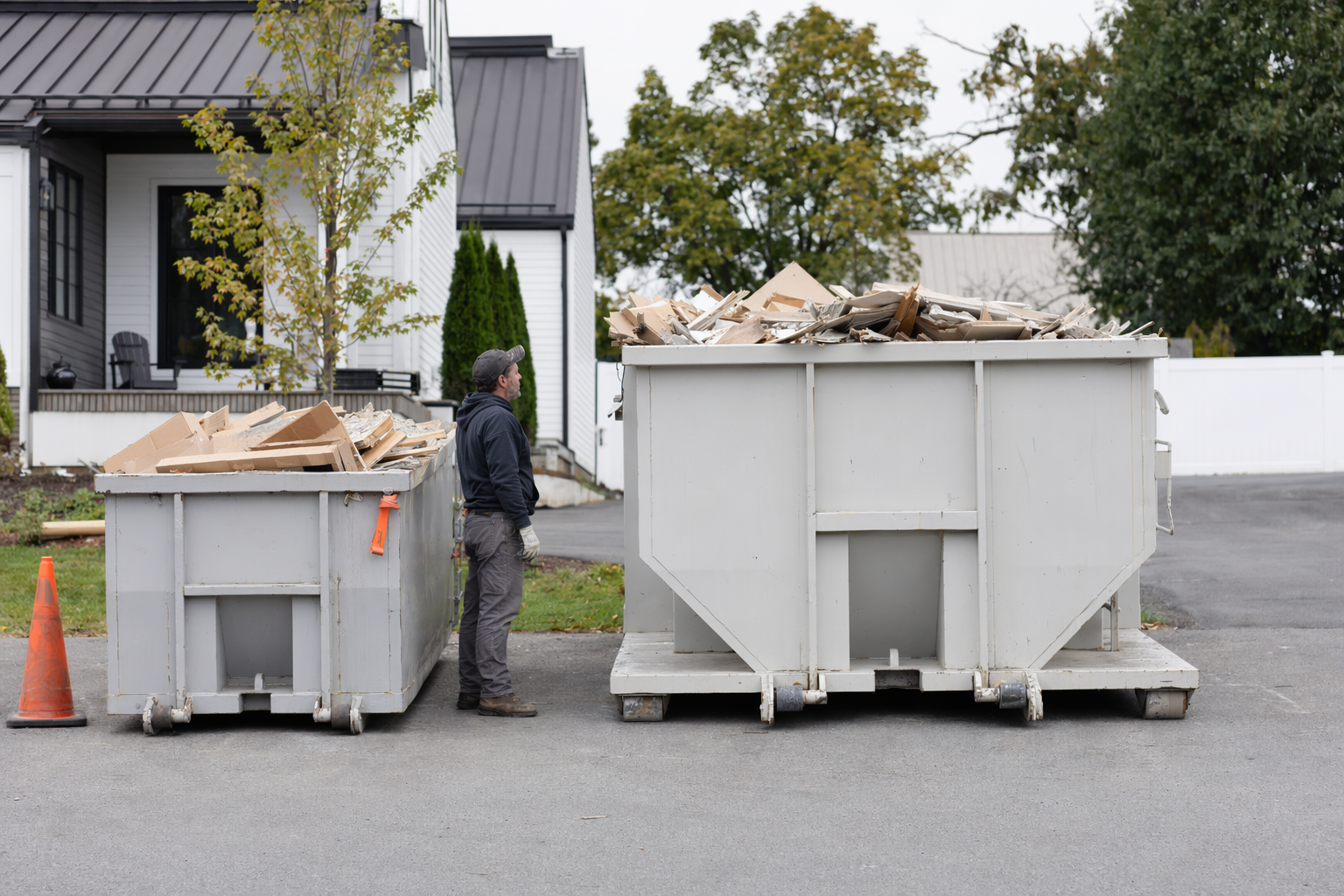
Typical roll-off dumpster dimensions by size
Most roll-off dumpsters in the US are built to fit the same truck systems, so the width is often similar: around 7 to 8 feet wide. What changes most is the length and the wall height.
A common rule of thumb is:
- 10-yard: about 10 to 14 feet long, 7 to 8 feet wide, 3 to 4 feet high
- 15-yard: about 12 to 16 feet long, 7 to 8 feet wide, 4 feet high
- 20-yard: about 14 to 18 feet long, 7 to 8 feet wide, 4 to 6 feet high
- 30-yard: about 18 to 22 feet long, 7 to 8 feet wide, 5 to 6 feet high
- 40-yard: about 20 to 22 feet long, 7 to 8 feet wide, 7 to 8 feet high
Those are general ranges, not exact standards. One company's 20-yard can be a little longer and lower, while another's can be shorter and taller. Always confirm the outside dimensions with the local hauler before delivery, especially if the dumpster has to fit a short driveway, a narrow alley, or under branches or wires.

What the yard size actually means
The "10-yard," "20-yard," or "30-yard" label refers to volume in cubic yards, not the exact outside measurements. One cubic yard is 3 feet by 3 feet by 3 feet. So a 10-yard dumpster holds about 10 cubic yards of material, but the box itself will be bigger than that because of the steel walls and the way the container is built.
If you think better in pickup-truck loads, a rough guide is:
- 10-yard: about 3 to 4 pickup loads
- 20-yard: about 6 to 8 pickup loads
- 30-yard: about 9 to 12 pickup loads
- 40-yard: about 12 to 16 pickup loads
This is only a rough conversion because pickup beds and loading styles vary a lot. Also, bulky items like cabinets, drywall, couches, and brush can waste space fast. Most people under-order. If you are between sizes, the next size up is usually cheaper than filling one bin too soon and renting a second one.
Will it fit in your driveway or job site?
For many homes, width is not the problem. Length, overhead clearance, and room for the truck to drop the box are the real issues. A roll-off truck needs space in front of the container to roll it off, and it needs enough vertical clearance while raising the bed.
As a practical starting point, measure the spot where you want the dumpster and then leave extra room for the truck to work. Confirm the required clear space with the hauler. Low tree limbs, power lines, parked cars, fences, garage overhangs, and soft ground can all cause trouble.
If the dumpster must go on a street, shoulder, or public right-of-way, a permit may be required. That depends on your city, county, HOA, and the exact placement. Rules vary by area, so confirm locally before delivery. BinRoute can help you get connected with local companies, but BinRoute is a free matching service, not a hauling company, and does not issue permits.
Dimensions matter, but weight matters more for heavy debris
A bigger dumpster is not always better. For heavy material like concrete, dirt, brick, asphalt, shingles, sand, and tile, you usually fill the container by weight before you fill it by volume. That is why haulers often use smaller dedicated heavy-debris containers for clean fill.
For example, a 10-yard dumpster may be the right choice for concrete even if the pile looks small. A 20-yard loaded with dense material can go overweight fast. That leads to over-tonnage charges, and in some cases the driver may not be able to safely haul it away.
If your load is mixed household junk, furniture, light demolition debris, or yard waste, volume matters more. If it is heavy clean fill, ask for a smaller dedicated container and confirm the weight allowance in writing. General information only here; local rules and hauler policies vary.
How dimensions affect cost and surprise fees
Dumpster prices usually rise with size, but not always by as much as people think. In many areas, a 10-yard might run roughly $300 to $550, a 20-yard about $350 to $650, a 30-yard about $450 to $750, and a 40-yard about $550 to $900. Those are honest general ranges, not quotes. The real number depends on your area, the dumpster size, the rental period, the included tonnage, and the type of debris.
Ask for the all-in price before you book, and ask what is included. The surprise fees to watch are:
- over-tonnage fees if you go over the weight allowance
- extra-day fees if you keep it longer than the rental period
- trip or dry-run fees if the truck shows up and cannot deliver or pick up
- prohibited-item fees if banned items are found in the load
A bigger box can cost more up front, but renting one size up is often cheaper than ordering too small and needing a second dumpster. You can read more about typical pricing on costs and more general help in guides.
How to choose the right size and get matched locally
Start with the project, not the box dimensions alone. Think about what you are throwing away, whether it is light or heavy, and how much room you have for placement. Then verify the actual outside dimensions with the hauler.
- Estimate your debris in cubic yards or pickup loads.
- Separate heavy material like concrete, dirt, brick, or shingles from lighter junk.
- Measure the placement area and check for overhead clearance.
- If you are between sizes, round up.
- Ask for the all-in price, rental period, tonnage allowance, and prohibited-item list in writing.
- Confirm whether a street permit is needed in your area.
- Hire a licensed, insured local hauler and verify the details yourself before delivery.
BinRoute is a free matching service that helps you connect with local licensed, insured dumpster-rental and hauling companies. BinRoute does not rent, deliver, haul, or dispose of dumpsters or waste. To get started, go to get matched or browse more quick answers at answers. BinRoute only needs contact and project details such as your name, phone, optional email, project type, ZIP code, and preferred language.
Most roll-off dumpsters are about 7 to 8 feet wide, but the length, height, weight limit, and delivery space vary, so always confirm the exact dimensions and all-in price with the local hauler before you book.
Common questions
Are roll-off dumpsters all the same size?
No. The yard rating is about volume, but the exact outside dimensions can vary by hauler. Width is often similar, around 7 to 8 feet, but length and height can differ.
What size roll-off dumpster fits in a normal driveway?
Many 10-, 15-, and 20-yard dumpsters fit in a typical driveway, but not every driveway is the same. Measure the space and confirm the exact dimensions and truck clearance with the local hauler before delivery.
How much space does the truck need to deliver a dumpster?
It needs more room than just the dumpster footprint because the truck has to roll the container off and raise the bed. The exact clearance varies by truck and container, so ask the hauler for the minimum length and overhead clearance needed.
Is a 20-yard dumpster twice as big as a 10-yard?
By volume, yes: 20 cubic yards is double 10 cubic yards. But the outside dimensions may not look exactly double because one box may be taller while another is longer.
Do bigger dumpsters always cost a lot more?
Not always. The price difference between sizes can be smaller than the cost of needing a second dumpster. Real cost depends on size, area, rental period, weight allowance, and debris type.
Can I use a large dumpster for concrete or dirt?
Usually you should use a smaller dedicated heavy-debris container instead. Concrete, dirt, brick, and similar material hit weight limits fast, and local rules and hauler policies vary.