Quick answers
How much does a dumpster rental cost?
Dumpster rental costs usually land in a broad range depending on the dumpster size, your rental length, and what you’re throwing away. Use the ranges below as a reality check, then confirm the all-in price with a local licensed, insured hauler.
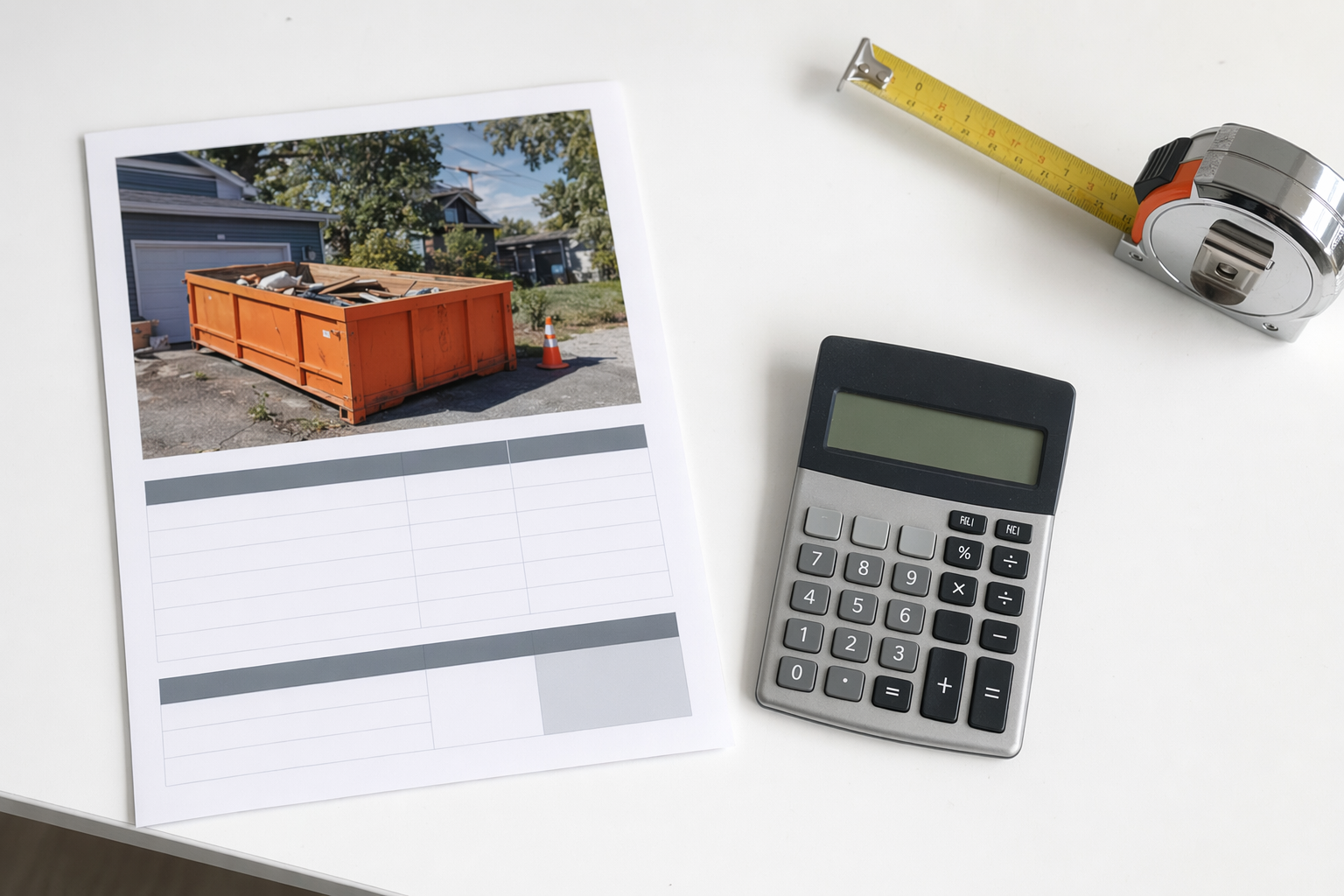
The short answer: typical dumpster rental cost ranges
Most roll-off dumpster rentals in the U.S. commonly cost about $300–$800 total, but it can be lower or much higher depending on where you live and what the dumpster is for.
For a quick reality check, here are common all-in-style ballparks people see for standard debris (not hazardous waste):
- 10-yard (small cleanout/yard debris): often $300–$550
- 15-yard (small remodel/light demo): often $350–$650
- 20-yard (most home cleanouts): often $450–$800
- 30-yard (bigger demo, roofing tear-off, lots of debris): often $600–$1,200
These are not quotes. Your final price depends on your local market, the rental period, the debris type, and weight/tonnage rules.
- Get the **all-in price in writing** before delivery.
- Rules and permit requirements vary by city/county and by hauler—confirm locally.

What makes the price go up (the stuff people don’t plan for)
Dumpster pricing isn’t just “size times miles.” The biggest cost drivers are (1) weight, (2) time, and (3) what’s in the bin.
Here are the usual “surprise” items to watch for. Ask the hauler to itemize these so you’re not guessing later:
- Over-tonnage / excess weight fees: Many dumpsters include a weight allowance. If you exceed it, you may pay per ton over.
- Extra-day fees: If you keep the dumpster past the rental period, costs can increase per day.
- Trip / dry-run fees: If placement can’t happen as planned, or the hauler needs to make a return visit, some companies charge a trip fee.
- Prohibited-item handling fees: Some items are banned or require special handling. If they allow them, they may charge extra—or refuse the load.
- Additional placement/permit costs: If you need a street permit, curb placement, or special setup, the hauler may pass through or charge for admin/time.
Concrete, dirt, shingles, tile, and mixed demolition debris often fill up by weight before volume, which is why people can end up with a smaller-looking bin that costs more than expected.
Size it right: why most people under-order (and what “rounding up” means)
The fastest way to waste money is to rent too small. Most homeowners and small contractors under-order, then have to deal with overflow, extra trips, or a second rental.
A practical rule: if you’re between sizes, the next size up is often cheaper than renting a second bin. Haulers also generally prefer you get the right size the first time.
For heavy debris (concrete, dirt/clean fill, masonry, brick, roofing tear-off, tile), don’t shop by “looks.” Heavy materials hit weight limits first. In those cases, BinRoute often recommends thinking in terms of a dedicated smaller bin for heavy load rather than one big bin filled with heavy material—because you may run into tonnage charges sooner than you expect.
If you want help picking the right size for your job, start with dumpster size help and then confirm your final size and weight allowance with the local hauler before delivery.
Project examples: what you might pay by job type
Here are typical “planning” ranges by common project types. Your final total can change based on debris weight, how long you need the bin, and whether a permit is required.
- Estate/home cleanout (mixed household items, light demolition): often $400–$900 for a 20-yard, depending on how much is actually in there.
- Junk/debris after a storm or yard clean-up (branches, siding, general trash): often $300–$700 depending on volume.
- Remodel/demo (drywall, cabinets, flooring—varies a lot): often $450–$1,000 for 15–20 yards.
- Roofing tear-off / shingles: often $600–$1,200 for 20–30 yards, and weight limits are a big deal.
- Concrete/dirt-heavy jobs: costs can land anywhere in the wide range above, but weight/tonnage fees are the key risk—confirm the allowance and what “over” costs.
If you’re unsure whether your debris is light or heavy, treat it like heavy. It’s safer for budgeting, and it helps you avoid over-tonnage fees.
- Ask: “What is my included weight allowance, and what is the per-ton overage fee?”
- Ask: “How much per extra day, and what counts as a full day?”
Permits, placement, and who’s responsible (varies—confirm locally)
Whether you need a permit usually depends on where the dumpster is placed (driveway vs. street), local rules, and the exact setup. Some areas require a permit if the bin sits in the public right-of-way.
Placement details also affect cost. If you need special access, extra coordination, or the hauler can’t set it where planned, you may see trip/dry-run fees.
To avoid surprises, confirm these before the truck shows up:
- Where exactly will the dumpster sit (driveway/yard vs. street)?
- Do you handle permits or do I need to get one? (Your responsibility varies by area.)
- What’s the rental period and the rules for extending it?
- What items are prohibited, and which require special handling?
For more general guidance, see cost help and what affects price. For the actual matching step, use get matched so you can compare licensed, insured local options.
How to get a real price (and not get burned by fees)
When you request quotes, don’t just ask “How much?” Ask for the all-in total and the fee details. Ranges are normal for budgeting, but you deserve clarity once you’re close to scheduling.
Before you hire anyone, ask the hauler to confirm in plain language:
- Dumpster size (in yards) and estimated debris type
- Rental start/end dates (and how extra days are charged)
- Included weight allowance and the per-ton overage fee
- Any trip/dry-run fees and when they apply
- Any permit/placement charges (or whether you must obtain a permit)
- Prohibited items list for your debris
BinRoute is a free matching service, not a hauling company. We can help you connect with licensed, insured local dumpster-rental and hauling companies, but you still stay in control of the size, dates, placement, and the final all-in price—always verify details locally.
Dumpster rentals commonly cost about $300–$800 total, but your real price depends on size, rental length, and especially weight/tonnage and prohibited items—so get the all-in fee details in writing from a local licensed hauler.
Common questions
Is a 10-yard dumpster cheaper than a 20-yard?
Usually yes, but not always in real life. If you under-order and need a second rental, the “cheaper” bin ends up costing more. If you’re between sizes, the next size up is often a better value—especially for mixed debris.
What’s the most common surprise fee on a dumpster rental?
Over-tonnage/excess weight fees and extra-day fees are the big two. Concrete, dirt, shingles, and tile fill up by weight quickly, so ask about the included weight allowance and the per-ton overage cost.
Do I need a permit to place a roll-off dumpster on the street?
It depends on your city/county and the placement location (driveway vs. street). Rules vary by area and by hauler, so confirm locally—don’t assume.
Can I put everything in the dumpster to save money?
No—some items are prohibited and others require special handling. For anything hazardous, medical, or regulated, use the proper local disposal program. Ask your hauler for their prohibited-item list before loading.
How much does a dumpster cost if I keep it longer than a week?
Many rentals include a set number of days, then charge extra per day after that. Exact rules vary, so confirm the rental period and the extra-day rate upfront.