Quick answers
Can I put a dumpster on the street?
Maybe—but it depends on your city and who’s placing the roll-off. In many places you’ll need a street-use/placement permit and the hauler may handle it, but you must confirm locally before delivery.
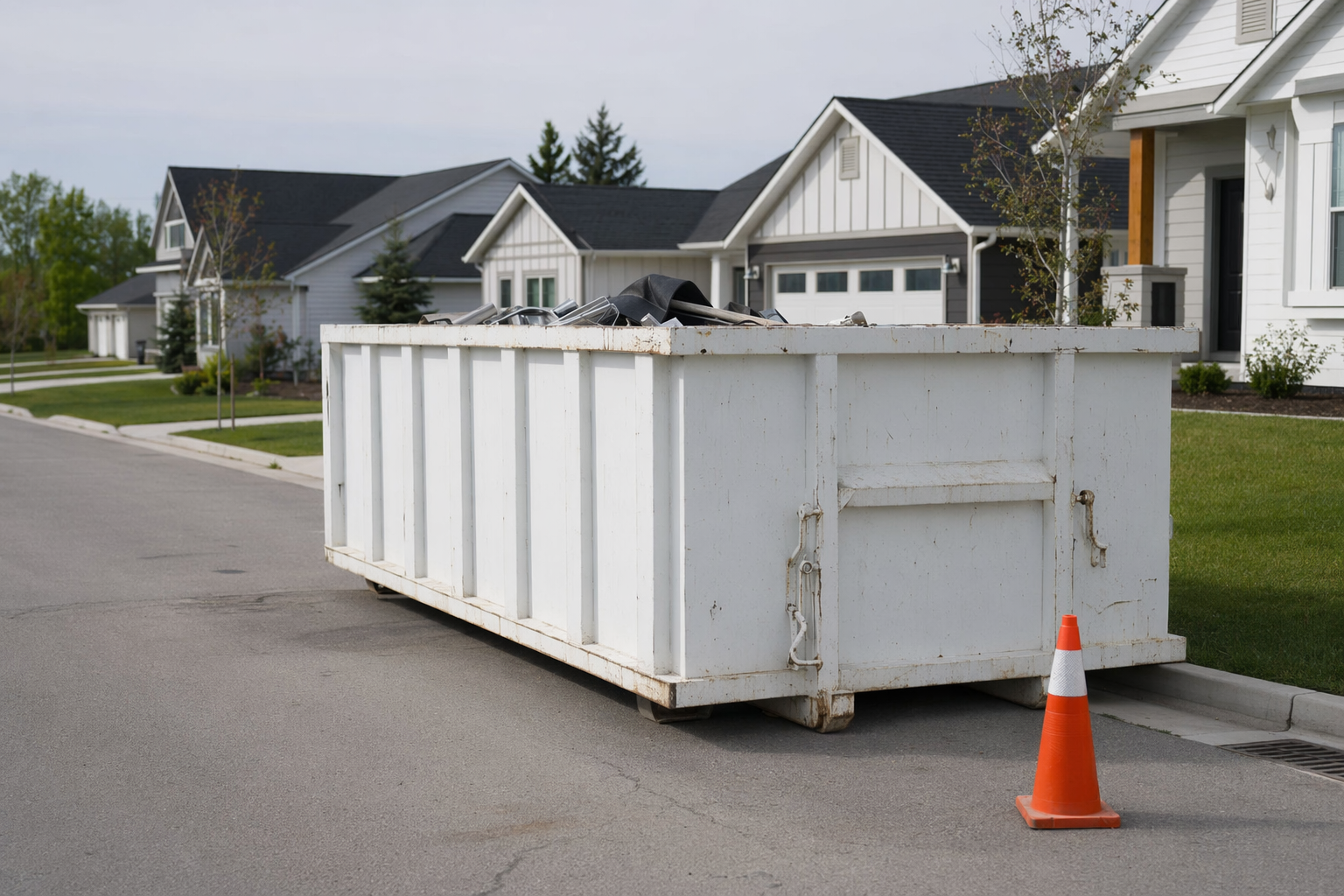
Quick answer: it’s often allowed, but usually not “just park it”
Putting a roll-off dumpster on the street can be legal in some areas, but the rules vary a lot by city, county, and even the exact street.
Most of the time, your option will come down to: whether the dumpster is on public right-of-way, how long it will sit, and whether it blocks parking, lanes, hydrants, mailboxes, or driveways.
Because placement rules differ by area (and who’s responsible), don’t assume. Ask the local hauler you plan to use what permits or setup they require for that address.

What you usually need when the dumpster goes on the street
Common requirements can include a street placement permit, special placement rules, traffic control (like warning signs/barricades), and limits on how long the dumpster can stay.
Some cities require the hauler to obtain the permit; others require the homeowner/contractor to do it (or at least approve it). Either way, you should confirm who’s doing what before the truck rolls.
Also check practical items like whether you have to keep access for emergency vehicles, whether there’s a distance rule from intersections, and whether overnight storage on the street is allowed.
Driveway vs. street: the safer bet for fewer headaches
If you can place the dumpster in a driveway or on private property, you often avoid street-use permits and traffic-control requirements.
If the only option is the street, expect more “process.” That can mean added paperwork, signage requirements, and sometimes extra time to coordinate delivery.
When you’re between two parking options, it’s worth asking the hauler about both: where you want the bin placed and what it takes to make that placement legal.
Surprise fees to watch for with street placement
Even when it’s allowed, street placement can trigger added charges. Ask for an all-in price in writing before delivery—especially if the dumpster must be moved to meet rules.
Common “surprise” fee categories include:
- Over-tonnage fees (you exceed the weight allowance)
- Extra-day fees (rental period runs longer than planned)
- Trip, dry-run, or re-delivery fees (the driver has to come back because placement isn’t approved, access changes, or the truck can’t set it down safely)
- Prohibited-item fees (if you put items the hauler can’t take)
Street permits and traffic-control needs can sometimes affect scheduling and may be bundled into the hauler’s cost. Get the complete “permit/placement-related” details up front so you aren’t guessing.
How to confirm it for your address (fast checklist)
Before you request a dumpster, have these details ready so you get a clear answer from the local hauler.
- Your exact street address and ZIP code
- Preferred placement (street curb, parking area, driveway, or side yard)
- Estimated rental length (how many days you truly need)
- What debris type(s) you’re loading (cleanout, remodel, roofing tear-off, concrete/dirt, etc.)
- Whether you’ll have heavy material (concrete, dirt, bricks) that can hit weight limits quickly
Then ask the hauler:
- Do you need a street placement permit for this address?
- Who obtains the permit—me or you?
- Is traffic control/signage required?
- What happens if the permit isn’t approved or the placement can’t be done as planned?
Rules vary by area, so treat any “general rule” you hear as a starting point—not the final answer.
How BinRoute helps you get matched (and what to say)
BinRoute is a FREE matching service—we don’t rent, deliver, or haul dumpsters. We help you connect with licensed, insured local dumpster-rental companies.
When you request help, focus on placement and project basics. The more specific you are about where you want the dumpster placed (street vs. driveway), the better the match.
If you’re ready, use get matched and include your project type and ZIP. For other decision support, see dumpster rental cost factors and practical sizing guidance in guides.
You might be able to place a roll-off dumpster on the street, but most places require permits and placement rules—so confirm for your exact address before delivery.
Common questions
Can I put a roll-off dumpster in front of my house on the street?
Sometimes, but many areas require a street-use/placement permit and specific placement rules. Ask the hauler for the requirements for your exact address and confirm who handles the permit before delivery.
Will my dumpster rental company handle the street permit?
It depends on your city and the hauler. Some haulers obtain the permit; others require you to provide it or approve it. Get the responsibility in writing before the truck comes.
What fees should I expect if the dumpster can’t be placed on the street?
Possible added charges include extra-day fees, trip/dry-run or re-delivery fees, and sometimes placement-related requirements. Always request an all-in price (including any permit/placement-related costs) in writing first.
Does street placement affect dumpster size or weight rules?
Street placement usually doesn’t change the weight rules, but it can affect what’s practical to load and how quickly you’ll hit weight limits—especially with concrete, dirt, shingles, or tile. Heavy debris fills by WEIGHT before volume, so sizing matters.
Are the rules the same everywhere in the U.S.?
No. Dumpster placement, permits, and responsibilities vary by area and sometimes by hauler. Confirm locally for your address and debris type.