Quick answers
Can I put a dumpster in my driveway?
Usually, yes — a roll-off dumpster can often be placed in a driveway if there’s enough room and the surface can handle the weight. But local rules, driveway condition, and the hauler’s policies vary, so always confirm before you book.
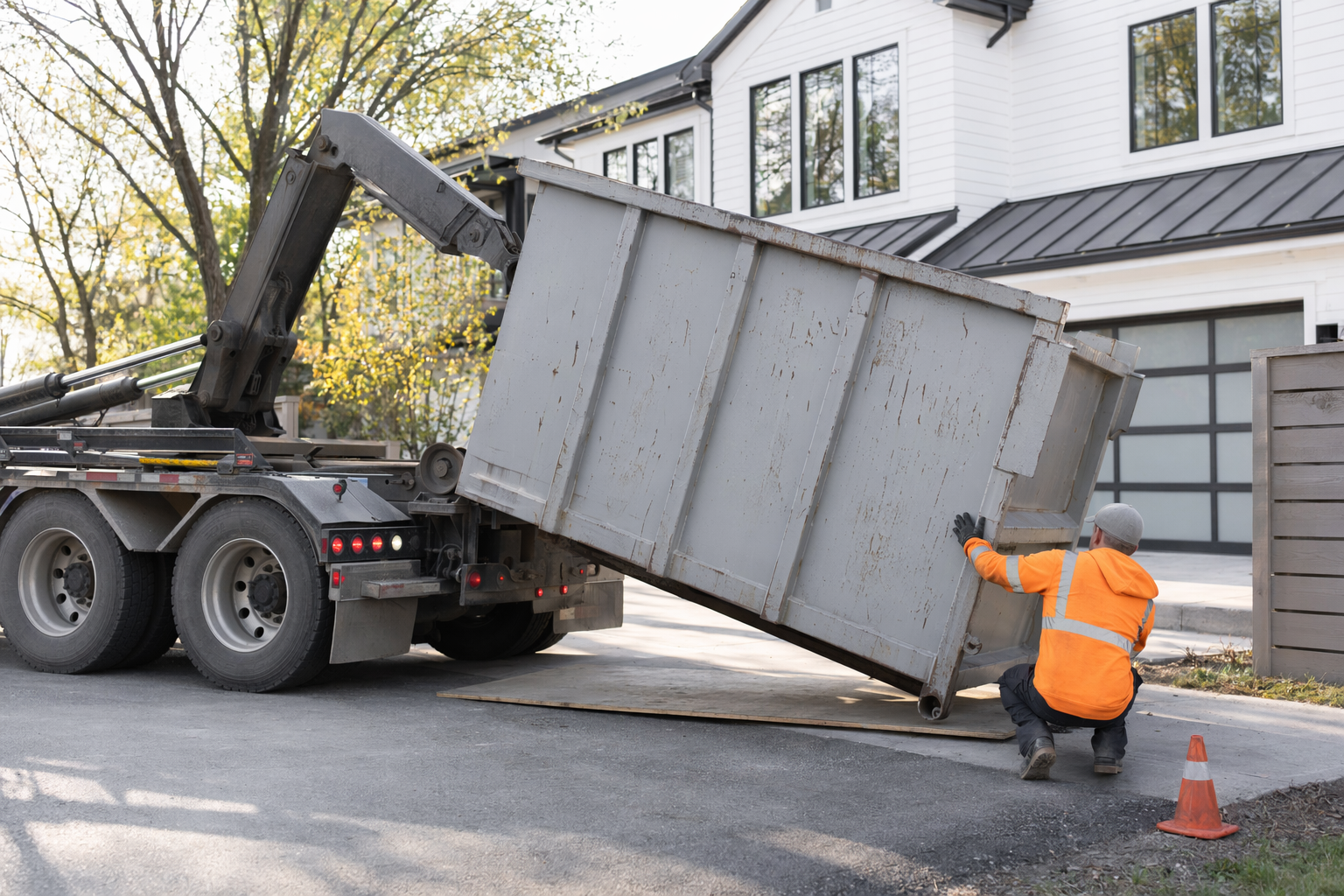
The short answer
Most homeowners and small contractors put roll-off dumpsters in the driveway because it’s the easiest spot for delivery and pickup. It keeps the bin close to the work and usually avoids street-permit headaches.
That said, “can I?” depends on your area and on the driveway itself. A loaded dumpster is very heavy, and some driveways crack, sink, or get damaged under that load. Rules also vary by city, county, HOA, and hauler, so you should confirm locally before delivery.
BinRoute is a free matching service, not a dumpster company. We help connect you with licensed, insured local haulers, but the final placement, size, weight allowance, and all-in price should be confirmed directly with the hauler before the bin arrives.

What makes a driveway a good spot
A driveway usually works best when the truck can back in straight, the surface is level, and there’s enough clearance for the dumpster and the truck that drops it off. Tight turns, low tree branches, power lines, parked cars, and soft ground can all make driveway placement harder.
Think about the actual size of the bin, not just the yardage number. A 20-yard dumpster takes up roughly the space of a couple of pickup trucks parked end to end, and the truck needs room to roll it off. If the driveway is short or narrow, the hauler may suggest a smaller size or a different placement.
If you’re unsure, send the hauler a few clear photos of the driveway and the access path. That’s often the fastest way to see whether the spot is workable.
Driveway protection and damage worries
A dumpster can damage asphalt, concrete, pavers, or decorative driveways, especially if the surface is already cracked or weak. Many haulers use boards or protection pads under the bin, but that is not the same as a guarantee that your driveway will stay perfect.
If the driveway is newer, uneven, steep, or already showing damage, ask the hauler what protection they use and whether they recommend another spot. Get that in writing along with the size, tonnage allowance, and placement details.
The safest move is to treat driveway placement as convenient, not risk-free. If you are worried about damage, ask the local hauler about surface protection before you agree to delivery.
If the dumpster can’t go in the driveway
If the driveway won’t work, the dumpster may need to go in a yard area, a jobsite area, or on the street — if your local rules allow it. Street placement often brings permit questions, and those rules vary a lot by city and neighborhood.
Do not assume the hauler will handle the permit or that a permit is optional. Ask who is responsible for it, whether there are extra fees, and whether the placement location needs to be approved before delivery.
For the cleanest path, start with your project details and ZIP code, then get matched with a local hauler who can tell you what usually works in your area.
Before you say yes, confirm these details
Before delivery, make sure you know the exact size, rental period, tonnage allowance, placement spot, and all-in price. That is where surprise fees usually show up later.
Watch for these common extra charges:
- over-tonnage fees if the load is heavier than allowed
- extra-day fees if you keep it longer
- trip or dry-run fees if the truck can’t deliver or pick up
- prohibited-item fees if forbidden debris is found
Rules, weights, and accepted materials vary by area and by hauler, so always confirm locally. For concrete, dirt, shingles, tile, and other heavy debris, a smaller dedicated container is often the smarter choice because you can hit the weight limit before the bin looks full.
How BinRoute helps
If you need a driveway dumpster and want a simple, no-pressure way to compare local options, BinRoute can help you connect with licensed, insured haulers in your area. The service is free for customers.
We only collect contact details and project intent — things like your name, phone, optional email, project type, ZIP, and preferred language. We do not rent, deliver, haul, or dispose of dumpsters ourselves.
If you want to get a better answer fast, share your project type, driveway size, and location, then ask the hauler to confirm whether driveway placement is okay and what the all-in price includes. For more basics, see our answers and guides.
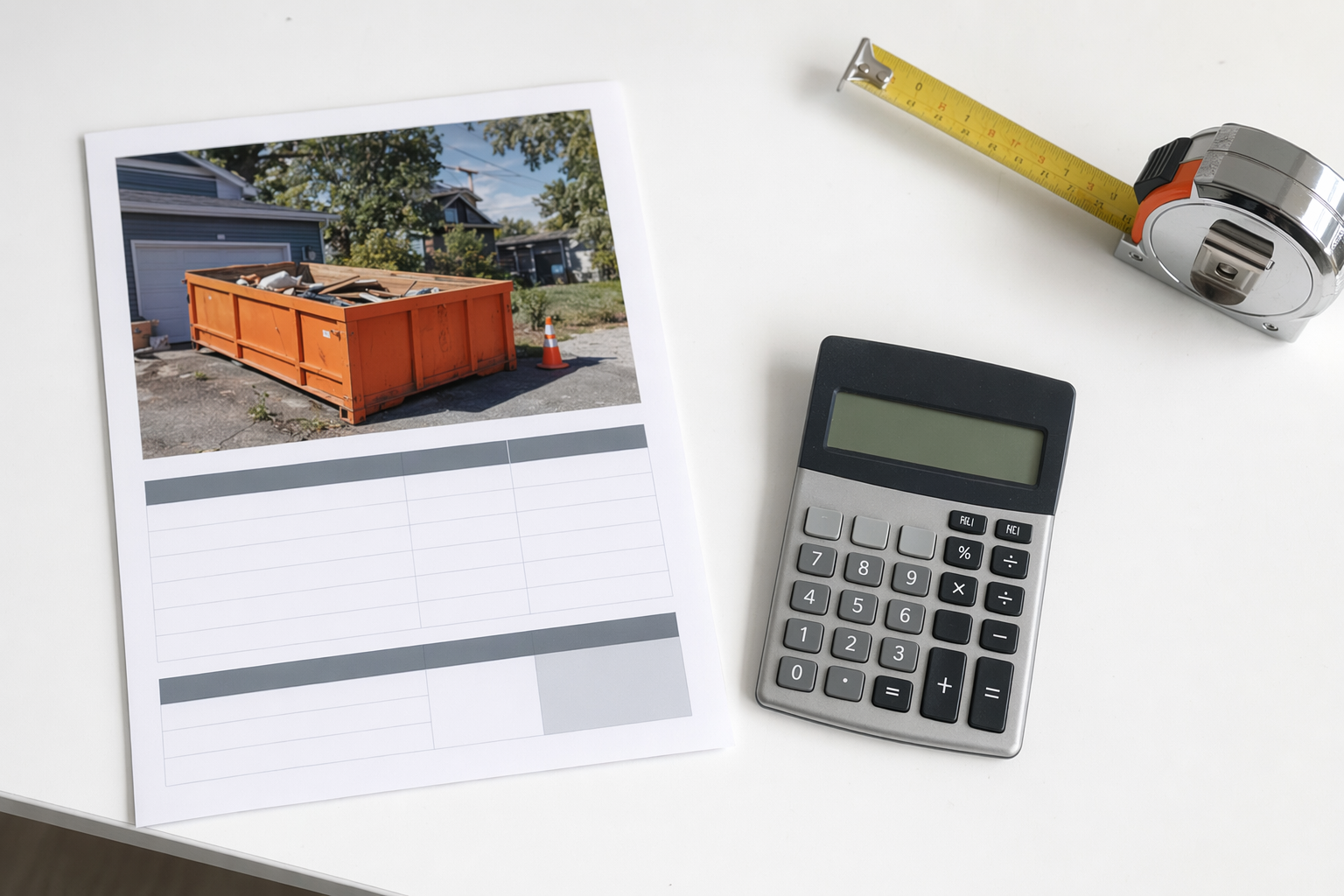
Yes, a dumpster can often go in your driveway, but you need to confirm local rules, driveway strength, and all-in price with the hauler before delivery.
Common questions
Will a dumpster crack my driveway?
It can, especially if the surface is weak, already damaged, or not level. Many haulers use boards or pads, but you should still ask about surface protection and confirm the placement plan before delivery.
Do I need a permit to put a dumpster in my driveway?
Often not, but rules vary by city and county. If the bin is staying fully on private property, a permit may not be needed, but always confirm locally because HOA and municipal rules can differ.
What if my driveway is too narrow?
The hauler may suggest a smaller bin, a different drop spot, or street placement if allowed. Send photos and measurements before booking so you do not end up paying for a failed delivery.
Does BinRoute place the dumpster for me?
No. BinRoute is a free matching service, not a waste company. We connect you with local licensed, insured haulers so you can choose who to hire and confirm the details directly.